
For most adults, it is nearly always wedding season. No sooner do you, your best friends, and their best friends get married than you find that a friend’s child is getting married . . . and so it goes, on to grandchildren if you’re fortunate enough. Not to mention those who need a second or third try at it.
Weddings are beautiful, wonderful, joyful, occasionally comical events, conducted with great seriousness, but whose seriousness is always undermined by the joy that bubbles up through most of the principals throughout the ceremony. And which are followed, in most cultures, by a huge party. (Pastors looking for a way to improve church attendance should take note.)
What is often overlooked in a wedding, however, is the communal nature of the event. Of course there are elopements, and Vegas weddings, and justice-of-the-peace weddings that go against this nature, but those are exceptions: your average wedding is communal in nature. The community plays a role.
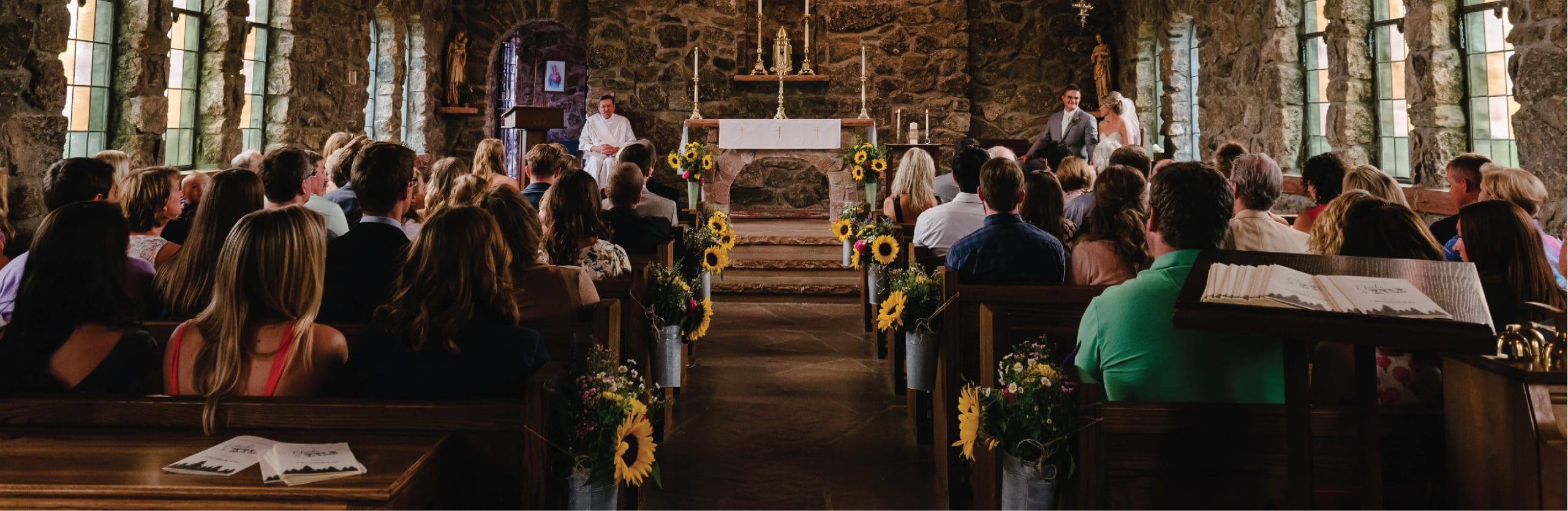
“We are gathered here before God and these witnesses . . . ” goes the familiar line, and it is an interesting construction. Church weddings (really, any wedding) are of course conducted before God. But I want to think for a moment about “these witnesses.” Who are they? And what significance do they have?
If you are cynical about marriage, a member of the “it’s just a piece of paper” school, these witnesses don’t mean much, either. Marriage cynics see the decision to wed (or not to wed but simply cohabit) as a free choice made by two unfettered individuals. What these cynics fail to see is that marriage is, among many other things, a social act. It takes place in society, is part of society, is lived out in society, and invariably changes that society.
What does that mean? It means that marriage is not just a decision that two people make. It is a covenant, first of all, between those two people, yes, but then between those two and the community. “These witnesses” are at the wedding to represent the larger community. That’s why even Vegas weddings need witnesses. Poor substitute though they may be, they stand in for the couple’s real community.
What accountabilities between the happy couple and the community are represented at the wedding by “these witnesses”? The couple takes on an accountability to the community: to function as that most basic social unit, the family, to provide a safe and healthy environment for any children that should result from their union, and to uphold, if nothing else, at least the definition of marriage as they understand it.
The onlookers, for their part, are also accountable to the bride and groom. Their role is to uphold the couple in their marriage, to support them through its inevitable storms, to encourage them when times are hard, and to rejoice with them in their blessings and grieve with them in their sorrows—in short, to live life together with them: not in their house, necessarily, but as their neighbours, friends, and extended family.
A hard-eyed cynic might interrupt, “What about wedding guests from out of town?” It matters not. The congregation at a wedding is not the community; it is a representation of the community. So much the better if the people are the same, but they don’t have to be. “These witnesses” are there to play the role of the community in the little drama that a wedding enacts. The couple vows their lifelong fidelity to each other and the witnesses tacitly vow their lifelong commitment to the thing the wedding creates: a married couple, a family unit, or, in the biblical formulation, one flesh. How much better would a wedding be if the guests were actually called upon by the officiant to pledge their lifelong devotion to upholding the couple’s vows to the extent they have the opportunity? Why is that not a part of every wedding?
Seen in this way, a wedding runs counter to the wide streak of individualism that colours nearly every human activity in North America. When the couple and the community are seen as accountable to each other, that shared responsibility is a debt that cannot be discharged except by the death of one of the participants. That is how it should be seen, and how seriously the formation of society’s basic building block should be taken. I don’t think this responsibility in any way diminishes the joy, the beauty, or the fun of the wedding day. If anything, it should magnify it. Because after all, what is a wedding but the launch party for the greatest adventure two human beings can undertake, the adventure of shaping a life together, the adventure of a lifetime?