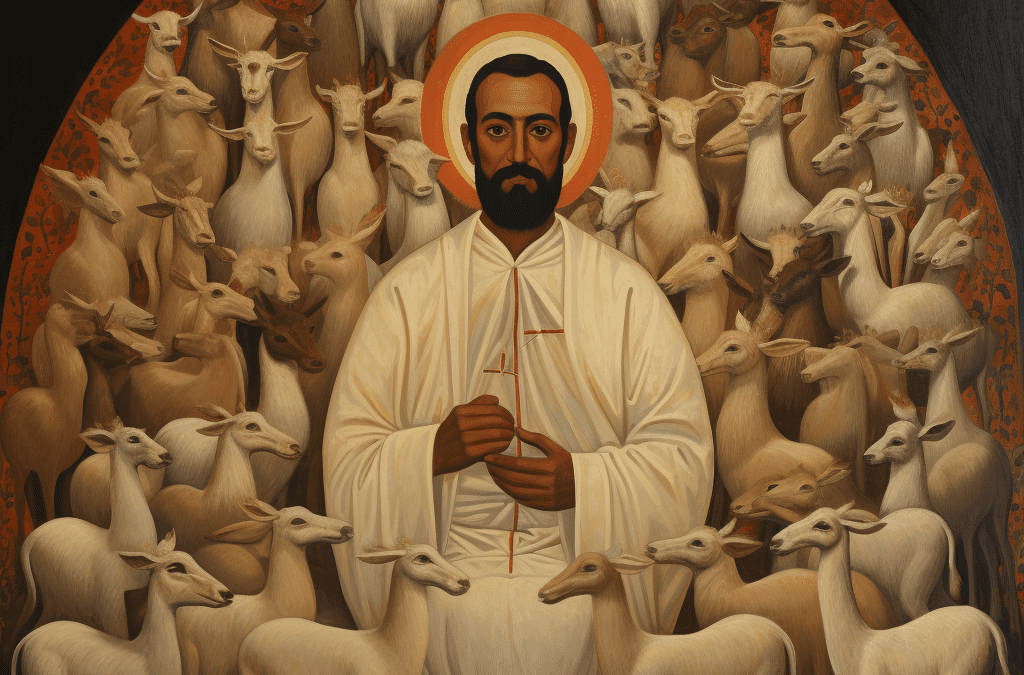

Rod Dreher, Crunchy Cons: How Birkenstocked Burkeans, gun-loving organic gardeners, evangelical free-range farmers, hip homeschooling mamas, right-wing nature lovers, and their diverse tribe of countercultural conservatives plan to save America (or at least the Republican Party). New York: Crown Forum, 2006, 250 pp. Hardcover: C$34.00 / US$24.00. Paperback: C$18.95 / US$13.95.
It’s a cliché: “A neoconservative is a liberal who’s gotten mugged.” Or hijacked. Or, been the target of Islamicist terrorism, post-9/11.
America—the United States—was founded as the first liberal country—the first political community intentionally organized along the lines of the Enlightenment. The French Revolution was a product of the philosophes (Diderot and the “encyclopedists,” and Rousseau)—the radical Enlightenment. But the American Revolution was intellectually undergirded by the moderate Enlightenment, centred mainly in England and Scotland (think: Locke, Reid, Hume, and Adam Smith) that included Montesquieu and Pufendorf (see Donald Lutz, The Origins of American Constitutionalism).
The French Revolution emphasized the democratic principle and populism, and the abolition of ancient, French institutions and traditions in favour of “the rights of man.” Initially, the American Revolution emphasized “the rights of Englishmen” that the revolutionaries fought to recover for the American colonies. When the American framers created a constitution, they endeavoured to strengthen and explicitly to constitutionalize the English tradition of the separation of powers between the executive powers of the King, the legislative powers of Parliament, and the judicial powers of the Court. They sought to restrain the democratic principle and populism with an appointed Senate, and created an Electoral College to choose the U.S. President. It was only once the War of Independence got underway that Thomas Paine’s Common Sense (1776) and the Declaration of Independence (1776) declared that the rights of Englishmen were universal to humankind.
The differences between the radical Enlightenment and the moderate Enlightenment came to define 20th-century liberalism and conservatism. From the beginning of the 20th century and as it unwound, American liberalism was increasingly defined by the political and economic populism of the radical Enlightenment. The democratic reforms of the 1910s saw a popularly elected U.S. Senate and extension of the voting franchise to women, the economic reforms FDR steam-rollered through Congress over the objections of the judiciary, and the social and welfare reforms of Johnson’s “Great Society” were brokered through a Democratic-dominated House and Senate. Meanwhile, conservatism endeavoured to hold on to the constitutionalism and institutionalism of the moderate Enlightenment, seemingly to no avail through the first half of the 20th century, leading to William F. Buckley’s famous inaugural editorial in his National Review that cried, “Stop!“
Dissatisfied with “the Left” and “the Right”
Neoconservatism was a product of the “New York Intellectuals” who started out as radical Enlightenment liberals, who became disenchanted with Johnson’s “Great Society,” and who founded Commentary magazine to promote an alternative view to radical Enlightenment liberalism and moderate Enlightenment conservatism.
Neoconservatism adopted the Wilsonian internationalism of 20th-century liberalism to inform its foreign policy. Neoconservatives saw America as FDR’s great “arsenal of democracy” with a particular responsibility to resist Soviet communist expansionism, particularly in the aftermath of the Hungarian Revolution of 1956 and the Prague spring of 1968, each brought to a halt by Soviet tanks. In their economics, neoconservatives generally but inconsistently held to the theories of “the Austrians” (Hayek and Mises), particularly as elaborated by Milton Friedmann. The neoconservative understanding of society was informed by the Hellenism and political theory of Leo Strauss, later popularized by Allan Bloom’s The Closing of the American Mind (1987).
Canadian wags have described Canada’s New Democratic Party as Trudeau Liberals in a hurry. Pat O’Brien, a former Liberal Party Member of Parliament, described the Chrétien and Martin Liberals as “NDP-lite.” American neoconservatives were Johnson Democrats who wanted an economy dynamic enough to pay for income support programs and, now, George W. Bush’s “Big Government Conservatism.” They were Wilsonian internationalists who took Soviet expansionism as a global threat and, now, are determined to halt radical Islamicist terrorism. They were liberal individualists who saw the institutions of marriage and family and church and synagogue as instrumental necessities to a free society (cf. Allan Bloom) and, now, are pursuing a constitutional amendment on marriage.
To read Rod Dreher’s Crunchy Cons is to discover a sometimes disenchanted neoconservative, at other times merely a neoconservative with disclaimers. What is a “Crunchy Con?” Dreher has spelled out “A Crunchy Con Manifesto” (an abbreviated version, found here):
- We are conservatives who stand outside the conservative mainstream; therefore, we can see things that matter more clearly.
- Modern conservatism has become too focused on money, power, and the accumulation of stuff, and insufficiently concerned with the content of our individual and social character.
- Big business deserves as much skepticism as big government.
- Culture is more important than politics and economics.
- A conservatism that does not practice restraint, humility, and good stewardship—especially of the natural world—is not fundamentally conservative.
- Small, Local, Old, and Particular are almost always better than Big, Global, New, and Abstract.
- Beauty is more important than efficiency.
- The relentlessness of media-driven pop culture deadens our senses to authentic truth, beauty, and wisdom.
- We share Russell Kirk’s conviction that “the institution most essential to conserve is the family.”
- Politics and economics won’t save us; if our culture is to be saved at all, it will be by faithfully living by the Permanent Things, conserving these ancient moral truths in the choices we make in our everyday lives.
Crunchy Cons is a series of stories about Dreher, his family, and his contemporaries who are dissatisfied with the ideologies of “the Left” and “the Right”—including “the new Right.” These are folks who are no longer preoccupied with the macro concerns of Modernity that suck up so much oxygen in political debate: macro-economic measures of both right and left, and the macro-social concerns mainly of the left defined in terms of class and identity politics. This preoccupation with “macros” is mostly programmatic on the grand scale of public policy, legislative frameworks, and publicly administered schemes. Dreher and his “diverse tribe of countercultural conservatives” favour the micro over the macro:
- how to buy the most succulent and nutritious vegetables produced and marketed by cooperatives;
- how to regulate pollution so air is not visible but breathable;
- how to foster family life and create community over careerism and consumerism; and
- opting for home-schooling over public schooling in order to pursue children’s education that is more about the transmission of faith and tradition than about skills acquisition.
Faith as a macro
In one dimension of life, however, Rod Dreher reverses his preference, favouring the macro over the micro. Dreher recites Alasdair MacIntyre’s observation
that moderns, even those who identify with political conservatism, tend to be liberals in the historic sense, meaning that they accept the Enlightenment’s dethroning of religious truth and the resulting privatization of religious conviction (179).
Where Dreher opts for the micro over the macro earlier in his discussion and collection of stories, here he favours the “sacramentalization” of life, not very different from the classic Calvinist insistence that all of life is sacred and to be lived to the glory of God. Instead of a privatized religion, Dreher favours faith as a macro that brackets, infuses, and informs all of life, public and private.
In the concluding chapter of Crunchy Cons`, “Waiting for Benedict,” Dreher frames the challenges before the American electorate, in the current and future electoral cycles. Dreher describes both liberal and conservative—Democratic and Republican—politics as defined by fear and loathing of each other. That liberal Democrats could with whimsical abandon muse about a terrorist bomb in a Baptist chapel sends as worldly a conservative Republican as Dreher into a tearful rage about those terrible liberals and how glad he is to be a Republican (225). That “(f)ear and hatred, the conservative historian John Lukacs has written, are the primary emotions motivating modern democratic politics.” That both liberals and neoconservatives want to uphold, and remove the restraints on, individual freedom. For liberals, it’s about keeping the individual free of moral restraints and the constraints of conventional marriage, family, and parenthood. For neoconservatives, it’s about keeping the individual free of the restraints on consumerism and the drive to the almighty buck—unmitigated greed. Instead, Dreher calls for restraint and for a culture that is defined not by fear and power politics, but by adherence to “the Permanent Things”—the “eternal mores” that make liberty and the preservation of wealth possible.
He identifies the famous “malaise speech” of 1979 in which President Carter called Americans to restraint and to be satisfied with less, and the ensuing torrent of negative reaction from the American public, as leading Mr. Carter to formulate “the Carter Doctrine,” early in 1980. The Carter Doctrine announced that any action in the Persian Gulf that might threaten the supply of energy to the United States would be taken as a threat to the security of the United States. Dreher insists it has shaped U.S. foreign policy from that day to this.
As a matter of American, national security, Dreher advocates for a conservatism of the micro over the macro, of the homely virtues of family and local community, pointing to the fragility of the American polity and its macro-economy. He calls on his readers to be “Benedicts”—some of whom may retreat from the city to the countryside, others of whom will live lives in the city favouring family, faith and tradition, and the local, and who will raise a generation likewise inclined.
Although I am in sympathy with much of the “post-neoconservative” agenda Dreher puts forward, I find myself suspicious of a program that seems a tad precious and pretentious, even with his disclaimers to that effect. I find some of his policy prescriptions to be insufficiently nuanced, if not pedestrian, particularly in respect of energy policy. (Steve Stein’s “Breaking the oil habit,” Policy Review, August & September 2006, seems closer to the truth of it). And yet . . . I am reminded of the pronouncement of a mentor, that not every generation must devote its energies to understanding and addressing foundational matters. “But,” he insisted, “this generation must be about understanding and addressing foundational things, lest they be lost to future generations.”
Crunch.