
American evangelical Protestants, both in the popular media and even in their own minds, are often reputed to be anything and everything but intellectual. To study this more closely, Boston University’s Institute on Culture, Religion, and World Affairs has launched a two-year research project, The Emerging Evangelical Intelligentsia Research Project. Last fall, the Institute launched the project with a major conference entitled, “Opening of the Evangelical Mind.”
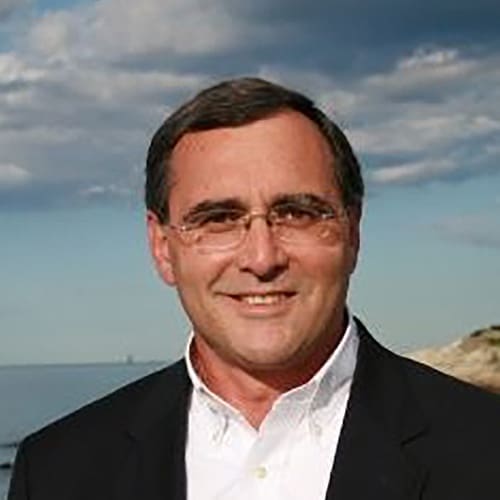
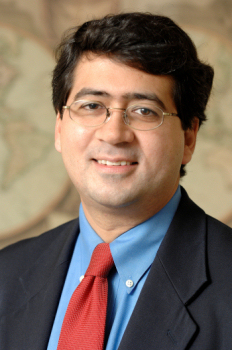
Directing the project is Dr. Timothy Shah, a Senior Research Scholar with the Institute on Culture, Religion, and World Affairs and Senior Fellow with the Council on Foreign Relations. Work Research Foundation Senior Fellow Dr. John Seel discusses the project and its early findings with Dr. Shah.
John Seel: What is the overarching purpose of your research project?
Timothy Shah: The project was actually an idea that emerged from the fertile mind of the eminent sociologist Peter Berger. It seemed to him that the prevailing understanding of the evangelical community among intellectuals in America was cartoonish at best. He felt that there were developments in the evangelical community that were being overlooked. Berger felt there was an emergence of what he called an “evangelical intelligentsia”—a self-assured, sophisticated class of intellectuals working in various fields. So he gathered a group of people, including Mike Cromartie (Ethics & Public Policy Center), Os Guinness (author), Mark Noll (Wheaton College), John Wilson (Books & Culture), Dana Robert (Boston University), and myself and asked if there has been a sociological or historical study on the emergence of this phenomenon.
We agree that there really wasn’t one. There have been critiques of its intellectual sophistication and assessments of its scholarship. Mark Noll’s The Scandal of the Evangelical Mind and Robert Wuthnow’s Restructuring of American Religion tackled this aspect. But most of this work was done in the early 1990s, and it seemed to us that there were recent developments that bode well for the emergence and impact of an evangelical intelligentsia. By intelligentsia we mean professional producers of ideas, not simply academics, but also public intellectuals—including sophisticated journalists and public commentators.
The project will do two things. Historically, we want to explore how this evangelical intelligentsia has emerged particularly in the years after World War II. And then, sociologically, we want to look at the institutions and resources that have enabled these evangelicals to have the influence that they are now having.
 |
John Seel: How do you compare this research with the recent book by the Rice University sociologist Michael Lindsay, Faith in the Halls of Power?
Timothy Shah: Michael has written a great book and our interests and concerns certainly overlap. For one thing, Michael Lindsay is a good example of what we are talking about. His book doesn’t exactly announce the fact that he is himself an evangelical. But the fact that an evangelical has done such a sophisticated sociological and critical analysis is indicative of the phenomena we are describing. Our work overlaps with Michael, but intellectual elites were not the primary focus of his work. Business and political leaders dominate his study. Only a small percentage of the 300 people he interviewed were actually intellectual elites. So in a sense we are trying to supplement his research. What we’re doing might be called, Faith in the Halls of Learning. Our work will focus on those who are in the academy, think tanks, policy institutes, and journalists.
John Seel: The evangelical elites that Lindsay studied largely derived their cultural capital, that is, their social standing and intellectual perspective, outside of evangelical institutions and in some cases over against evangelical theology. What is your assessment of this situation?
Timothy Shah: This isolation and disconnection is very worrying. Michael himself is worried about it. This set of issues is one we will want to focus on as we look at evangelical intellectuals. We will want to explore whether these evangelical intellectual elites are similarly isolated from evangelical institutions, theology, and other kinds of resources that can sustain them or whether they better connected to them.
Our sense is that many of the most influential evangelicals are not isolated from evangelical churches or traditions. Rather they are closely connected and have emerged from, incubated by, and are still in close contact with a variety of evangelical institutions. Not all certainly, but many of them have had a connection with Calvin College or Wheaton College, for example. The resources of Reformed Calvinism have sustained many. I think the situation may be different for evangelical intellectuals.
It will be interesting to see whether the Harvey Fellows Program, funded by Dennis and Eileen Bakke, which provides graduate fellowships and summer institutes, will help younger evangelical elites to be more connected. In fact, I’m a little pessimistic, because the Harvey Fellows Program provides academic funding for secular graduate study, but it does not provide intellectual or theological resources. It does not provide experiences that would strengthen their intellectual formation as evangelical scholars.
The Harvey Fellows stands in sharp contrast with the unfortunately defunct Pew Young Scholars Program. Our recent conference noted the importance of the Pew Charitable Trust and programs like the Pew Young Scholars Program, which not only provided funding, but extremely rich intellectually formative experiences for junior and senior evangelical scholars. You cannot say enough about the impact of these programs on dozens and dozens of evangelical intellectuals. This is completely gone now. Joel Carpenter and others lament this fact. There is a small group that is seeking to attract resources to redress this.
John Seel: If you were speaking to a younger emerging evangelical scholar, what are the lessons that can be learned from the older generation of evangelical thinkers?
Timothy Shah: One is to really do your theological homework. Unfortunately, many younger evangelical scholars are very capable in their particular disciplines, but have a very superficial grounding in theology. They need to read Jonathan Edwards, Abraham Kuyper, Carl Henry, and Harold Ockenga. They need to immerse themselves in the theological giants who have wrestled with many of the philosophical and political issues that we are facing today. The evangelical tradition is often attacked as being superficial or even non-existent. This assessment is completely false. People who make these claims are frankly ignorant of the rich evangelical tradition.
The other point to make is to not be afraid to bring a perspective informed by faith into the secular academy. This perspective will not always be greeted with welcome or warmth. But the intellectual fragmentation of the academy, and in some ways the desecularization of the academy through the influences of postmodernism, has provided a greater opening for a diversity of perspectives. There isn’t the kind of methodological imperialism that once dominated the academy.
John Seel: Your point on the importance of sustained theological reflection is well taken. Many young evangelical scholars do not have a theological sophistication to match their academic competence.
Timothy Shah: Absolutely. Moreover, there is a failure to appreciate the uniquely evangelical theological tradition. There is a tendency for young evangelicals to think that they have to turn to Catholic social thought or the Natural Law tradition. It is certainly fine to appropriate these traditions, but it is wrong to think that there is not a specifically evangelical tradition from which one can draw. It is a tradition that goes back to Jonathan Edwards and includes Pietist thinkers like Johann Arndt and Philip Jacob Spener. And then you have Abraham Kuyper who is best understood as an evangelical Calvinist. He had a born again experience and developed a lively appropriation of the faith, which really fired his whole philosophical and theological perspective. We don’t spend enough time acquainting ourselves with this tradition. Carl Henry wrote millions of words that we don’t fully appreciate. I’ve recently been reading several of Henry’s books from the late 1940s, The Remaking of the Modern Mind and The Protestant Dilemma. These are powerful books.
John Seel: Who do you see on the horizon as younger emerging scholars and public intellectuals?
Timothy Shah: There are many. One is an outstanding black intellectual, Amos Jones, who is a fiery passionate evangelical, a legal scholar practicing law in Washington. He has written on multiculturalism and human rights.
Another is, of course, Michael Gerson, who was a former speechwriter for President Bush and is now a columnist for the Washington Post and a Senior Fellow at the Council on Foreign Relations. Some don’t appreciate him as a specifically evangelical public intellectual.
Another one is Peter Feaver, who is a brilliant political scientist, expert on international security and tenured at Duke University. He served on the National Security Council under President Bush.
Another is Christopher Seiple, son of Robert Seiple of World Vision, who leads a think tank dealing with religion and foreign policy, The Institute for Global Engagement. He is also active on the Council on Foreign Relations. He will do important work in coming years.
John Seel: If you are a young emerging evangelical, where should you go for “care and feeding”?
Timothy Shah: I think young evangelical intellectuals should consider taking some time to do serious theological study, perhaps in the middle of their graduate studies, before they pursue their doctorates. Regent College and Fuller Theological Seminary are two places to consider. Unfortunately, there isn’t anything quite like the Pew Young Scholars Program to nurture them specifically in their discipline or chosen field of endeavor. Hopefully, this will be corrected in the near future. The only current alternative is the Harvey Fellows Program. I was a Harvey Fellow and I continue to appreciate the network of relationships that it fostered.
In my area, which is world religion and politics, I run a summer seminar with Peter Berger on religion and world affairs, and we’ve had a number of evangelical students participate in the past. It is a very rich theoretical experience as well as provides a wealth of basic empirical information about trends in world religion and politics. Of course, I’m biased, but I think it would be very valuable for students interested in religion and international relation, religion and world politics, or religion and comparative politics. The Institute for Religion, Culture, and World Affairs at Boston University sponsors this summer seminar.
John Seel: What kind of education should a thoughtful evangelical student seek in high school or college to prepare him or herself to become a public intellectual?
Timothy Shah: One can get this kind of preparation in any number of different institutions including Christian colleges. But there are also secular institutions, which provide excellent formative training for Christian intellectuals.
One of the most important things and often one of the most neglected, in my own experience, is a solid grounding in the history of ideas, not philosophy narrowly understood, but the history of social, moral, and political thought coupled with a solid grounding in history. These are essential.
Rising evangelical scholars need to understand the fundamental debates and discussions that have constituted the philosophical and political traditions. And then understanding how specifically Christian thinkers and ideas have been a part of this conversation. And then, as I mentioned earlier, one should understand how specifically evangelical thinkers figure in this history. One will necessarily have to supplement one’s courses particularly at a secular institution with the kind of reading and sources that I described earlier. But we lack perspective when we are not grounded in history.
Unfortunately, we tend to neglect precisely these subjects as they don’t immediately lend themselves to success in the job market or are required in core curricula. Nonetheless, they are essential for the development of a Christian public intellectual.