

Without question, the greatest invention in the history of mankind is beer. Oh, I grant you that the wheel was also a fine invention, but the wheel does not go nearly as well with pizza.
—Dave Barry
What you drink and why you drink it is about culture: the culture we grew up in, the culture we want to identify with, and the exploration of new cultures of taste and discernment. Like never before, the compression of space and time which many call globalization brings the rich variety of cultures together, rubbing shoulders, tipping glasses, and lubricating the gears of academic and social life. But where to begin in this smorgasbord of taste and delight? Benjamin Franklin famously said that “beer is proof that God loves humankind, and wants us to be happy.” But what kind of happiness does he mean? Is it hoppy and rich or malted with a deep bitter chocolate body? Is it a joy brewed from the rice fields of south-east Asia, or perfected deep in the monasteries of Belgian Trappists?
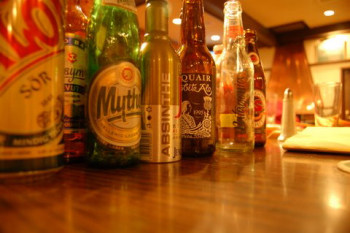
Enjoying beer is about more than taste. According to tastebeer.com, most people drink their favourite beers for reasons other than taste! Beer connoisseurs often argue that what influences beer consumption is far more related to brand recognition, image, peer pressure, habit and familiarity, cost, health reasons, and alcohol content. What we choose has more to do with perception and brand than it does with actual taste. This tells us a few things. First, it tells us that beer is about more than taste, that there is a sociology to beer drinking. Who are you drinking it with? What is the setting? What is being eaten? But it also tells us that a surprising amount of people drink bad beer—not because they don’t know good taste, but because other factors have interfered at some level to prevent them from branching away from the familiar and into the better tasting. Blind beer tests have proven that when presented without marketing, packaging, branding, and social pressure most people prefer beers which they do not consider their favourites.
 |
Branching out can be an intimidating prospect, so it’s worth sticking in the short term to the same general category that you’re familiar with. Beer generally falls into two broad classifications: lagers and ales. The main difference in these is the type of yeast used and the temperature at which they are brewed. Both lagers and ales generally contain hops, malted barley, yeast, and water. Lagers include American-style pale lager, pilsner, light lager, and dark lager. The pale lager usually has more carbonation and tends to be light, including popular U.S. brands such as Coors and Budweiser. The main types of ales include brown ales, porters, and stouts.
When choosing outside your usual range, consider the rising phenomenon of the micro-brewery. (The microbrew almost certainly means supporting local business).
A highly recommended microbrew is the Granville Island brewery, in Vancouver, especially their Lion’s Winter Ale, which is so coveted by east coasters. This seasonal brew is available only during winter months, but is amiably replaced in hot summer months by an unfiltered wheat ale, Robson Street Hefeweizen. Granville Island offers a variety of seasonal beers all well worth sampling. It also has a very generous and entertaining staff tour of the brewing facilities.
Doing one thing, and doing it right, is the Steam Whistle Pilsner from the Steam Whistle Factory at the John Street Roundhouse in Toronto. In addition to a refreshing golden and bright beer, the Steam Whistle packaging is built with 30% more glass, making for over 35 uses per bottle. The bottles have “3FG” embossed at the bottom, denoting the Three Fired Guys who started a brewery after being, erm, released, from major executive jobs. Steam Whistle tours are a delightful downtown Toronto outing, and the Roundhouse is also open for event booking.
While not a micro-brew, McAuslan Brewery in Montreal brews one of the finest Canadian brews. A gold medalist in the Golden Canadian Pale Ale category at the 1996 World Beer Cup, Griffon Extra Pale Ale has a bright gold colour, clean hope, and malt flavour for great drinkability.
 |
Unibroue brewery, in Chambly, Quebec, started the Raftman in 1995. It is a speciality ale brewed with whiskey malt, and referenced in the bottle. With a coral sheen, it has a smoked whiskey malt taste, with traces of hops and a subtle caramel. The Raftman is brewed to commemorate the legendary courage of the foresters of Canada’s north, and to share their joie de vivre!
A fine international brew is La Chouffe Golden Ale by Belgium’s Brasserie d’Achouffe. While edging a bit higher in alcohol content at 8%, it offers a strong, spicy, lightly hoppy evolving taste. It is entirely natural, re-fermented, unfiltered, unpasteurized, and without any additives.
All of this to say: branch out from the familiar. Drink less; drink better.