
What we believe about life and the world becomes plausible as we see it lived out all around us. This is not an abstraction, though. Its reality is seen in time and space, in the histories and circumstances of real people living real lives… We discover who we are—and who we are meant to be—face to face and side by side with others in work, love and learning.
—Steven Garber, The Fabric of Faithfulness (2nd edition, 2007)Community and friendship are things to get tangled up in. They aren’t easy or efficient. But they give meaning to our lives.
—Greg Veltman, “Making friends for life,” Comment (September 2006)
Of the instruments God used to woo me to Himself during my mid-teens, the most obvious to me in retrospect are my then-girlfriend (and, now, wife) Angela, and Edith Schaeffer’s story of an out-of-the-way, out-of-the-ordinary, missional community, L’Abri (1969). I was a bookish teenager. Even so, what drew me out of my childhood racism and early teens attempt at Buddhism was not so much reading Christian apologetics (although that was helpful to me later), but the experience of friendship and the example of community.
Angela invited me to dances and parties, she hung out with me at the practices of our local youth orchestra (in which I was the seventh violist and she the lead first violinist and concert master), she prayed for me, and she decisively bought me a pre-owned, well-worn Good News New Testament at a public market in Cape Town’s Greenmarket Square. Having fallen in love with Angela, it made a lot of sense for me to fall in love with the God she loved.
Edith Schaeffer tells the story of her family, their friends, and of visitors to the little village of Huemoz in the Swiss Alps. The L’Abri community started in the mid-1950s as just Edith and Francis Schaeffer and their children, opening their home to guests for conversation, and praying to be able “to show forth by demonstration, in our life and work, the existence of God.” On the basis of prayer and word of mouth, more than 180 guests arrived at their door in the first year after they made this commitment.
As I read the story of the founding years of this community (of which you can learn more at labri.org), I hungered after the richness of conversation, the depth of friendship, the robust delight—and acknowledgement of brokenness—in the world it embodied. That hunger for the community exemplified by L’Abri eventually drew me to its source, author, and purpose—the Jesus I was to meet in the pages of the Good News New Testament given to me by my best friend.
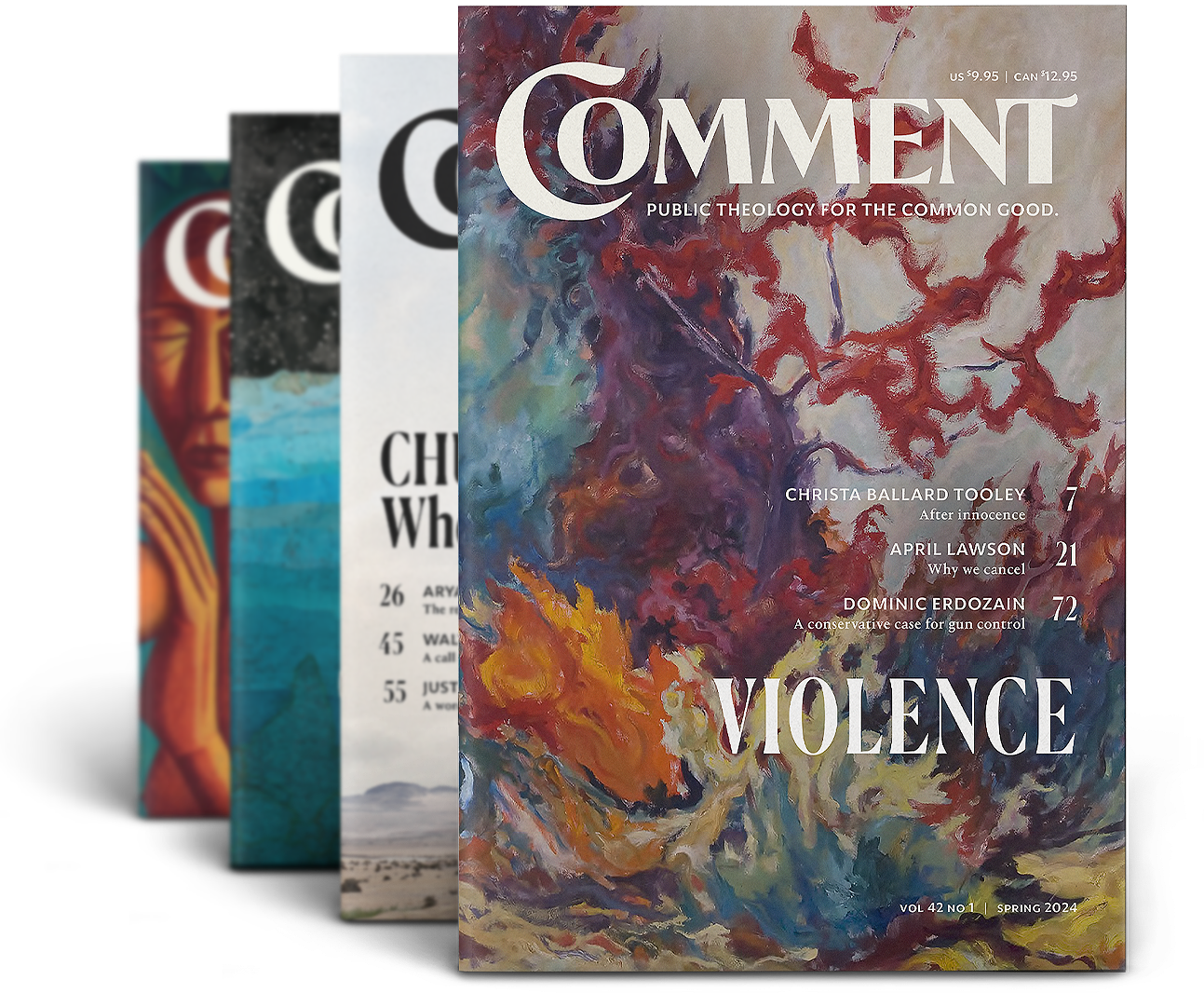
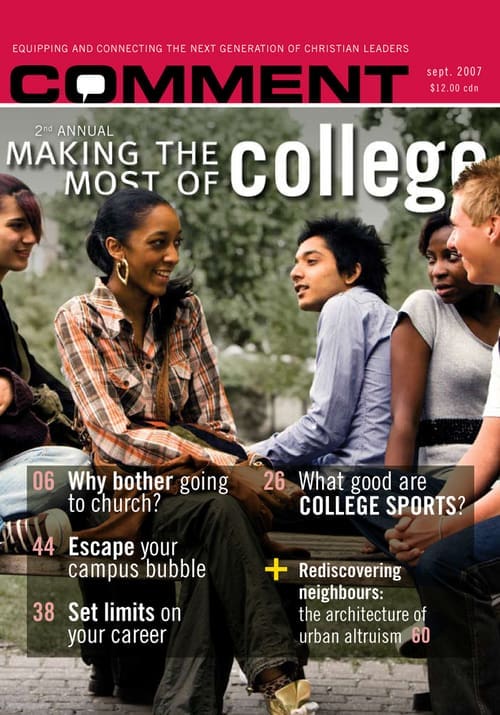
This is our second annual issue of Comment with the theme “Making the most of college” (or university). In 2006, we considered a number of Big Questions that young adults must answer, and practices that help answer those questions: “What do I love?” (and the asking of big questions in general); “What do I believe?” (and the reading of good books, learning from history, studying philosophy, and studying art); “Who are my friends?” (and making friends for life); and “What should I be doing with my life?” (and cultivating the skills of writing and leadership).
Following our March issue on commitment and our June issue on conviction, we focus our September issue on the cultivation of community: making and learning alongside the friends who will shape us. We hope you will also learn how to cultivate your convictions, how to lead, and how to seek the shalom of the city in which you live. And don’t forget delights like cheering on sports teams or dressing well!