
In public conversation, death is usually a “no-go zone.” Dealing with this subject flippantly is irreverent and disrespectful. Dealing with it respectfully exposes profound and deeply held differences. Talking about a world without “me” in it requires some skill in mental gymnastics—like imagining attending your own funeral. Yet the effort is deserved, since talking about death also changes our life priorities.
Last year, the British think tank Theos issued a report which suggested that discussing death more would decrease people’s fear of death. The Humanist Association cried foul, suggesting the study was a ruse that “invented a cultural problem which only religion could solve” in order to advance a religious agenda. Sociologist Reginald Bibby has been asking young Canadians their views on various matters, including death, since 1975. In Restless Gods, he observes that “it may well be that people are not taking the time to reflect on ‘life’s big questions’ to the extent they did three decades ago.”
Although fear of death can hardly be a recently-invented cultural problem, measuring how different people deal with this fear seems to be subjective. My nineteen-year-old son has attended one funeral: an aged great-grandparent. When I was his age, I had been to five funerals, two of them after sudden and tragic deaths. We recently talked about our first direct exposures to death and we each had vivid, emotional memories. I asked my father about his teenaged memories of dealing with death. He recalls attending half a dozen or so funerals, mostly of older folk but also one of a teenaged neighbour. Interestingly, however, it was the much more involved engagement in the grieving process which distinguished his experience from ours. In the rural Dutch village where he was raised, what we typically contract to professionals was cared for by the entire community. The deceased’s closest neighbour was responsible for overseeing the funeral arrangements, which included constructing a casket. The wake was held in the home with defined roles for neighbours, family members, and clergy. The town bells tolled during the entire funeral procession, and most of the community walked behind the horse-drawn cortege as it made its way from the home of the deceased to the cemetery. It was a communal event.
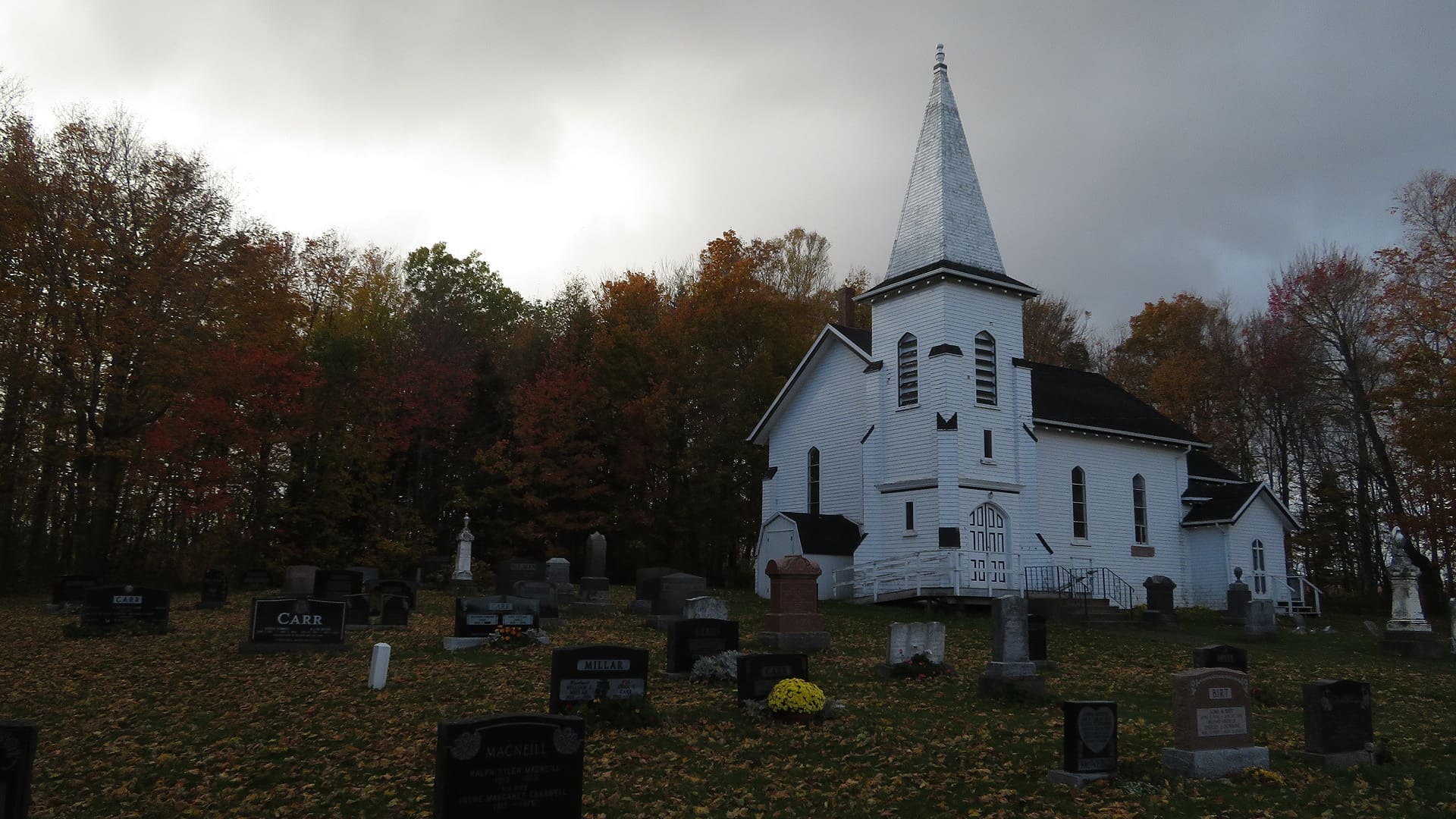
Thinking about our own death is obviously a very personal and spiritual matter and grieving the death of someone close to us is clearly experienced differently by those who knew the deceased in an intimate and personal way. As often as not, I attend a viewing or funeral today to express condolences and show support for people I know who are related to the deceased. My time and presence are all that is required. Increasingly of late, it seems that this communal participation in the funeral process is being separated from reality of death as funeral services have transformed into memorial services celebrating life and a private service is held for the internment or cremation. The community involvement in customary grieving processes generally requires much less direct exposure to the realty of death than it once did.
We deal with death less directly, but also less frequently. The advances of medicine have increased the average life expectancy, and the distance many of us live from our families means that we attend fewer funerals. A card or phone call becomes our expression of grief for the passing of an uncle, schoolmate, or former colleague. Unless we were close, no one expects us to purchase an airplane ticket to attend a wake or funeral.
I wonder what the impact of this less frequent and direct brush with death might be. Personally, I feel the pain of sin more than at any other time when I stand by an open grave. My theology teaches me that the wages of sin is death. I hate death. Never is it more real to me than when a casket is laid on a grave and the mourners have to turn to leave it behind. I see its coldness and cruelty in the faces and tears of those most intimately affected and I intensely realize just how serious sin really is.
Thankfully, my Christian theology provides me more. Services conducted in a Christian tradition provide a message of hope and triumph in the face of sin and death. Even as we prepare to leave the body behind, we recite the Apostles Creed, in which we declare that “Christ was crucified dead and buried. He descended into hell. The third day He arose again from the dead . . . I believe in the resurrection of the body and the life everlasting.” Christ rose from the grave—a miraculous historical truth, which if not affirmed as such renders our faith as vanity (I Corinthians 15.17).
I know these things to be true. My faith is tested when I try to understand how dust and ashes will be raised into a glorious body, just as I don’t fully understand how an acorn becomes an oak. But I know it does, and that gives me hope and reason to live on.
The impact of this truth is more than personal. What we think about death also shapes how we approach life. If there is no life beyond the grave, then whatever meaning one ascribes to life on earth is, by definition, limited. Logic dictates that we should live for the moment and enjoy life. Saving for the future, having concern for a legacy, participating in projects that are multi-generational in nature—few compelling arguments can really be mustered to support these activities. By the time the impacts of these activities are realized, we are not even there to observe. If it makes you feel good to give something to future generations, or if you want to be remembered, then do it; but beyond that, why bother?
Short-term horizons affect everything from our bank accounts to our construction projects. When things break down and decay, it will be someone else’s problem. We stand and marvel at the cathedrals that took centuries and generations to build, but we hardly stop to reflect on what it says about us that we cannot muster the vision to undertake these sorts of projects. Most fundamentally, not thinking beyond ourselves deprives us of our sense of purpose and hope.
I have no embarrassment in admitting to the humanists that encouraging people to think about death will encourage them to think about spiritual questions. In fact, that is a good thing, even if it causes discomfort. But, I would argue, it impacts more than spiritual questions. It will shape their priorities and attitudes about what is good and true and beautiful, what is worth saving for, and how much they are prepared to sacrifice for social goods that they may not participate in. It gives my work a purpose beyond my own satisfaction and short-term benefit, and provides a perspective that will define my citizenship and neighbourliness.
I don’t enjoy discussing death. It evokes uncomfortable emotions and painful memories. But I recognize its importance. It is part of the process of creation-fall-redemption-restoration, and puts what I do and who I am into a perspective beyond what I can touch and measure. That in turn gives what I can touch and measure greater texture and value. Ultimately, it helps me to truly live.