

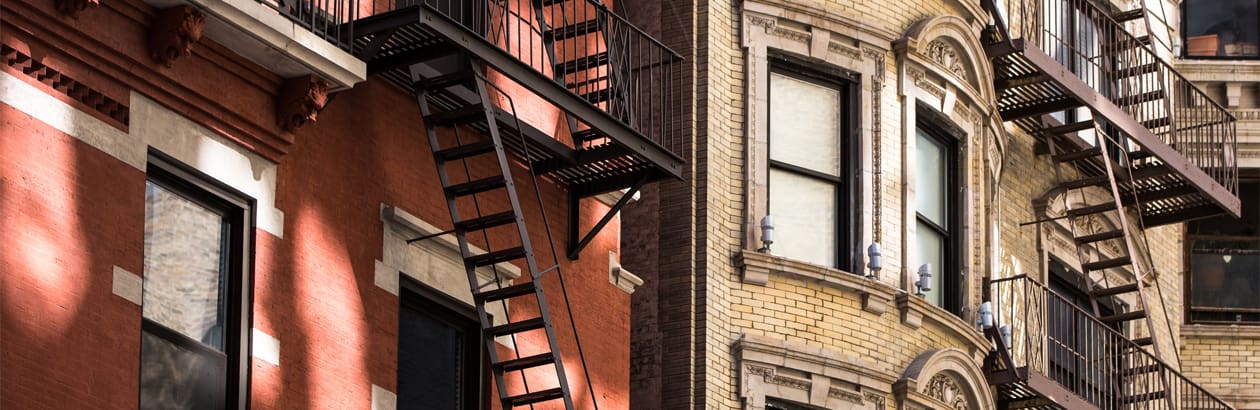
“Oh Mom,” moaned our six-year old daughter walking home from school, “look at all those poor people sitting in traffic!” I chuckled at her compassion for this strange car-bound population. What she does not yet grasp is that most families don’t live, as she does, in compact towns and city neighbourhoods where the freedom to walk everywhere is a way of life. While some families lack the opportunity, others have deliberately chosen not to live in towns or city neighbourhoods.
Mixed-used, pedestrian-friendly places promote a more rigorous public life, inspiring healthy community and engaged citizens precisely because, ready or not, face time with your neighbours is unavoidable. When your wall is someone else’s, getting along is imperative. These places often come with smaller, storage-challenged homes that confront America’s intoxication with material things. Also, raising kids in this environment encourages the development of city smarts and a respect for the unfamiliar.
More of us should be animated by an interest in places that serve people, in places that elevate the importance of people—the crown of creation—and encourage a sense of citizenship from the little tykes on up.
But most American households don’t see things this way. In a recent survey conducted by the National Association of Home Builders and the National Association of Realtors, 62 percent of American households said that a neighbourhood with “houses spread out” was an important feature in considering the location of a home. Thirty-nine percent responded that a location “away from the city” is important, while 47 percent wanted a “bigger home.” These desires clearly conflict with the nature of the tight-knit, pedestrian-friendly town, but we might also question whether they conflict with people’s desire to have a stronger sense of community.
My stroller is my car, the sidewalk is my classroom
Where does the sidewalk in front of your home lead you? Doing duty for both business and play, the sidewalk in my town can be a road that opens up enormous possibilities. The sidewalk’s functions are endless. Walking unhurried, the kids and I have had countless conversations about lost dogs, diseased trees, private property and the role of firefighters. It is an outdoor classroom as well as a place where the experience of people bumping into people delivers unintentional comfort, builds trust and mutual support, and unites neighbours to solve problems. The sidewalk is a place that convenes spontaneous social gatherings and provides miles of exercise. And, since health experts warn that today’s youth will have a shorter life-span than their parents for the first time because of obesity, incidental exercise is a good idea.
But most Americans are choosing the conventional residential development that depends almost entirely on cars, thereby encouraging sedentary, lonely children and mothers. Critics will say that the city is unsafe, but many threats to the family are inside the home in the form of cables, cords and wires that connect kids—literally—to everything except their parents. While such escapist attitudes are complex and not confined to suburban residential developments, it is aided by an environment in that children and teens are trapped inside a big house where everything, including play-dates, requires a car. Jane Jacobs writes that with the exception of the elderly, “Children are at the mercy of convenience more than anyone else.”
This drives our teens to want to drive as soon as possible so that they can at last feel some independence. But the resultant rise of teen auto-related deaths is alarming. The likelihood of a suburban teen dying in an auto accident is greater than a city teen dying from gun violence. So, by doing our best not to live near thugs and weirdoes in the city, we put our kids in the situation of having to spend more time on sometimes lethal roads and highways.
Of course mothers look forward to 16th birthdays, too, so that they can resign their position as “taxi-driver”—one that has American mothers logging in an unmerciful number of hours each year. Carting kids around to their activities for the bulk of your day, listening to their tapes and trying not to go crazy is not what soon-to-be moms are dreaming of—or expecting. And many moms are experiencing loneliness, depression and a little craziness. Being mom and being human can be a challenge. Families—mothers most of all—need to consider these costs when considering a home.
I stopped and talked with a former neighbour on the sidewalk who had moved away to the “family-friendly neighbourhood,” as the rumour goes. She was happy with their new home but surprised that nobody was around during the day. The residential neighbourhood de-populated in the morning and then re-populated late afternoon. A regular ghost town & so what do you do? My friend and her toddler were back walking the familiar streets in town, voting for people and place, rejecting the Big Empty.
Obvious and hidden costs
People often jump to the issue of affordability as their reason for living in exurbia. The sentiment goes something as follows: “We would love to move to Main Street, but we just can’t afford it!” Many of today’s new towns, the “new suburbanism,” as Joel Kotkin calls them, as well as the old main street towns and city neighbourhoods, what Eric Jacobsen calls “paleo-urbanism,” are exceedingly pricey and out of range for mainstream America. Clearly both examples of traditional town design, the old and the new, are valued where available.
But cost is not the whole story: the drumbeat is also about space. If a family’s price range enables them to live in a mixed-use town if they downsize, or sell a car, or reassess the family budget, which criterion—place or space—drives the decision? High density and mixed-used town design can mean less space than conventional housing developments. Today’s households value their space—to store amazing amounts of possessions—more than do they a smaller home in town.
That space holds top sway in the family housing market is unsurprising. In The Progress Paradox, Gregg Easterbrook says, “The leading complaint of home buyers is that there is not enough space for their possessions.” This insatiable desire for space is coming at a time when “the average number of people in the household has fallen.”
A storage-challenged townhouse can be a natural restrainer—and liberator. A thoughtful attitude to what we have enables good stewardship and easier enjoyment of what we own. Family psychologist John Rosemond has suggested that it is unreasonable to expect kids to pick up after themselves when today’s kids have so many toys. “The obvious solution is to buy young children fewer toys,” he writes. “I’ve been preaching this ‘less is more’ toy philosophy for most of my professional life, and those parents who have adopted it have never failed to praise the results.”
In contrast to needs, wants can never be satisfied. “The more you want, the more likely you are to feel disgruntled; the more you acquire, the more likely you are to feel controlled by your own possessions,” writes Easterbrook. So that in spite of the fantastic material gains of the past few generations, the “trend line for happiness has been flat for fifty years.”
The limits of a small home act as a conscience in this consumer-driven world. Our children learn a valuable lesson, not delivered in lecture-form, when they have to acknowledge that & well, the closet is full. It’s not a theory, but an attitude that we pass on to our kids.
Raising good citizens
Choosing space over place, and privacy over community, hampers a healthy public life. It’s a condition driven by having too much in our private worlds. Where we live affects how we live. And consequently, how we live greatly affects who we and our children are. Decisions thought to amplify life often suck up our freedom and our energy to respond to the responsibilities of citizen, neighbour and fellow human being.
I have a friend who understands this in a very real way. Her family downsized by 1,800 square feet and moved into town while child number three was on the way. It was the best decision they ever made, she says. We met while our children played in the school playground, which faces their historic townhouse. “We feel part of the neighbourhood, like we belong to the neighbourhood and the neighbourhood belongs to us.”
We crave permanence, but our choices say otherwise. “America is a country of pioneers. And, as Americans, we assume that the way to embody our dreams in a house is to build it new for ourselves,” writes Sarah Susanka in The Not So Big House. But she says this is changing. “Why do we love Europe so much?” she queries.
Tracking Alexis de Tocqueville’s steps across America for The Atlantic Monthly, Bernard-Henri Levy wonders about the “mystery of the modern ruins,” the remains of American cities destroyed by our anti-city ethos. Abandoned like a spurned partner, cities atrophy.
I know one little city-lover who would be puzzled by this picture. At school, our daughter was asked to define “neighbourhood.” She wrote confidently from her own experience: “A neighbourhood is a place where people live, work, and play.” Not bad for a six-year-old.