
A new tool by a Hamilton-based think tank is letting Canadians coast to coast see how money from church collection plates in their community translates to social good on the street. For every dollar congregations spend on programming, the community reaps $4.77 worth of benefit, according to Cardus estimates. Researchers call this divine social and economic spin-off a halo – and now the public can search for their town or city using the think tank’s tool. “These communities are generating good beyond themselves and that means everybody is kind of benefitting,” said Milton Friesen, senior fellow and program director at Cardus. “If they disappeared and you had to cover the common good benefits that they’re giving to the community, what would that cost you in a dollar figure?… Who would pick up that slack?” The interactive online tool is an expansion of study published last year that focused 10 Christian and non-Christian Toronto congregations. The Cardus team assigned market prices to the services each group provided – including daycares, recreation space, alcohol and drug addiction programming, family counselling, housing developments and helping refugees settle in Canada. Researchers interviewed church leaders and handed out detailed questionnaires for them to complete. The study was based on a similar project conducted in Philadelphia and was funded by the Canadian Council of Christian Charities, World Vision Canada, The Salvation Army and several other religious organizations. When the project leads tallied up all the programs, assessed their monetary worth and compared the final sum to the 10 churches’ overall operating budget, they found that for every dollar the congregations spent on initiatives, the community receives nearly $4.77 in benefits. “They’re not producing widgets or cars or things that can be directly linked to GDP…. But if they disappeared and the municipality or somebody had to put back all the stuff that’s missing, how much would that cost,” said Friesen. The newly-released Halo Calculator applies the figure uncovered in Cardus’ 2016 study to Canada Revenue Agency data for church groups across the country. St. Thomas’ 16 listed congregations had a combined operating budget of $2,546,336 in 2013. By Cardus estimates, the total dollar value of the services they provide totals more than $12 million. “This is all still very experimental,” said Friesen, adding the Halo Calculator numbers are only meant to be estimates. “We’re hoping to generate more research. We’re pretty sure this is not the end of the story.” Friesen wants the findings and the new online tool to spark conversations about the role religious institutions play in community development – especially at a time when some are facing an aging congregation and declining membership. “This will hopefully generate discussion between municipalities and faith communities,” said Friesen. “They are part of the social ecology of their communities. The look to be generative, they’re adding something, they’re not extracting. Let’s talk about what that means in terms of the long-term wellbeing of our communities.” — — — Halo Effect in Southwestern Ontario Dollar value of community impact London – 351 organizations – $811,032,649 Sarnia – 77 organizations – $143,333,940 Chatham – 67 organizations – $97,430,622 Woodstock – 56 organizations – $77,840,471 Aylmer – 22 organizations – $19,320,647 St. Thomas – 16 organizations – $12,146,023 Dutton – 11 organizations – $2,560,670 West Lorne – 5 organizations – $2,146,438 Source: Cardus calculation based on 2013 Canada Revenue Agency T3010 data
Think tank says religious group spending pays off nearly five-fold
June 15, 2017
The Important Role Of Faith In Canada’s History
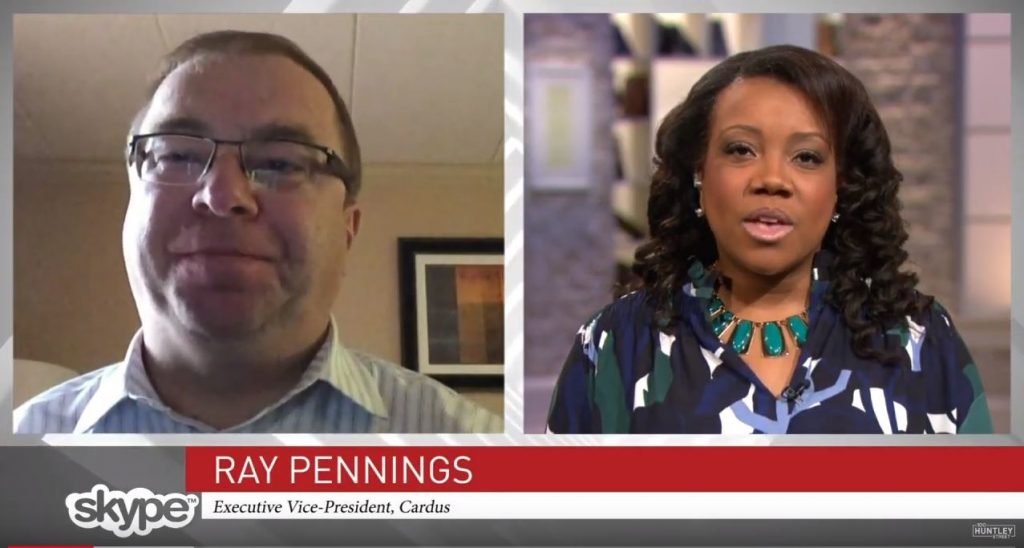
Ray Pennings joins Maggie John to discuss a recent online survey conducted by The Angus Reid Institute in partnership with Faith in Canada 150 - focusing on faith in Canada in the past, present and future.
June 13, 2017

Forgetting To Always Remember
June 8, 2017

Canadian cities’ faith communities cast a profitable ‘halo’
OTTAWA – Faith communities are not just good for the soul of a city — they also help its bottom line. “The role of faith communities in our country is profound,” said former Ambassador for Religious Freedom Andrew Bennett, who is now the director of Cardus Law, during a panel discussion June 1 on how cities are impacted by faith communities. Cardus used the event to also launch its Halo Project, researching the role of religious communities as “economy catalysts” in cities. The study concluded that for every $1 a religious institution budgets for various programs, a city receives $4.77 in “common good services.” The importance of faith communities goes back to Canada’s first inhabitants, to the founding of hospitals, schools, social services and universities, Bennett said. “It’s about the transmission of virtue, ethics, the moral sense these communities provide,” he said during a panel discussion to introduce the Halo Project. The first phase of the project, modelled after one done in the United States, examined 10 congregations in Toronto which spend $9.5 million per year in “their direct budgets,” said the Halo Project report. “But that is just the tip of the iceberg,” the report said. “The actual common good value those congregations produce, their ‘halo effect,’ ” is estimated to be more than $45 million per year. That figure is calculated from a formula that measured the effects of events like weddings and artistic performances, and programs like suicide prevention, ending substance abuse, housing initiatives and job training. Project researchers then extended their findings to other cities across Canada using data from the Canada Revenue Agency. The results are available through their Halo calculator (www.haloproject.ca). Based on the research, Toronto faith communities account for $6.7 billion annually. Calgary ranks second at $2.2 billion and Montreal at $2.1 billion. The faith communities also contribute to enhancing the moral life of the city by showing “as citizens we are responsible for one another,” said Bennett. He was joined on the panel by Cardus’ Social Cities program director Milton Friesen, who is responsible for the Halo Project, and Cardus Family director Andrea Mrozek, who spoke on the role families play in making good cities. “There is no simple ‘City-building for Dummies,’ ” Friesen said, describing the elements that go into a good city as “deeply complex.” It may not be a matter of “if we knew more we could do better,” but “we may need to know some things differently,” he said. Mrozek described the street she lives on has having a playground, but it is not used, and only few working families with children, she said. A glossy advertisement promises “hotel living” in a new condo development being built nearby. In the 2011 census, the number of one-person households surpassed that of families with children, she said. The fertility rate in Canada has dropped to 1.6 children per woman of child-bearing age, well below the 2.1 children needed to keep the population stable. There’s a trend towards “post-familialism,” past the “prior assumption that the family was the bedrock” of society, she said. If developers keep building condos designed for one person, or a maximum of two people, it reflects an “atomization” of society. “Do we need more families who make cities more habitable?” she asked. “Stable families bring more good to cities than cities can bring to families,” she concluded.
June 7, 2017

Milton Friesen on CBC Radio’s Edmonton AM
Milton Friesen spoke with Mark Connolly on CBC Radio’s Edmonton AM talking about the Halo Project.
June 5, 2017

Milton Friesen on the Danielle Smith Show
Milton Friesen, Program Director of Cardus Social Cities, explains the halo effect on the Danielle Smith Show on AM770 Radio in Calgary.
June 5, 2017

Study Puts Windsor’s Yearly Halo Effect at $270M
Milton Friesen appears on AM800 to discuss how the city of Windsor now has a dollar figure on the economic impact provided by religious based organizations in the city.
May 31, 2017

Ray Pennings on Roundhouse 983 in Vancouver
To listen, click here .
May 25, 2017

Ray Pennings on AM770 in Calgary
To listen, click here .
May 19, 2017
Media Contact
Phil Gaudreau
Director of Media & Public Relations