
The 2026 Shugart Lecture ft. Ayaan Hirsi Ali
Date: October 8, 2026
Time: 7:00pm - 9:00pm
Location: Downtown Calgary, Alberta (Venue to be announced)


2026 Lecture: Ayaan Hirsi Ali
Date: Thursday, October 8, 2026
Time: 7:00 – 9:00pm
Location: Calgary, Alberta (Venue to be announced)
Few stories capture the stakes of faith in the modern world more vividly than Ayaan Hirsi Ali’s. Born in Somalia, she survived female genital mutilation, fled a forced marriage, rose to serve as a member of the Dutch parliament, survived assassination threats following the murder of her collaborator Theo van Gogh, and spent decades as a globally recognized critic of religion.
And then, in 2023, Ayaan Hirsi Ali—one of the most famous atheists in the world—became a Christian.
Her conversion was not a quiet, private affair. It announced itself as a reckoning—with the limits of secular reason, with the question of what holds civilization together, and with the deeper hungers that neither Islam nor atheism had been able to satisfy. Hirsi Ali’s journey is the subject of her forthcoming book, Why I Am Now a Christian, and it is this journey—personal, intellectual, and civilizational—that she will share with us as our 2026 Ian Shugart Lecturer.
What makes Hirsi Ali’s voice singular is that her case for Christianity does not begin in theology or philosophy. It emerges from a life that led her unexpectedly to Christ: from the mosque, to parliament, through exile and grief, and into the slow discovery that the secular tools of the West—military, diplomatic, technological—cannot answer the question that undergirds them all: What is it that unites us? For Hirsi Ali, the answer lies in the Judeo-Christian inheritance that gave rise to free conscience, the rule of law, and the dignity of the person. It is a conviction forged by a lifetime of struggle and suffering.
In conversation with Brian Dijkema—Cardus’s President, Canada—Hirsi Ali will speak about what drew her to the Christian faith, how her conversion has shaped her understanding of the civilizational challenges now facing the West, and what it means to live—as Ian Shugart himself did—with convictions that are at once deeply personal and publicly consequential. In a moment when many formerly secular people are searching for cultural renewal, and returning to religion as the moral and cultural wellspring of Western civilization, Hirsi Ali will show us why Christianity cannot simply be a civilizational project—before all else, it is an encounter with a person who fulfills the needs of every human heart. That encounter reshapes us entirely, and it is only from the divine gifts of this relationship—mercy, forgiveness, and love—that a civilization worth building is born.
Thank you to our Title Sponsor

Thank you to our Maple Sponsors


Meet Ayaan Hirsi Ali
Our 2026 2026 Ian Shugart Lecturer

Ayaan Hirsi Ali, the Founder of AHA Foundation, is a women’s rights activist, champion of free speech, and best-selling author. She is also known as someone who speaks truth to power.
Ayaan Hirsi Ali is a Research Fellow at the Hoover Institution, Stanford University and founder of the AHA Foundation. Prior to joining the Hoover Institution, she was a Fellow at the Belfer Center’s Future of Diplomacy Project at Harvard University, and a Resident Fellow at the American Enterprise Institute in Washington, D.C.
Ayaan’s journey began in Somalia in 1969 where, as a young girl, she was subjected to female genital mutilation (FGM). From very early on, she questioned the subjugation of women she saw all around her; while listening to a sermon on the many ways women should be obedient to their husbands, she couldn’t resist asking, “Must our husbands obey us too?”
Ayaan’s path led her many places, but upon being forced by her father to marry a distant cousin, she fled to Holland and claimed political asylum. Once there, she worked her way up from being a janitor to serving as an elected member of the Dutch parliament. As a member of parliament, she campaigned to raise awareness of violence against women, including honor killings and FGM, practices that had followed her fellow immigrants into Holland.
In 2004, Ayaan gained international attention following the murder of Theo van Gogh. Van Gogh had directed her short film, Submission, a film about the oppression of women under Islam. The assassin left a death threat for her pinned to Van Gogh’s chest. This tragic event, and Ayaan’s life leading up to it, are all chronicled in her best-selling book, Infidel.
Ayaan has shown great courage, risking her life to expose the violence she sees around her. But she has done more than speak out. Ayaan has connected her life experiences, and the attention she garnered, to the AHA Foundation. She took action to protect women and girls from the violence she—and so many others—faced.
She has written several books including Infidel (2007), Nomad: from Islam to America, a Personal Journey through the Clash of Civilizations (2010), Heretic: Why Islam Needs a Reformation Now (2015) and The Challenge of Dawa (2017) and Prey, published by Harper Collins in 2021. Ayaan also started the Restoring the West Substack in 2026.
She received her Master’s degree in Political Science from Leiden University in the Netherlands.

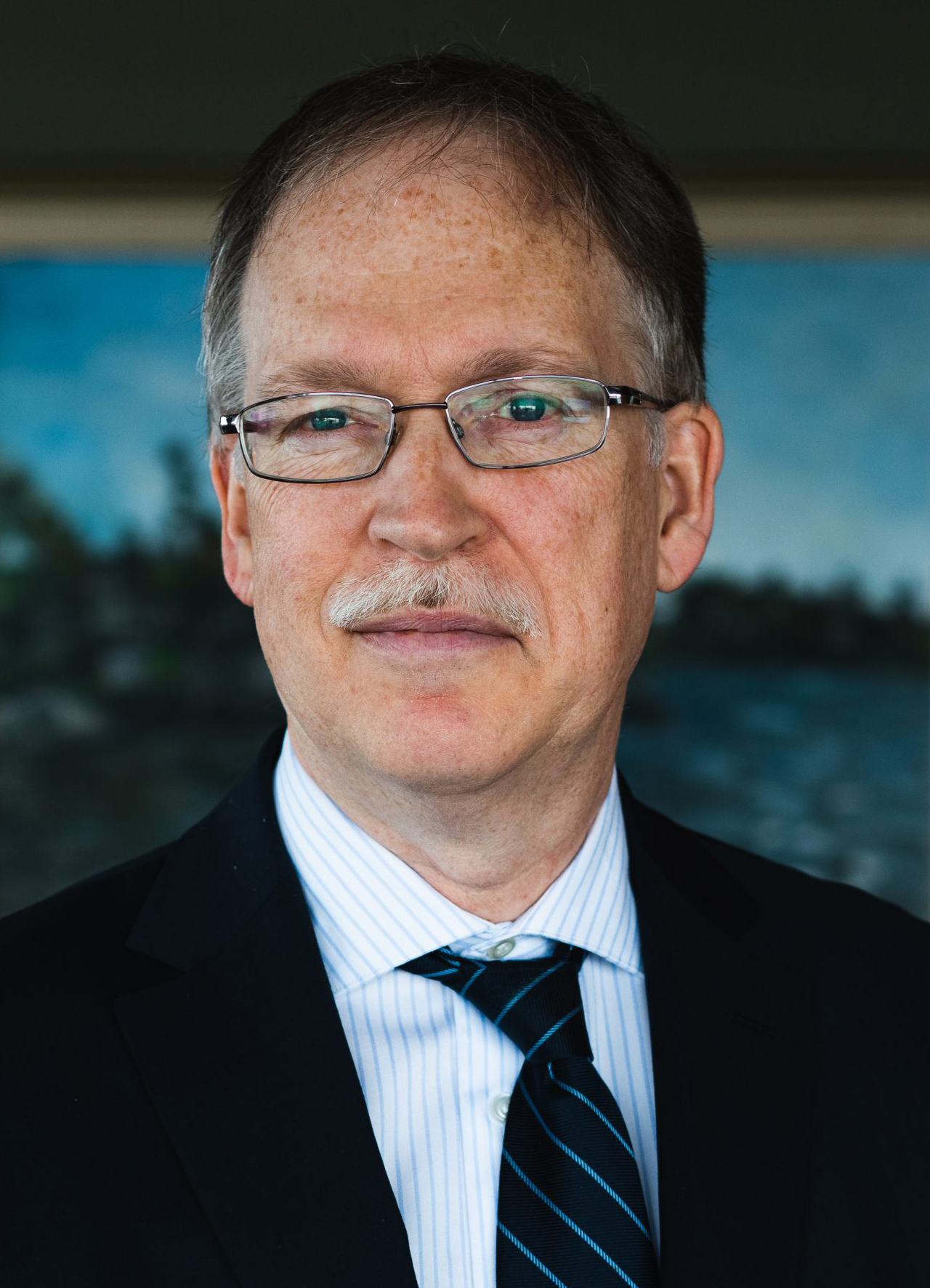
The Ian Shugart Lecture Series intends to honour the life and work of Ian Shugart by highlighting and exploring the creative possibilities, tensions, and realities that accompany the integration of faith and public life. The speakers of this series of annual lectures will take seriously the role that faith plays—even imperceptibly—in modern Canadian life, and how enduring commitments rooted in faith act as shaping forces of our life together. Ian was an exemplar of living his Christian faith in public life, and we want this lecture series to serve as inspiration for those seeking a better way to live their faith in public life. Ian’s life showed that it was possible, and we wish to honour him through this series.
Ian Shugart (May 31, 1957–October 25, 2023) is most widely remembered as a model Canadian public servant. His career spanned over forty years of service to Canada and ended with his appointments as the twenty-fourth clerk of the Privy Council and then as a Canadian senator. He died in office at the age of sixty-six, mourned by his wife, his three children, his colleagues, and all who had interactions with him in public life.
While everyone who met him describes Ian as a man of great dignity, Ian’s life, dedicated as it was to public service, was not preoccupied, motivated, or inspired by desire for dignitas, as it has been historically understood in classical political life.
His life and work were preoccupied, motivated, and inspired by a different sort of dignity. Not one rooted in actions or achievements, nor in desire for standing among peers or even recognition by history, but one rooted in seeing his fellow citizens as made in the image of God.