

Key Points
- Ontario is in a unique position because, unlike many other provinces, it has a relatively low-regulatory environment for independent K–12 education. This creates favourable conditions for new and innovative schools to be established. Since 2022, more than three hundred independent schools have begun operating in Ontario, representing a broad range of educational purposes and target communities. This growth reflects increasing demand for alternatives beyond the district (public) school system. This report analyzes these new schools through a website analysis supplemented by a survey of school leaders.
- Sixty-three percent of all new schools can be categorized as either Special Emphasis or Religious schools, with Montessori schools, Nature schools, Islamic schools, and Non-denominational Christian schools representing the largest subtypes.
- Educational delivery models are also evolving as emerging forms of schooling gain traction. Microschools, hybrid schools, and other flexible learning models are growing in popularity and are increasingly present within Ontario’s independent-school landscape.
- Our survey analysis found that many new schools operate on a small scale. Most enrol fewer than forty students and rely on a small number of staff members, who often take on multiple roles within the school.
- Although Ontario’s regulatory environment is favourable for new school start-ups, a large majority of survey respondents reported that opening a school was “extremely hard” and expressed significant concern about the long-term sustainability of their schools. Most report their success is due to the dedication of their staff, the involvement of their community, and a clear sense of their vision and mission, rather than to government support of any kind.
Introduction
It is a question that all parents confront: Where should our children go to school? What once seemed like a straightforward question has become increasingly complex. Should we send our children to a school that aligns with our family’s religious convictions? One that reflects our love for nature? Or perhaps one that is best equipped to cultivate our children’s academic talents? For North American parents, recent shifts in education and culture have made feasible an increasingly diverse array of schooling options. What was once largely a choice between district (public) schools, independent (private) schools, and traditional homeschooling has become a menu of a great variety of options, particularly within the independent school sector, where numerous subcategories and educational models have emerged.
These developments are situated within broader cultural shifts that have fostered dissatisfaction with established institutional regimes and have encouraged an entrepreneurial mindset grounded in choice and innovation. School leaders in the United States, in particular, operate within a policy environment that is highly conducive to educational experimentation and growth. While Canada’s education policy landscape is more institutionalized by comparison, its proximity to and cultural exchange with the United States has nevertheless contributed to a growing openness to innovation and entrepreneurship in Canadian schooling contexts as well.
Some scholars have begun to brand these developments as “emerging school models.” 1 1 For the last four years, the Program on Education Policy and Governance at the Harvard Kennedy School has held a conference on emerging school models. Taubman Center, “Emerging School Models”; McShane, “A New Crop of School Models.” Complete citations are provided for all sources at the end of this report. What is less understood is how lasting these changes will prove to be: whether they are sustainable in the long term and whether they portend deeper change to K–12 education systems.
In this paper, we set out to explore the landscape of emerging school models in Ontario through identification and analysis of school start-ups in the province. In November 2022, we published an overview of the entire landscape of independent schools in the province, titled “Naturally Diverse.” 2 2 Hunt, DeJong VanHof, and Los, “Naturally Diverse.” In the present study, we compare the data we had in 2022 with the most recent data available. We ask the following research questions:
- How many new schools have started and stayed open in Ontario between fall 2022 and fall 2025? What types of schools have started?
- Of these new schools, how many are microschools, learning pods, hybrid schools, or some other emergent education model?
- What are the primary characteristics of these schools (such as grade levels, size, and location)?
- What do school leaders or owners identify as the reasons for starting these schools, the factors necessary for their sustainability, and the ongoing challenges they face?
The US Context
Emerging school models have developed through the convergence of three primary trends: a gradual demographic shift within homeschooling and independent schooling communities, the shock to education systems caused by the COVID-19 pandemic, and regulatory environments that are increasingly receptive to alternative schooling initiatives.
Demographic Shift
Researchers have long documented the impact of persistent racial discrimination within traditional educational contexts as a factor that drives minority support for choice in education. 3 3 Coons and Sugarman, Education by Choice; Berner, “The Progressive Case for Educational Pluralism.” More recently, scholars have found that homeschooling demographics are shifting over time from mostly White families to a variety of family backgrounds. 4 4 Cheng and Hamlin, “Contemporary Homeschooling Arrangements,” 1459-61. For example, a growing number of Black families have decided to homeschool due to negative experience within district (public) schools. 5 5 Justice, “Promise, Protection, and Privacy,” 707–8. This increased interest in homeschooling has also been observed and documented among Hispanic families. 6 6 Cheng and Watson, “Demographic Characteristics of Homeschooling Households”; Justice, “Latinx Families Homeschooling.”
Families and students with special education needs have also begun to choose forms of emergent education. For those for whom full-time attendance at school is overwhelming or challenging, a “flexischooling” model, known also as hybrid schooling, has proven to be beneficial. Not to be confused with online schooling, to which the term “hybrid schooling” is commonly applied, the Hybrid Schools Project at Kennesaw State University in Georgia defines hybrid schooling as a model in which “students attend live classes fewer than five days per week in a physical building and are homeschooled the rest of the week.” 7 7 Griffin, “Flexischooling Children with Special Education Needs”, 864; Schafer ad Khan, “Family Economy,” 524; Wearne and Thompson, National Hybrid Schools Survey, 1. It is typical for the traditional school to set the curriculum, and for a parent or caregiver to carry out the work during the home portions.
Those with special education needs are not the only students who benefit from hybrid schooling. In regular surveys that track the growth of hybrid schools across the United States, Eric Wearne has found that a desire for religious education, a better learning environment, and smaller class sizes are among the top reasons parents choose this model 8 8 Wearne, “A Descriptive Survey of Why Parents Choose Hybrid Homeschools,” 364.
In public discourse, independent schools are commonly mischaracterized as elitist and only for the wealthy. One emergent type of independent schooling is microschools, which are distinguished by an approach to schooling that models the one-room schoolhouse and may blend a variety of approaches including a hybrid model. An estimated 750,000 to 2.1 million American children are educated in microschools. 9 9 Ohls, Covelli, and Schweig, “Microschools as an Emerging Education Model,” 2. Recent analysis of more than eight hundred schools reveals a diverse landscape: More than 75 percent of microschools indicated they serve student populations with neurodivergence or other special needs, and on average, the majority report serving families at or below the average income for their area. In fact, just 12 percent reported serving families above the average income. Since 48 percent of schools report charging between five thousand and ten thousand dollars in annual tuition for one child, and 26 percent report a tuition fee below five thousand, this form of education is increasingly accessible to low-income families. 10 10 Soifer and Soifer, “American Microschools,” 11–12, 17. Independent schooling is becoming an affordable option for the masses.
The COVID-19 Pandemic
The sudden shock of COVID-19 to education systems worldwide caused a rise in the number of homeschooling families. Distinct from the many who were educating virtually during school lockdowns, these families exited traditional schooling and began actively educating at home. In Canada, the number of students who were homeschooled rose by 51.7 percent, from 40,608 to 83,988 students in the 2020–21 school year. Similarly, in the US, self-reported homeschool rates rose to 11 percent of the school-aged population. 11 11 Statistics Canada, Number of Students in Elementary and Secondary Schools; Watson, “Homeschool Participation,” 446.
During these years, we began to hear about the formation of “learning pods,” in which one or two families banded together to provide home education, and subsequently, researchers and advocates have documented a widespread increase in the number of microschools, home education networks, and hybrid schooling models. 12 12 McShane, “A New Crop of School Models,” 9–10; Kennesaw State University, “The Hybrid Schools Project”; National Microschooling Center. The demographic shifts that had been slowly building over time experienced rapid growth as families sought out—and in many cases, created their own—solutions to school lockdown policies. Additionally, the formalization and institutionalization of online or virtual learning in the pandemic accelerated educational enterprise in technological solutions. The emergence of the term “edupreneur” to describe the creation and marketization of teaching tools sold by educators has ballooned into a plethora of technological products for learning, 13 13 Williamson, Valladares Celis, Sriprakash, Pykett, and Facer, “Education’s Sociodigital Promises.” adding to the complexity of the emergent education landscape. Aside from large corporate investment into education technology, there are increasing numbers of teachers or leaders—edupreneurs—who are seeking to meet changing educational needs by starting schools, non-profits, or companies related to education, such as tech or AI education programs.
Regulatory Environment
Another accelerant to the growth of the independent school sector across the United States has been a rapid expansion of both federal and state-level policies that direct government funds for schooling toward families through voucher programs, tax credits, and education savings accounts (ESAs). At the federal level, the Education Freedom Tax Credit has garnered bipartisan support. 14 14 Democrats for Education Reform,“DFER Urges Democratic Governors to Opt-In.” At the state level, many of the ESA programs that have been passed into legislation are universal policies, accessible to families regardless of income. The result of this increased access to educational options means that increasing numbers of families are choosing education outside of the local district (public) school context. Some estimate that up to a million students have exited district (public) schools since 2020, whereas enrolments in microschools and hybrid schools have grown to between 750,000 and 2.1 million students. 15 15 Dee, “Where the Kids Went,” 1; Ohls, Covelli, & Schweig, “Microschools as an Emerging Education Model,” 2. This policy context, and the relative ease with which families can access increased funding, has likely led to an increase in innovative models and structures for education, particularly in jurisdictions where the regulatory burden of entry to the system is not high.
The Canadian Context
Across Canada, provincial contexts differ. However, in general, Canadians experience a higher degree of institutionalization within K–12 education than their counterparts to the south. To date, no student-directed funding model such as voucher programs or education savings accounts (ESAs) exists in Canada, and the strength of the public sector teacher unions across provinces continues to ensure institutional stability. Additionally, there is a more fundamental difference between Canadian and American education systems, which stems from their origins. The American common school (public school) made no accommodation for minority populations—faith or otherwise—upon its establishment. 16 16 Garnett, “Parental Rights,” 82–91. By contrast, though the American vision for a common school system was influential on Ontario education pioneer Egerton Ryerson and others, Canada’s district (public) systems have made space for minorities since Confederation and tend to exhibit within them a higher degree of pluralism than the American common schooling system.
This history has developed differently in different provinces, but the result is that in all large provinces except Ontario, accommodation of minority languages and religious education is realized through public funding for independent schools, and in some provinces, in the incorporation of Francophone and Catholic school systems into district (public) education. In British Columbia, Alberta, Saskatchewan, Manitoba, and Quebec, varying levels of funding are provided to independent schools as a percentage of public-school per-student operating costs. Independent schools that receive this funding are subject to regulatory requirements of their province: to teach provincial curriculum, to hire provincially certified educators, and to provide audited financial statements and annual operating plans where necessary. Schools are free, in return, to educate according to their deeply held convictions and specific educational philosophies.
In Ontario, no funding is provided to independent schools. There are four district (public) boards of education that are supported by public funds: English, French, French Catholic, and English Catholic. All other schools operate outside these mainstream systems. This arrangement has persisted since Confederation, and challenges to it have, to this point, failed.
The lack of public funds for any alternative form of education in the province is accompanied by a lack of regulation and an open environment for independent schools to operate within. Dubbed a “wild” landscape by scholar Derek Allison, independent schools in the province are diverse and highly subject to turnover and change. 17 17 Allison, “School Choice in Canada,” 304. The tendency that exists within Canadian education policy conversation and public commentary to characterize Alberta as the most “American” province in Canada simply because of the breadth of educational opportunity it provides and because it is the only province to adopt publicly funded charter schools, is a mischaracterization that does not take regulatory environments into account. Government support for many educational options in Alberta certainly exists, but it is highly regulated. Rather, it is Ontario that offers the most comparable education landscape to the United States—isolated independent schools that operate in relief to a hegemonic district (public) school system.
This reality also means that it is a fruitful place to study emerging education models. The low regulatory burden makes it possible to start new schools easily. Ontario is a highly diverse province, and the growing grassroots interest in alternatives to district (public) education has meant prolific growth in independent education and homeschooling in recent years. Indeed, the rate of growth in Ontario in independent school enrolment has been significant: 4.6 percent growth from the 2021–22 to the 2022–23 school year and 5.8 percent growth from the 2022–23 to the 2023–24 school year respectively, from 150,831 to 167,802 students. 18 18 Author’s calculations based on Statistics Canada, Number of Students in Elementary and Secondary Schools.
Methodology
We chose to focus on schools that were founded between January 2022 and December 2025 and remained open during that period, as our previous study analyzed all available data up to April 2022.
Before beginning our analysis, we assembled as complete a list as possible of Ontario schools that met the above criteria. Our primary data source was a list we obtained from the Ontario Ministry of Education in April 2022 for use in our previous study, along with the most recent data from the Government of Ontario’s publicly accessible list of private schools. 19 19 Ontario Ministry of Education. Private School Contact Information. We then supplemented this list with information from SchoolCred, which tracks private schools in Ontario that are active, have closed, or whose permission to grant Ontario Secondary School Diploma (OSSD) credit has been revoked, and cross-referenced it with the Ontario Ministry of Education’s list of private schools that have closed. 20 20 SchoolCred, “About SchoolCred”; Ontario Ministry of Education, Private Schools That Have Closed. SchoolCred compiles its data by directly importing open-source information from the Ministry of Education and supplementing it with data obtained through Freedom of Information requests. We removed from our list any schools that were closed or that did not have a publicly available website. If a school was active and had a publicly accessible website but there was no contact information for the school leader/owner and we could not find such information in the data sources mentioned above, we removed that school from our list. From an initial compilation of 373 schools, we were left with 322 schools for analysis.
The first stage of our study consisted of a website analysis of all 322 schools. We applied the same framework analysis methodology and school typology developed in our “Naturally Diverse” research published in 2022. This involved sequentially familiarizing ourselves with the data, identifying a thematic framework, indexing and charting the data accordingly, and then mapping and interpreting our findings. A concise version of the school typology is found below; the full definitions of school types, with citations, are available in the earlier paper. 21 21 Hunt, DeJong VanHof, and Los, “Naturally Diverse.” The information gathered in our list was verified through the website analysis, and any discrepancies were noted.
The present study diverges from the previous one in a notable way: Where schools that were classified as Auxiliary Emphasis schools were excluded from analysis in 2022, we include them in the analysis for this study. This is to reflect the fact that new school start-ups frequently begin by offering auxiliary services alongside single courses or grade-level schooling programs and grow their schooling offerings in part through the auxiliary services provided. Therefore, we considered them an important part of the landscape of emerging school models.
Using our list, we then sent a peer-reviewed set of survey questions to all 322 independent school principals and school leaders. The goal of the survey was to gain a deeper understanding of the inner workings of new independent schools. Of the 322 schools contacted, 44 responses were received, including 27 complete responses and 17 partial responses. From the 27 completed surveys, we further narrowed the sample to 22 usable responses.

Limitations
While this paper captures the number of schools that opened and stayed open between the fall of 2022 and the fall of 2025, we were unable to include in our study schools that opened and subsequently closed within that time frame. It is worth noting that the Ministry keeps an ongoing list of independent schools that have closed, and that a portion of the schools that have closed would also have opened within our time frame. Additionally, it was not within the scope of this paper to collect data on the number of families who have notified their local school board that they are homeschooling, but who may have formed informal learning pods or microschools within the home education sector. Therefore, this paper is likely an underrepresentation of the innovation of the sector and the grassroots interest in emergent education models.
It is also possible that some schools that did not fit our study’s criteria were still included in our analysis. This occurred because data from the Government of Ontario website and SchoolCred are drawn from mandatory annual Notice of Intent forms that schools submit to operate in a given school year. When a school undergoes a name change or is issued a new Board Identification number by the Ministry of Education, it may appear as a new school at the point of reapplication, even when the school is, in practice, a continuation of an existing institution. Similarly, schools that open new campuses or locations may also apply for and be issued new Board Identification numbers by the Ministry of Education for these expansions. In these cases, schools that explicitly identified a founding year prior to 2022 were removed from the sample.
Finally, it is important to note that the data collected by the Government of Ontario, SchoolCred, and our website analysis rely on self-reported information. In the case of website-based analysis, there may be a disconnect between the aspirations, vision, values, and programs presented online and those enacted in day-to-day practice. As a result, school classifications based on publicly available descriptions may not fully capture how schools operate. For example, a school’s website may prominently feature individualized learning yet provide limited evidence of how this commitment is consistently enacted in daily practice. This gap may be particularly evident in smaller or newer schools that lack the resources or institutional capacity to fully realize their stated aspirations. To mitigate this limitation, we followed the same procedure that is laid out in our 2022 study: We ensured that there were multiple touch points by both researchers verifying the data, we focused on looking beyond general website statements to see if a school’s programs supported the typology we assigned to it, and each researcher reviewed the other’s interpretations and we discussed and resolved any differences to improve consistency and reliability. We further refined the typologies used when assessing our new dataset to better reflect the diversity of emerging school models and to improve consistency across cases. While these steps do not eliminate the limitations inherent in self-reported data, they strengthen the reliability of our categorizations and increase confidence in the patterns reported in the analysis.
Findings from Website Analysis
Using information provided on the school’s website, we categorized and analyzed the school according to school type and subtype, region, school level, program type, and association membership, and the reasons or rationale offered for the school start-up.
Distribution by School Type
Table 1 demonstrates the overall frequency of schools according to primary, secondary, and tertiary school types. Figure 1 provides the frequency of schools according to primary type. The majority of schools (129, or 40.1 percent) are Special Emphasis schools, followed by Credit Emphasis schools (95, or 29.5 percent), and Religious Schools (74, or 23.0 percent). Combined, Religious or Special Emphasis schools make up 63.0 percent of new school start-ups.
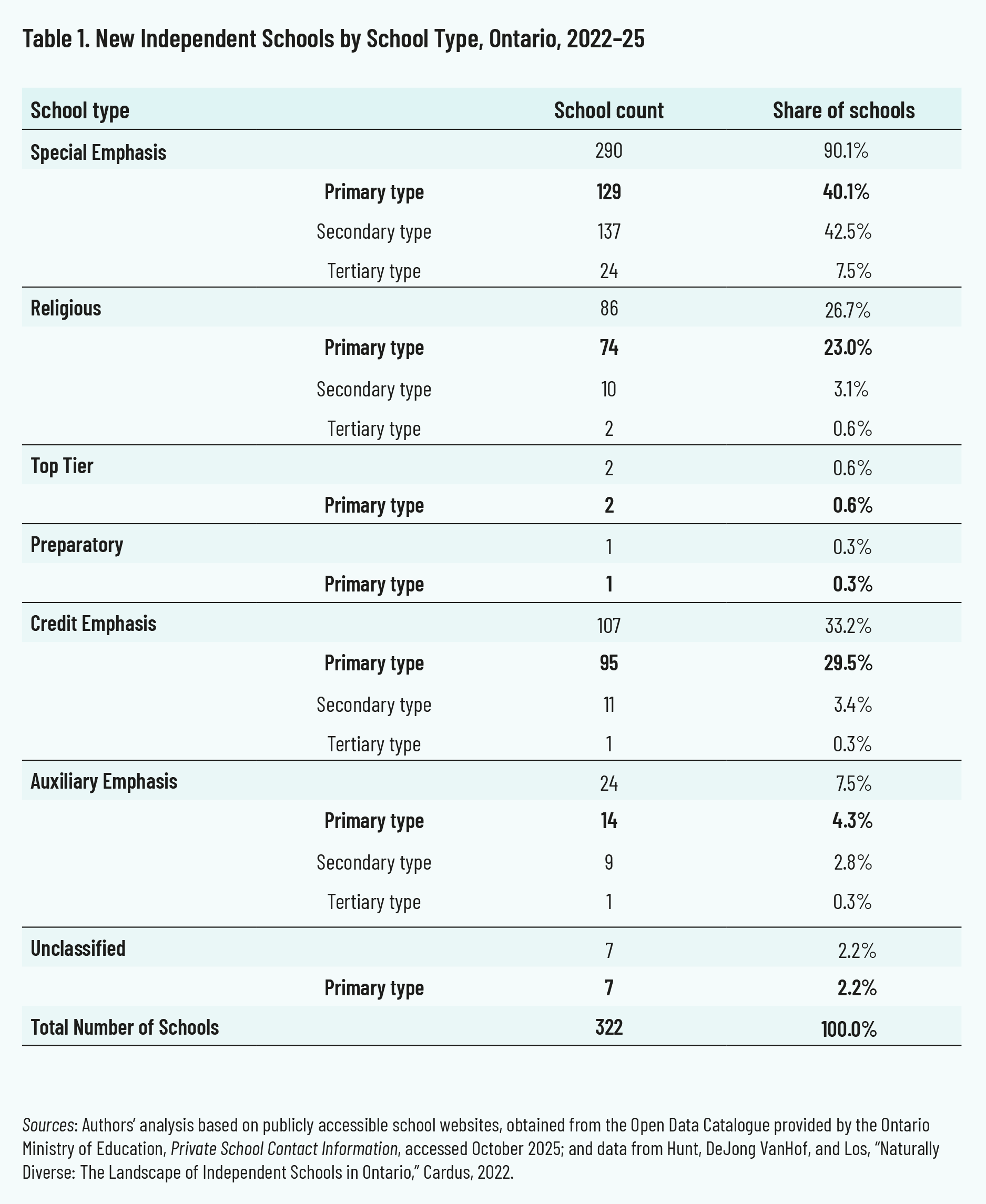
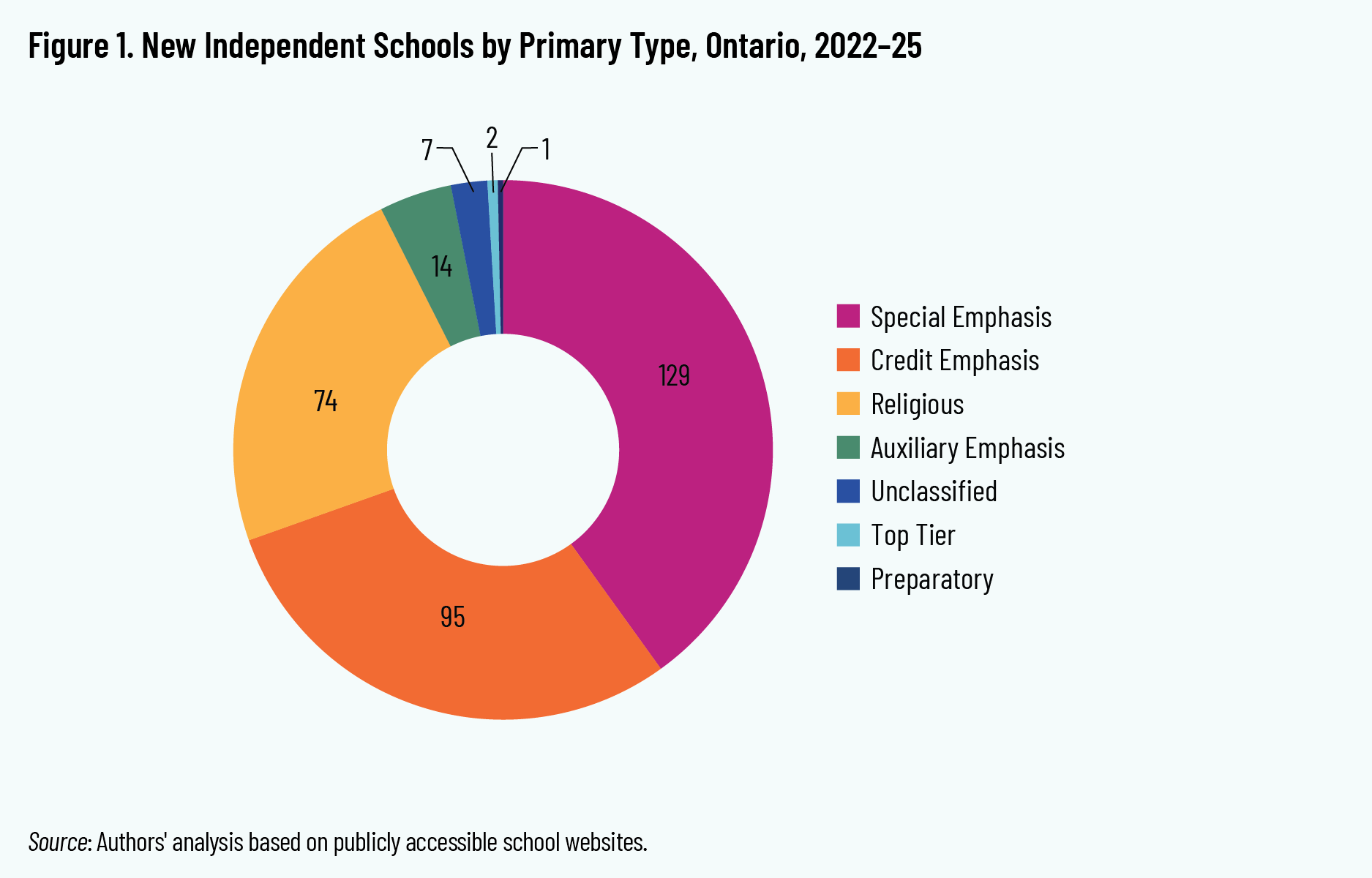
Evidently, Credit Emphasis schools make up a substantial portion of new school start-ups. This likely reflects, at least in part, the high rate of turnover that characterizes this segment of the sector. Many Credit Emphasis schools market the Ontario Secondary School Diploma (OSSD) to international students, including students living overseas, and new school start-ups may be a response to increased demand within these populations.
In a previous research paper, we examined the legitimacy of Credit Emphasis schools in Ontario and found that the majority of schools operating for less than five years received weak to modest legitimacy scores. 22 22 DeJong VanHof, “Can We Call Them Credit Mills?” 23. This suggests that the proportion of new Credit Emphasis schools may be inflated, as low barriers to entry and high turnover rates may result in frequent openings (and closures) over a short period of time. A deeper analysis of Credit Emphasis program models, student outcomes, and legitimacy, would be valuable, but falls beyond the scope of this paper. For this reason, we primarily focus the remainder of the analysis on Special Emphasis and Religious schools, which constitute most new start-ups outside the Credit Emphasis category.
Distribution by Special Emphasis Subtype
Our typology includes subtypes for Special Emphasis school types, a breakdown of which is found in figure 2.
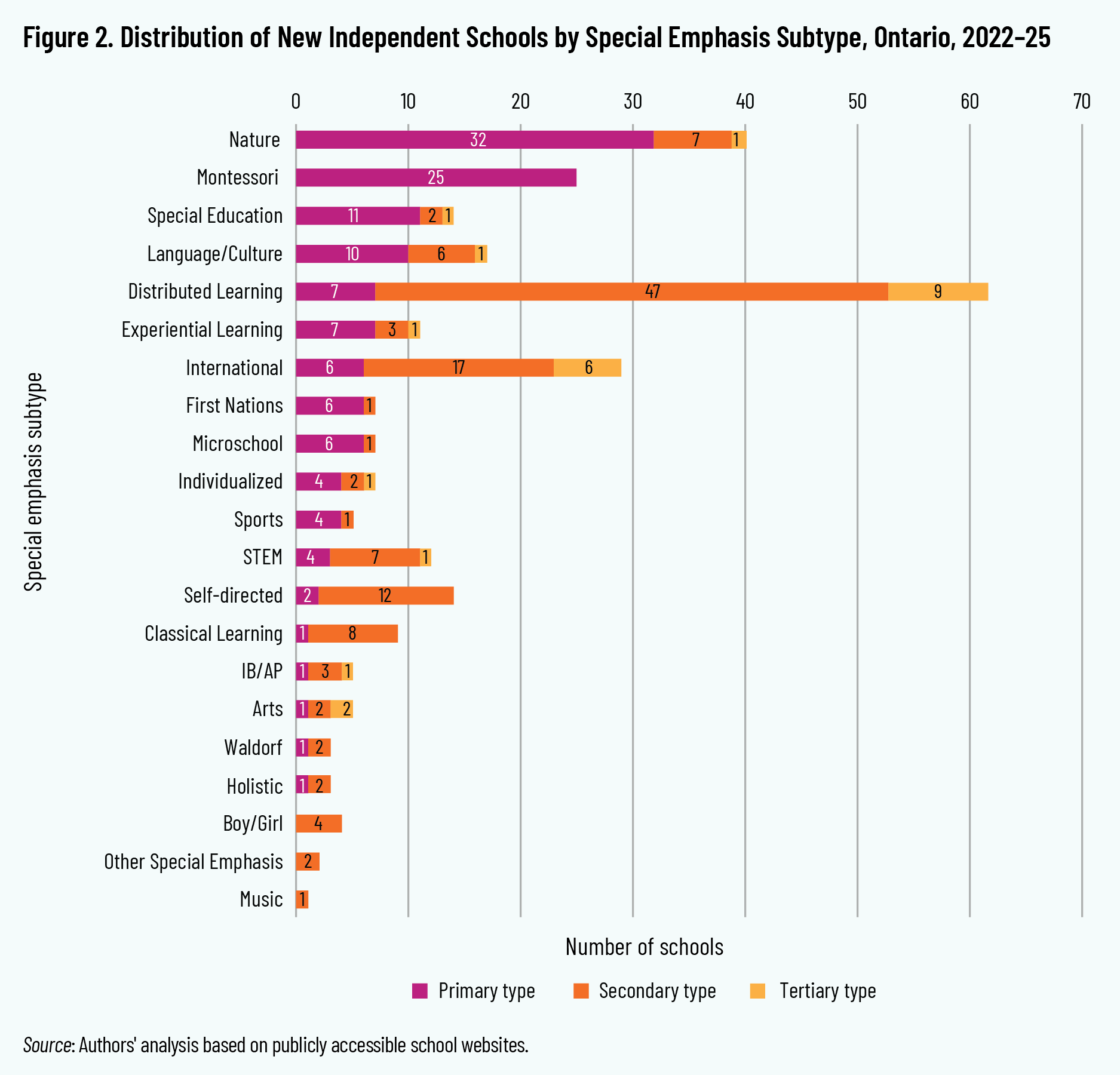
In terms of sheer volume, Distributed Learning is the most common Special Emphasis subtype, yet it rarely appears as a school’s primary type. Instead, most schools in our dataset were categorized as having Distributed Learning as a secondary emphasis. This pattern likely reflects the fact that distributed learning functions primarily as a mode of delivery, while other types and subtypes more often provide the school’s pedagogical foundation and core identity.
Conversely, the Nature subtype (32 schools, 25.0 percent) ranks first among Special Emphasis primary subtypes, followed by Montessori (25 schools, 19.5 percent). Unlike Distributed Learning, both of these subtypes represent pedagogical philosophies rather than delivery structures. Notably, 38.6 percent (22 schools) of schools with Nature as their primary subtype are also categorized with Distributed Learning as a secondary emphasis. In contrast, no schools that we classified as Montessori as their primary subtype also had Distributed Learning as a secondary emphasis. This suggests that while many independent schools are pairing a clear educational philosophy with a flexible delivery model, some pedagogical approaches are simply more compatible with distributed delivery than others. The Montessori model emphasizes hands-on, communal learning within a carefully prepared environment, which is an approach that is difficult to translate into the hybrid or remote formats that often characterize distributed learning. This may offer one explanation for why most Montessori schools in our dataset remain relatively pure in their typology: Among schools assigned the primary type Montessori, the majority (12 schools, 63.2 percent) did not provide sufficient evidence for us to assign a secondary classification, whereas distributed learning may be a more common secondary classification for other school types. When Montessori schools do include a secondary emphasis, it tends to be something complementary, such as Nature (3 schools, 15.8 percent) or Language/Culture (1 school, 5.3 percent).
We also observed a strong relationship between the International subtype and Credit Emphasis schools. Almost all schools (16, or 94.1 percent) with International as their secondary type, and all schools (6, or 100.0 percent) with International as their tertiary type, had Credit Emphasis as their primary type. This aligns with findings from previous Cardus research, which showed that many Credit Emphasis schools explicitly market the OSSD to students living outside of Canada, as well as to international students residing in Canada. 23 23 DeJong VanHof, “Can We Call Them Credit Mills?” 39. Many of these schools also provide services tailored to international student needs. While the few schools that have International as a primary subtype (6 schools, or 20.7 percent of all International-type schools) are less heavily concentrated within the Credit Emphasis category, half of them (3 schools) still have Credit Emphasis as a secondary type.
Notably, over half (12, or 57.1 percent) of Special Emphasis subtypes appear in fewer than 10 schools total (or less than 3.5 percent), whether as a primary, secondary, or tertiary type. This likely reflects a mix of factors. Some subtypes may be highly niche and therefore have limited demand, while others may face significant barriers to entry. For example, sports-focused schools often require specialized facilities and infrastructure (e.g., a hockey rink, swimming pool, gymnasium, or training centre), which limits how easily these models can be replicated. Regardless of the cause, the breadth of Special Emphasis categories points to the increasing diversity and fluidity of the independent school landscape, signaling that many families and founders are searching for alternatives to one-size-fits-all schooling.
Distribution by Religious Subtype
Our typology also includes subtypes for Religious school types, a breakdown of which is found in figure 3.
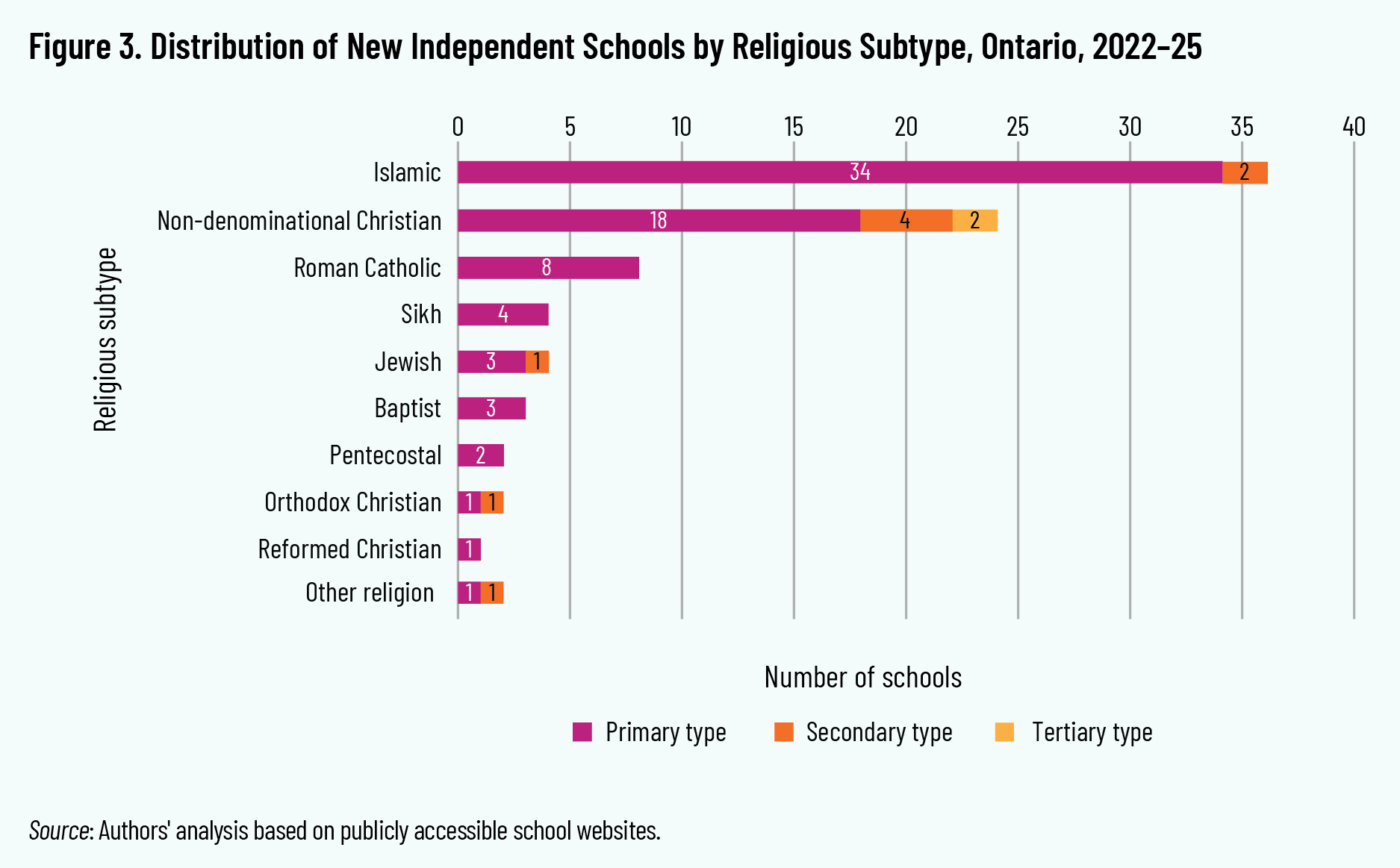
Religious subtypes most commonly appear as a school’s primary type, unlike Special Emphasis subtypes, which were distributed more evenly across primary, secondary, and tertiary categories. This likely reflects the fact that religion is typically understood as a personal identity rather than an educational add-on that can be layered onto an existing model. In our dataset, all eighty-six religiously affiliated schools (100 percent) integrated their faith tradition in at least one of the following ways: the school’s mission, vision, and values; its target audience and community orientation; its curriculum and instructional content; and its daily routines, rituals, and broader school culture.
Since it takes a considerable amount of time to get a new school up and running, the development of new schools tends to be a lagging indicator of broader cultural, and in this case, religious, shifts. Figure 4 shows the religious distributions of Ontarians in percent change from the 2011 to the 2021 census.
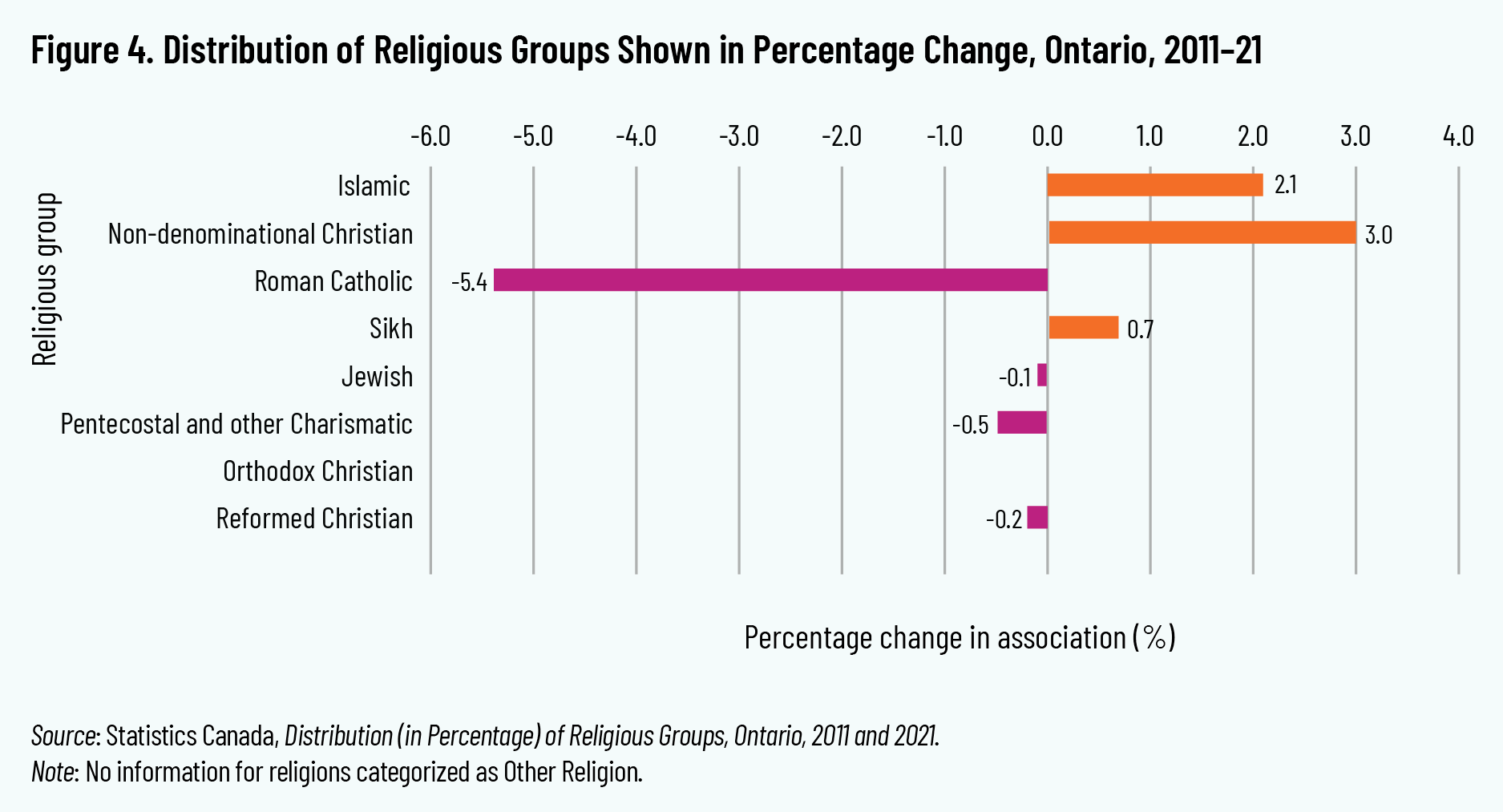
When comparing figure 4 with the distribution shown in figure 3, a clear pattern emerges: The two religious subtypes with the highest number of new school start-ups, Islamic (36) and Non-denominational Christian (24), are also the two religious groups that experienced the largest percentage increase between 2011 and 2021, according to Statistics Canada. 24 24 Statistics Canada, Distribution (in Percentage) of Religious Groups. While the relationship between population-level religious growth and the number of new religious school start-ups is not perfectly aligned across all groups, the broader trend is difficult to ignore. Taken together, these findings suggest that school founders may be responding to shifting religious demographics and renewed cultural attention to religious identity, particularly among communities that are growing or becoming more visible within Ontario.
Somewhat counterintuitively, Roman Catholic ranks third in the number of new school start-ups, despite experiencing an overall decline in religious affiliation between 2011 and 2021. Although this decline is the largest percentage change in religious affiliation during that period, this demographic shift does not appear to have translated into lower levels of new school formation. Catholic schools are in a unique position, as there are also publicly funded Catholic schools. So why has there been a comparatively large increase in new independent Catholic school start-ups, despite the declining percentage of people in Ontario that identify as Catholic? One possible explanation is that most public Catholic schools draw in both Catholic and non-Catholic students, whereas independent schools may exercise greater discretion in shaping their enrolment policies and community expectations in line with their mission. For this reason, public Catholic schools face unique pressures to accommodate a broad and diverse student population, which can make it more difficult to maintain a clearly articulated Catholic identity in practice. Independent Catholic schools, by contrast, can more explicitly define their values, enrolment criteria, and school culture around a particular understanding of Catholic belief and practice. In this sense, the growth of independent Catholic school start-ups is not a function of population growth; it may instead reflect a desire among some families for a more intentional, cohesive, and explicitly Catholic schooling experience than what they perceive to be available within the publicly funded system.
Growth among the remaining Religious subtypes appears much more modest, with fewer than five new schools for each subtype, which matches the fact that these religious groups have experienced less growth than Muslim and non-denominational Christian groups have.
Auxiliary Emphasis Schools
While we have not assigned subtypes to Auxiliary Emphasis schools, we categorized fourteen Auxiliary Emphasis schools according to their main offerings, which are provided in table 2. Just under half (six of fourteen, or 42.9 percent) provide tutoring services as their main offering, followed by adult education and after-school program offerings. One Auxiliary Emphasis school is a travel school. Within the Other category, one school offered land-based curriculum to Indigenous students for high school credit, and another provided mental health and learning support for neurodiverse students in a youth home.

Reasons for School Start-Up
To understand the motivation for new school start-ups in Ontario, we analyzed websites for direct statements that indicated the reason the school was begun. Statements such as “We began in order to . . .” or “Our school offers . . .” or “[School Name] was founded to . . .” were identified, and an initial list of reasons developed. Table 3 provides the frequency distribution of the reasons for start-up among new independent schools.

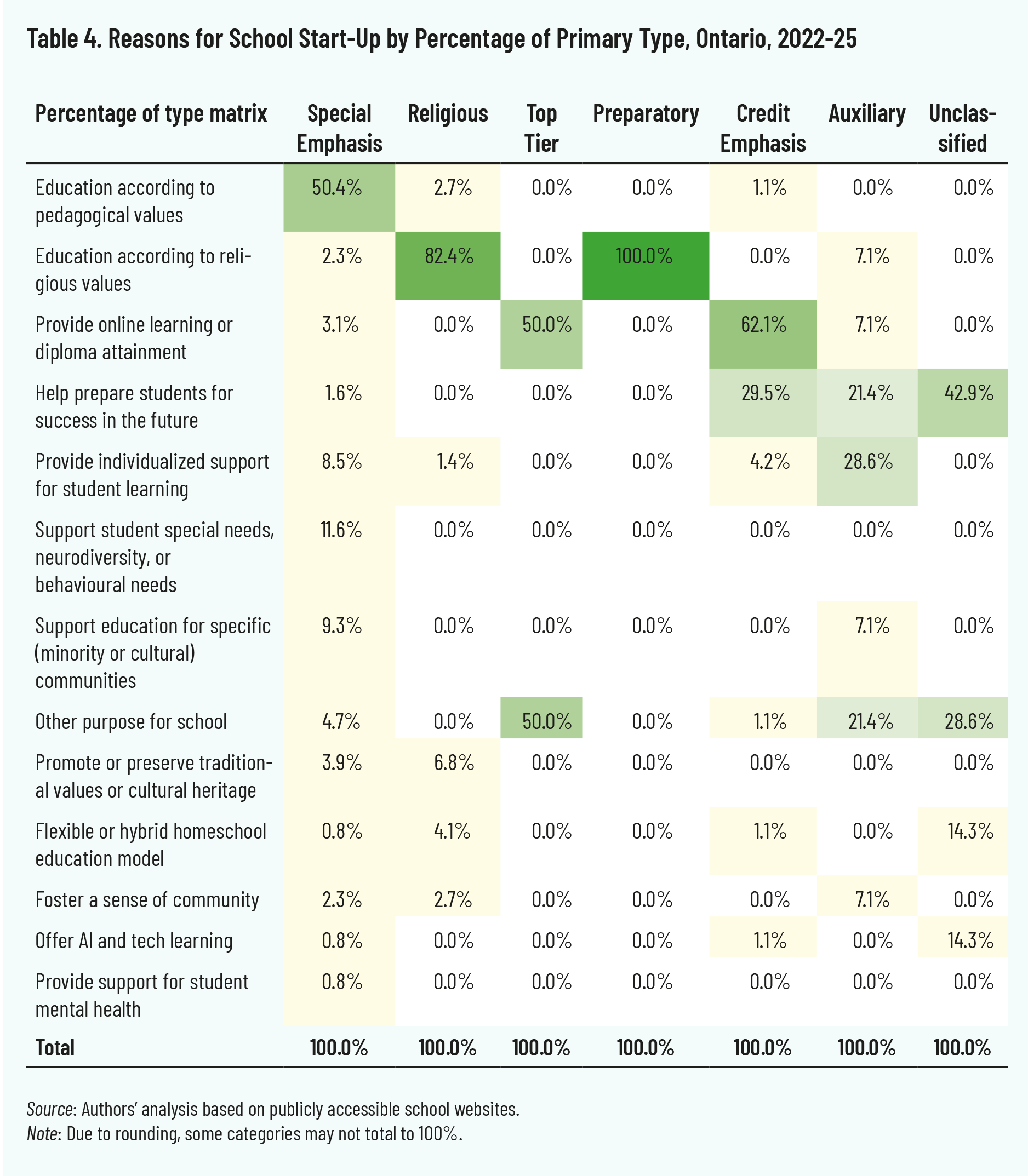
We anticipated a high correlation between possible reasons for starting a school and school type, since both are related to the purpose of the school. Table 4 demonstrates the distribution of reasons for school start-up across school type. Special Emphasis schools demonstrate the most diversity in reasons for school start-up, perhaps somewhat intuitively aligned with the array of subtype emphases. After “education according to pedagogical values,” the most frequently selected reason for school start-up was support for students with neurodiversity, behavioural needs, or special needs (11.6 percent).
Distribution by Region
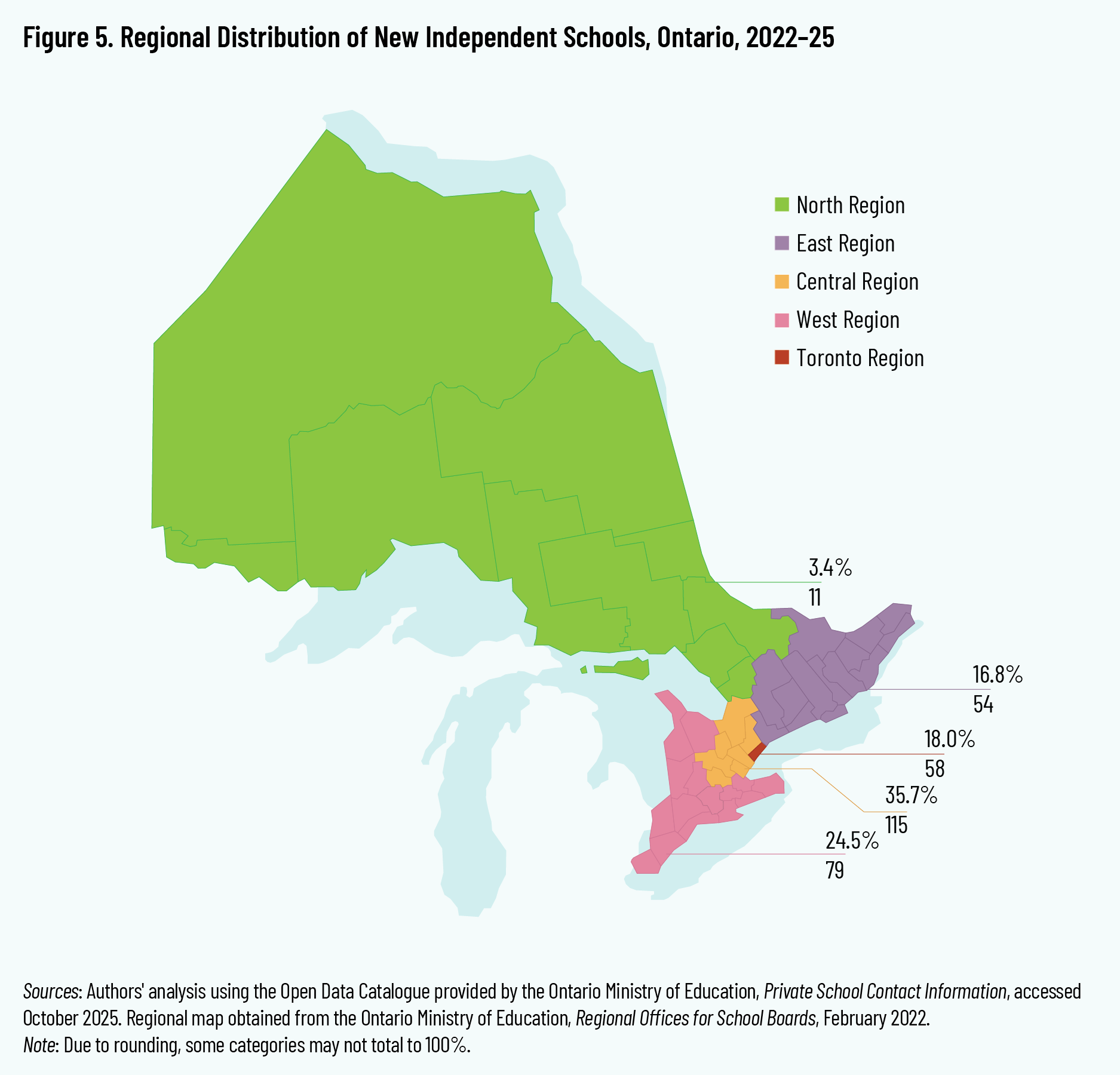
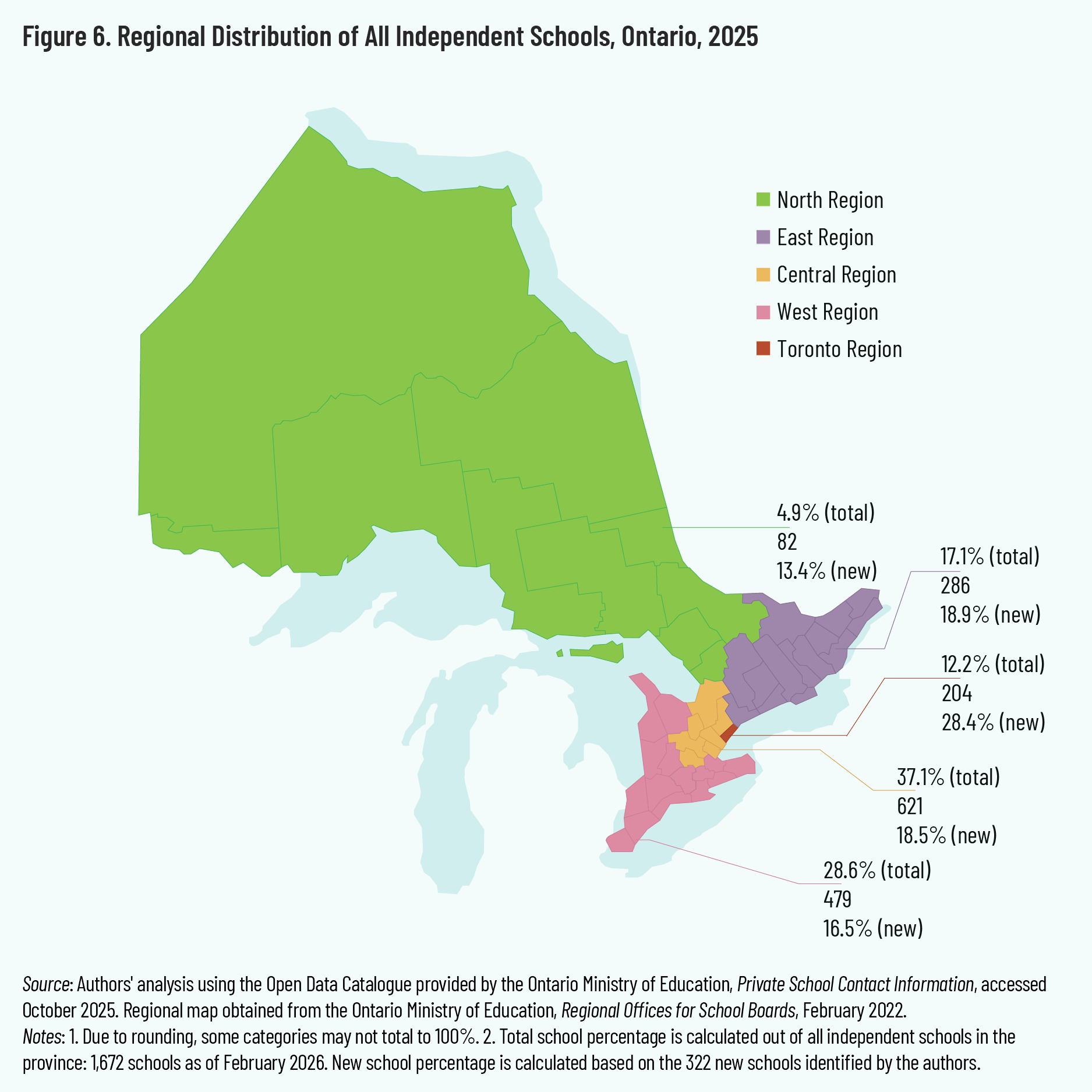
The regional distribution of new schools in Ontario is shown in figure 5. New independent schools are found in every region of the province. Just over half (53.7 percent) of new schools are concentrated in the Central and Toronto regions. One in four (24.5 percent) of new independent schools are found in the West region, followed by 16.8 percent in the East region. Finally, 3.4 percent of new independent schools serve communities in the North region.
When the regional distribution of new schools is compared to the overall regional distribution of independent schools (figures 5 and 6), we find that the expansion of new schools reflects a similar distribution as the overall distribution of independent schools in the province. The one discrepancy is the Toronto region. Whereas 12.2 percent (204) of all independent schools are located in the Toronto region, 18.0 percent of new independent schools are in the Toronto region. This means that 28.4 percent of independent schools in Toronto are new independent schools (figure 6).
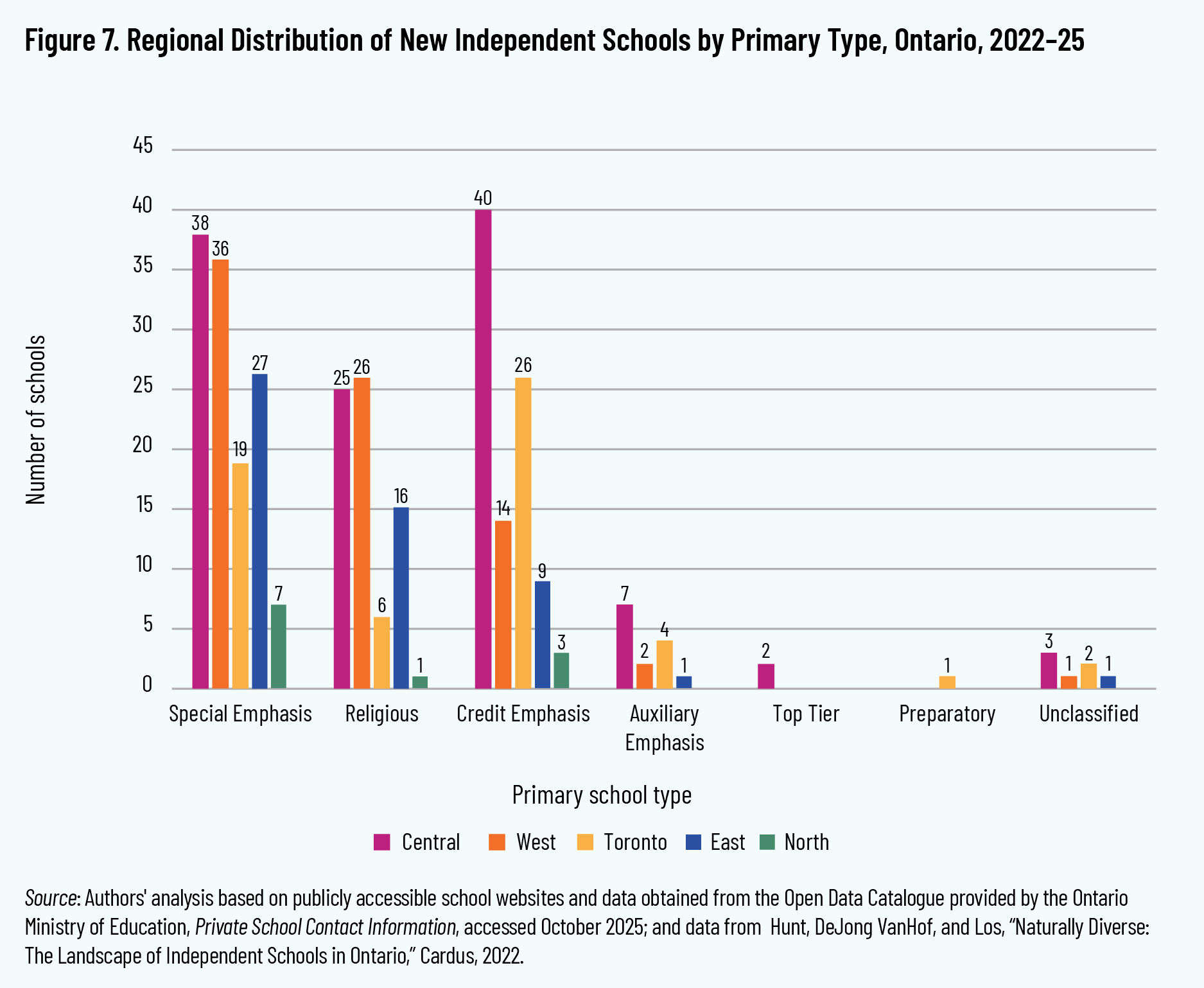
The regional distribution of new schools by school type (figure 7) demonstrates that, similar to earlier findings, Credit Emphasis schools are concentrated in the Central and Toronto regions. The higher percentage of new independent schools in the Toronto region likely reflects a higher rate of turnover for new Credit Emphasis schools than other types of new schools. Religious and Special Emphasis schools, by contrast, are found primarily in the West, Central, and East regions.
Distribution by School Level
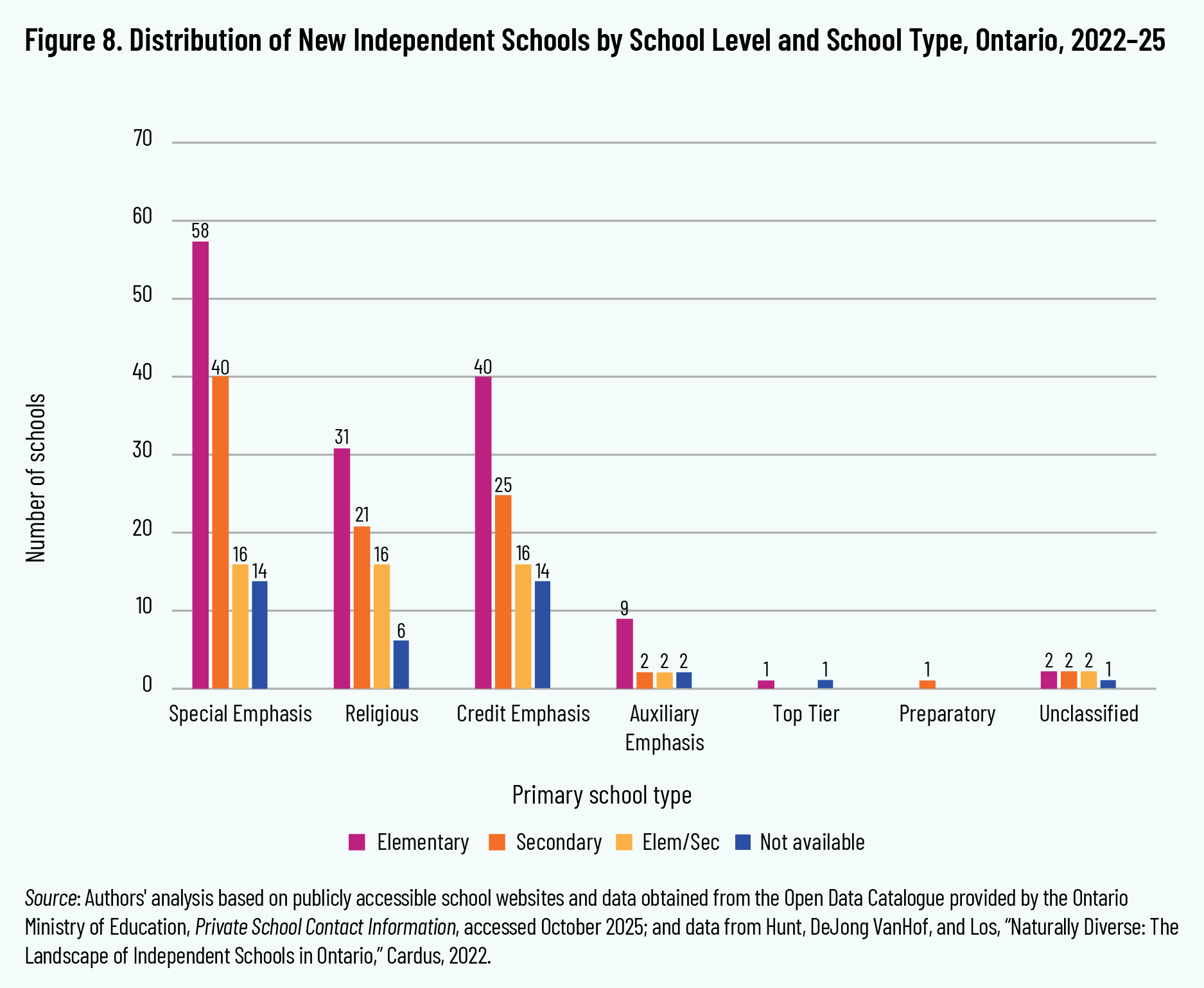
Table 5 demonstrates the distribution of new independent schools by school level. Most new independent schools are elementary schools (43.8 percent), followed by secondary schools at 28.3 percent of the new school landscape, and then K–12 schools, which make up the smallest proportion of new schools (16.1 percent).
A breakdown of school level according to school type is provided in figure 8. The high number of elementary schools in the Special Emphasis type may be reflective of growth in Montessori and Nature schools, which tend to focus on kindergarten and primary grades. That there are more schools at the elementary level than the secondary level among schools we typed as Credit Emphasis is interesting, and different from findings in our 2022 study, in which many Credit Emphasis schools are listed as secondary schools. Since school level is self-reported, the tendency of some school start-ups to offer tutoring or daycare alongside credit offerings may influence how schools conceptualize their grade-level offerings.

Distribution by Program Type
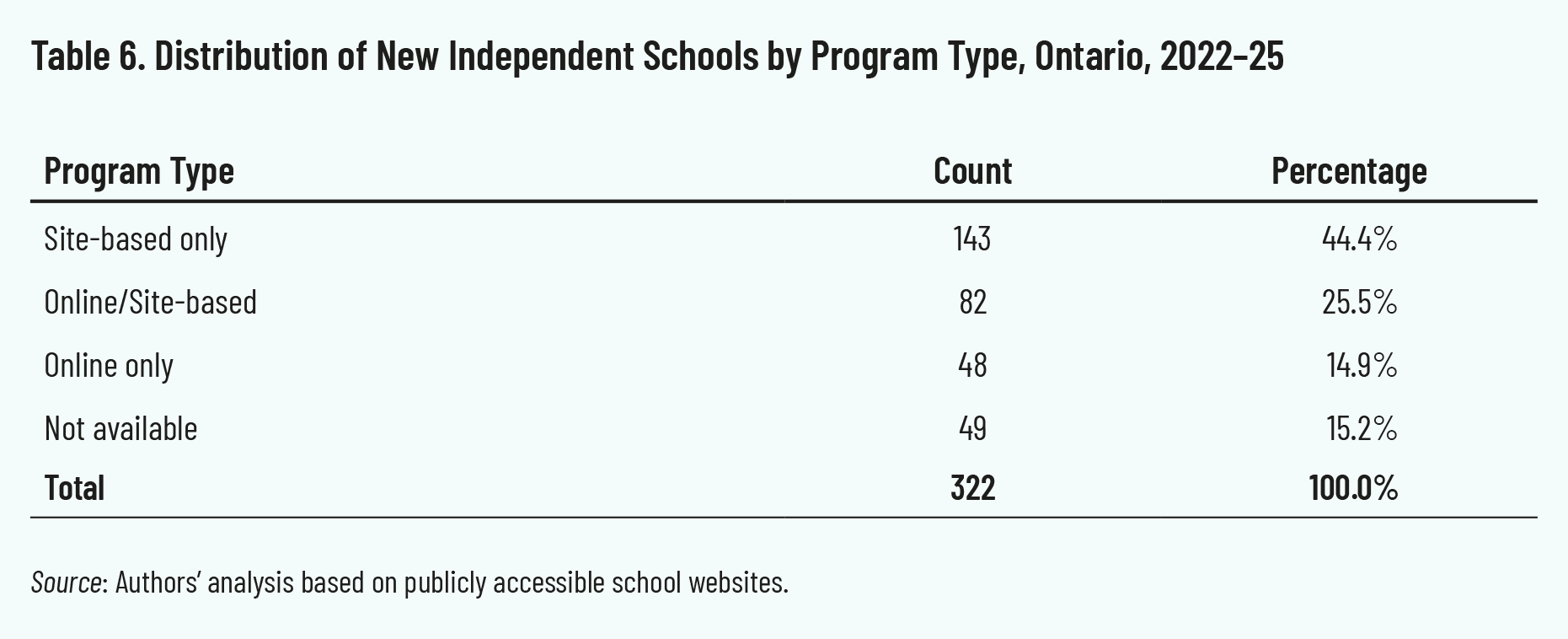
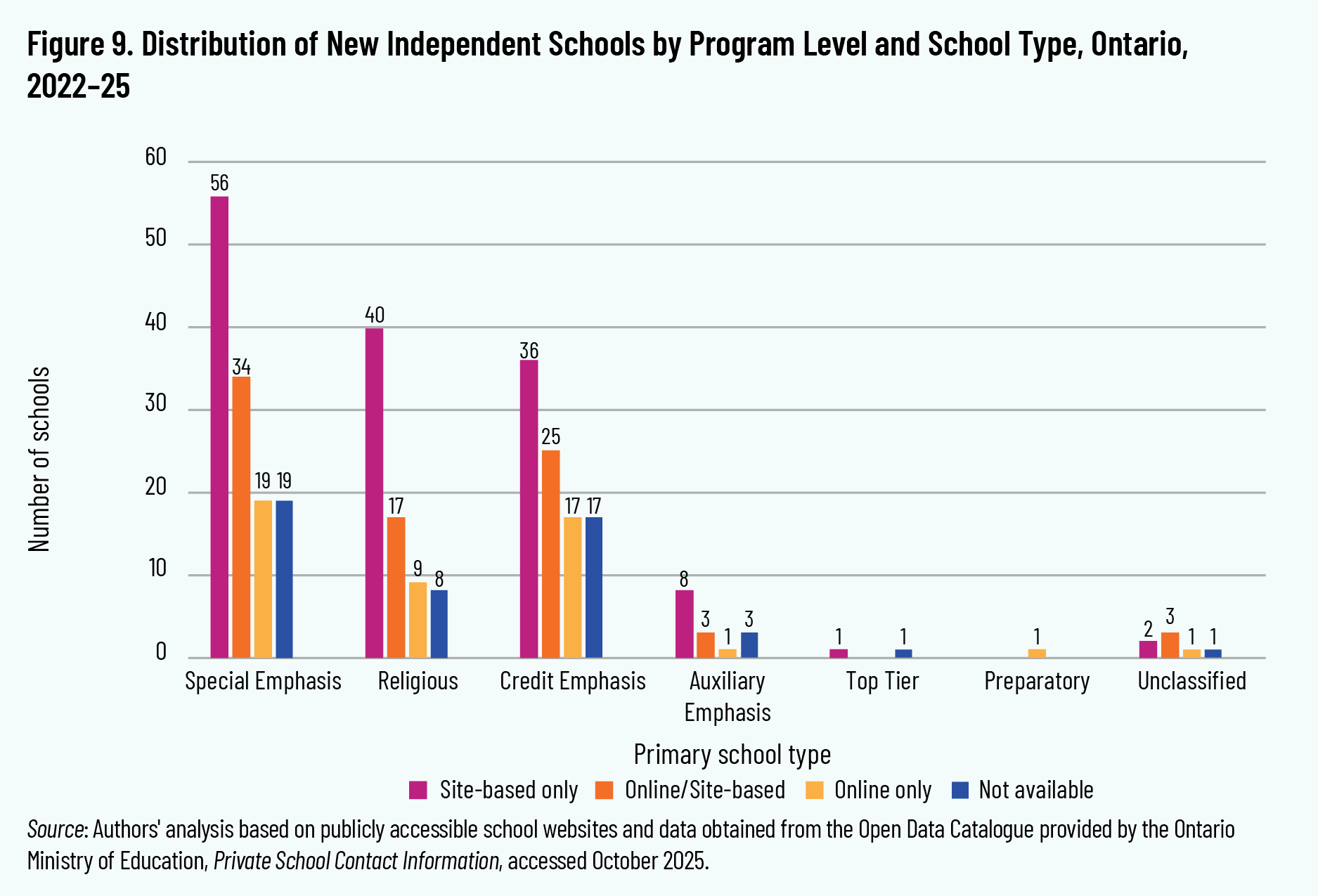
Most new independent schools are classified as site-based schools, meaning that they operate in person as traditional brick-and-mortar schools (table 6). One in four new independent schools is classified as both online and site-based, with in-person and virtual learning options, and 14.9 percent of new independent schools are classified as online only. When this is broken out by school type, we see a distribution similar to the distribution by school level (figure 9). While site-based learning is fairly high across Special Emphasis schools (43.8 percent) and Credit Emphasis schools (37.9 percent), more than half of Religious schools (54.1 percent) prioritize site-based learning.
Distribution by Association Membership
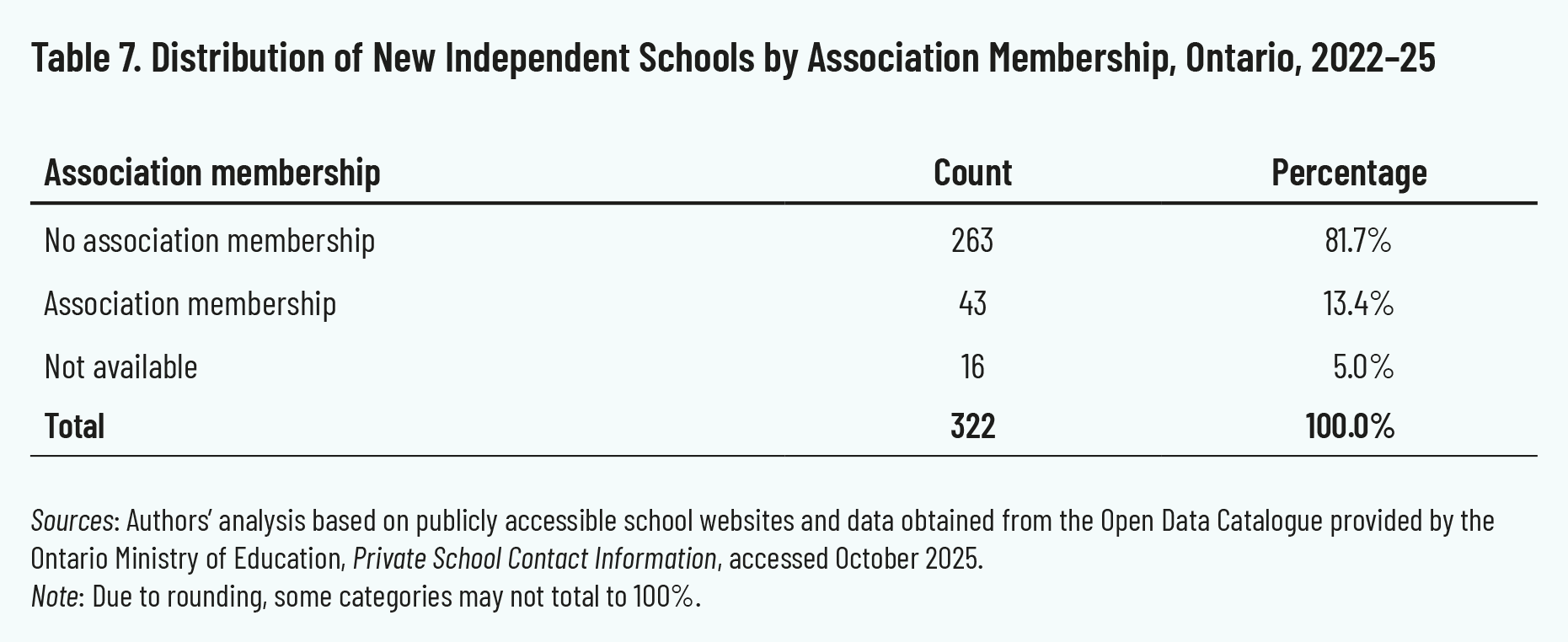
By and large, new independent schools in Ontario do not hold membership in a school association (table 7). Just forty-three of 322 schools, or 13.4 percent, do. Of these, affiliations with eleven different associations were identified, with nine schools reporting membership in the Independent Private School Forum, seven in Edvance, the largest association in the province, five in Montessori Canada, and three in the Ontario Federation of Independent Schools. Other listed associations included the Muslim Association of Canada and the Society for Classical Learning. Since membership in most school associations requires schools to pay member fees in exchange for quality assurance services, it may be that schools feel the need to be more established before making this commitment. 25 25 See DeJong VanHof, “Better Together: How Canada’s Independent School Associations Strengthen Democracy and Civil Society” for an in-depth discussion of the role of school associations in the accountability of independent schools.
School Survey Findings
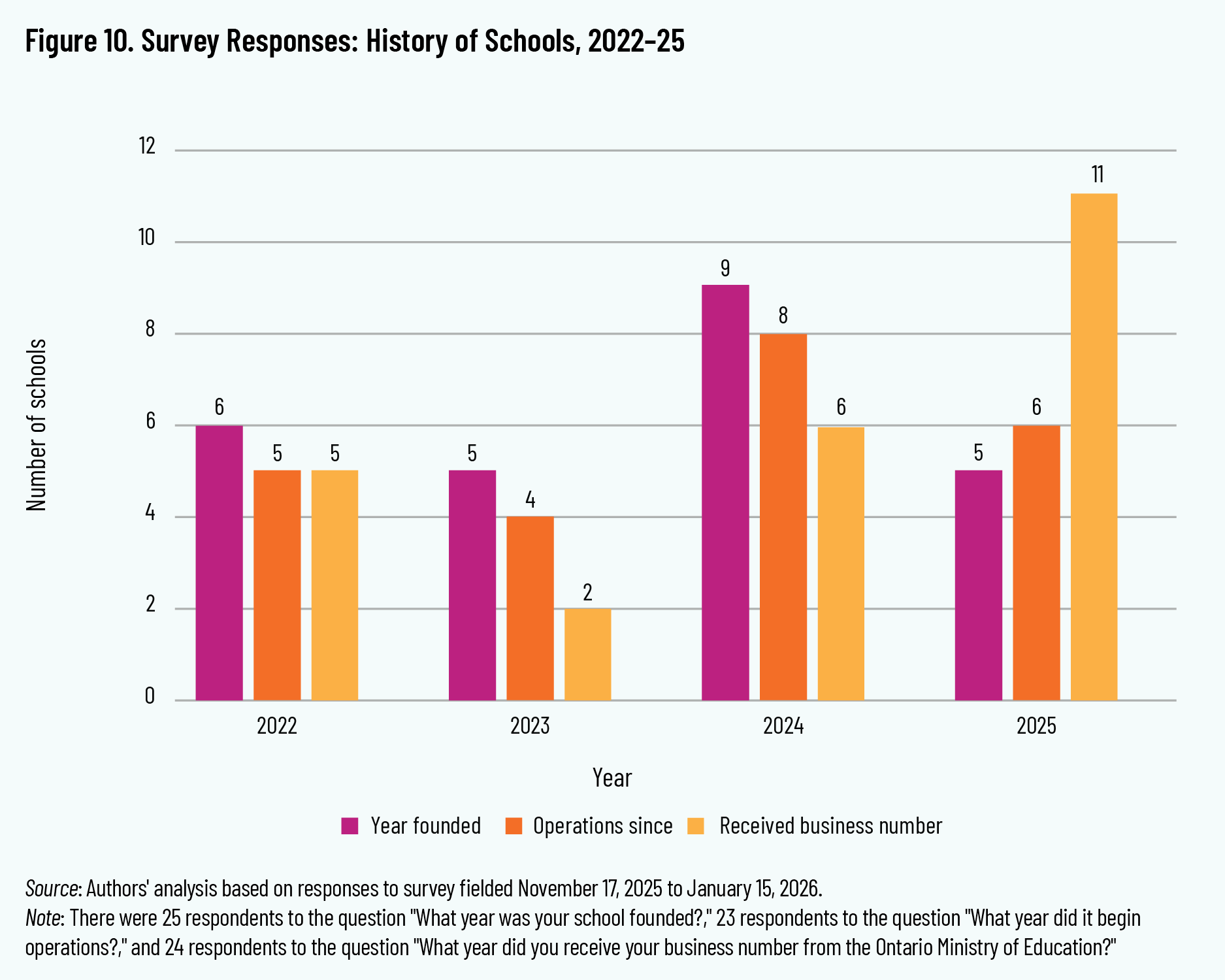
To complement the overall website analysis, we sent an in-depth survey to leaders and/or owners of all 322 new independent schools. We asked questions about school purpose, student enrolment, tuition structures, and school sustainability to gain a fuller understanding of the challenges and opportunities that school leaders of newly founded independent schools face. All schools in the sample were founded, began operations, and received their business number from the Ontario Ministry of Education between 2022 and 2025 (figure 10).
School Purpose and Type
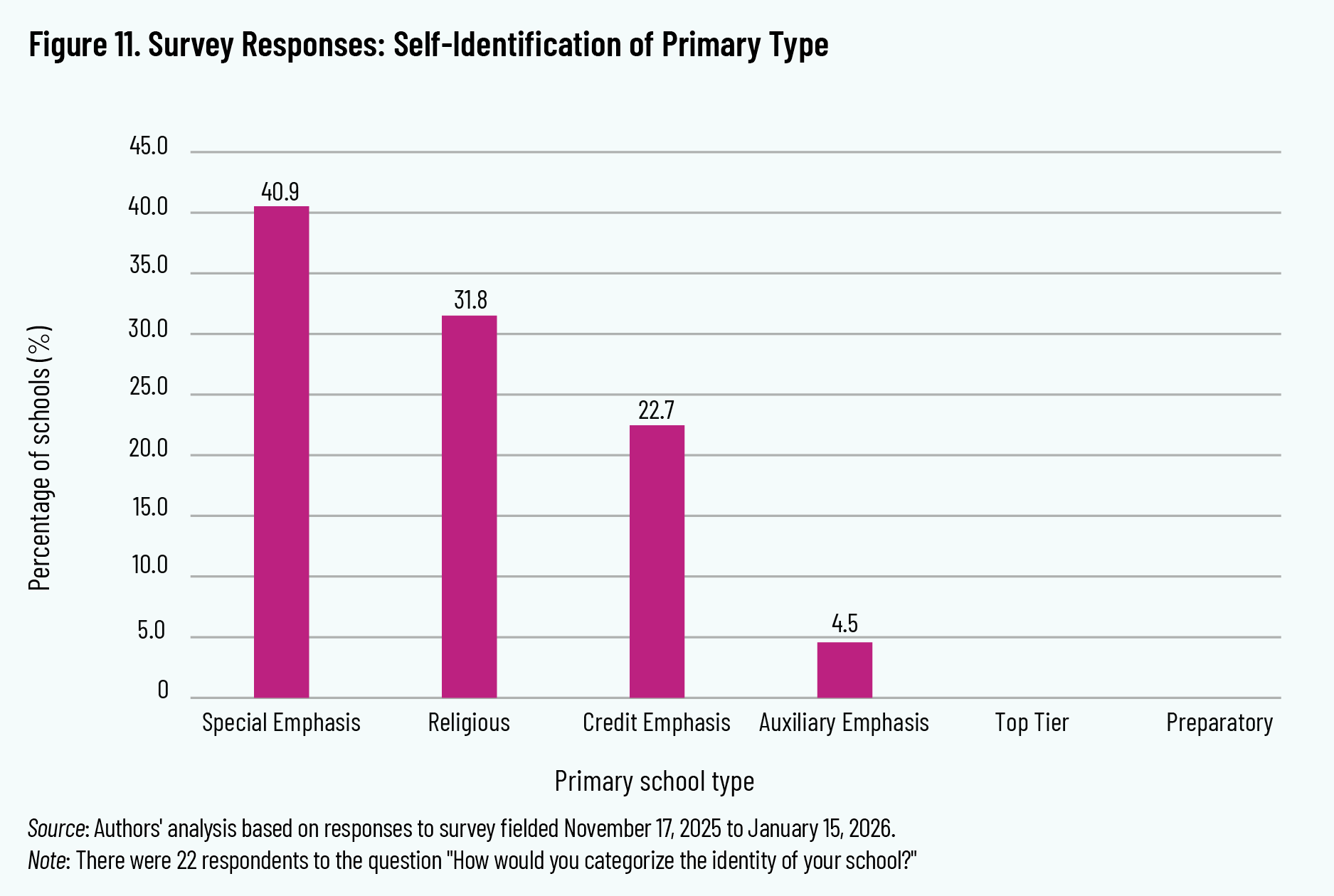
We provided in the survey the list of school types as shown in the sidebar of this report, asking them to select the primary type, and the secondary type (if applicable), as shown in figure 11. Most respondents classified their school’s primary type as either Special Emphasis (40.9 percent) or Religious (31.8 percent). In addition, five survey responses selected Credit Emphasis and one identified as an Auxiliary Emphasis school, providing a variety of school types in our sample despite its small size.
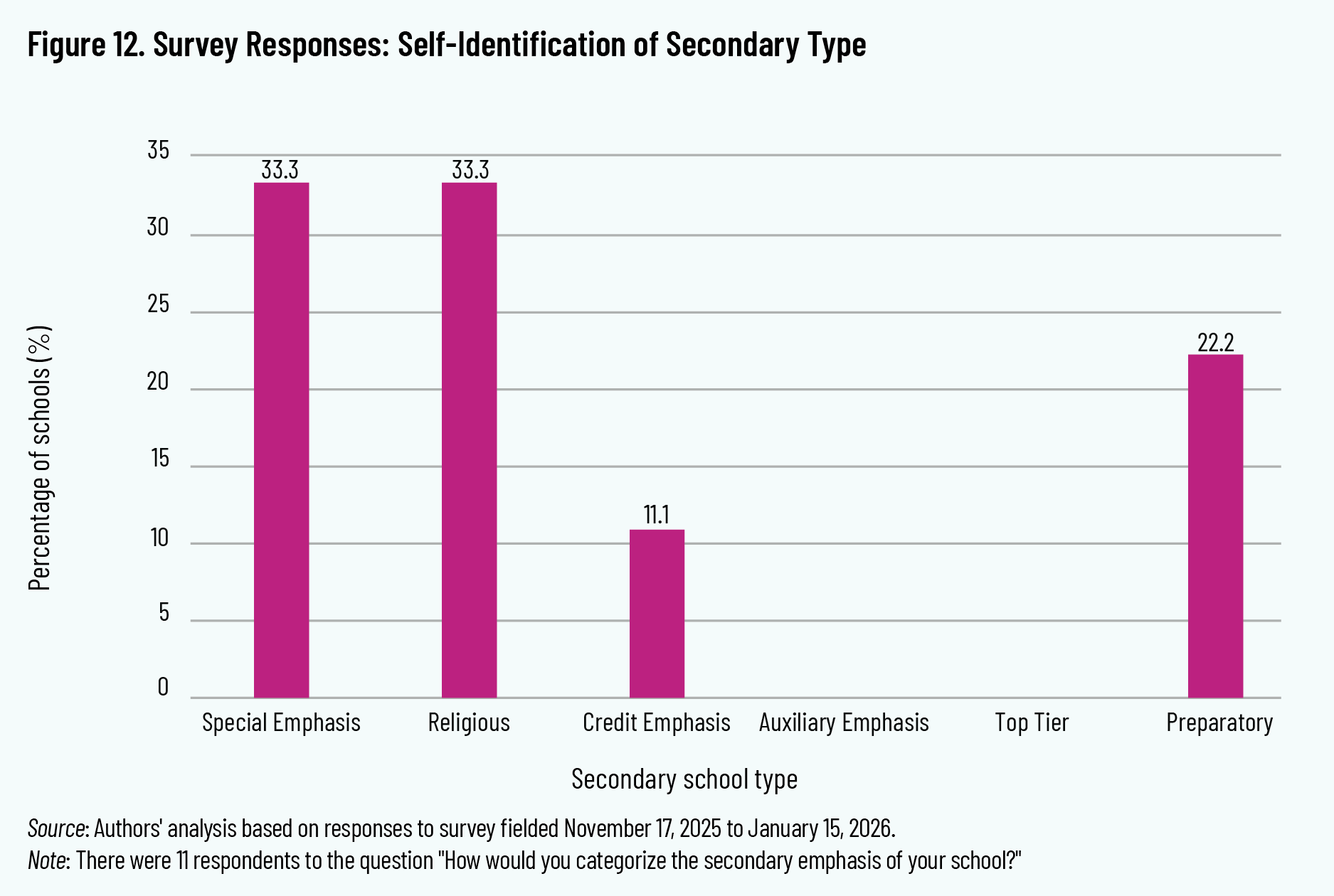
Just over half of respondents (52.4 percent) also selected a secondary type. Two-thirds of schools that had a secondary type selected either Religious or Special Emphasis (figure 12).
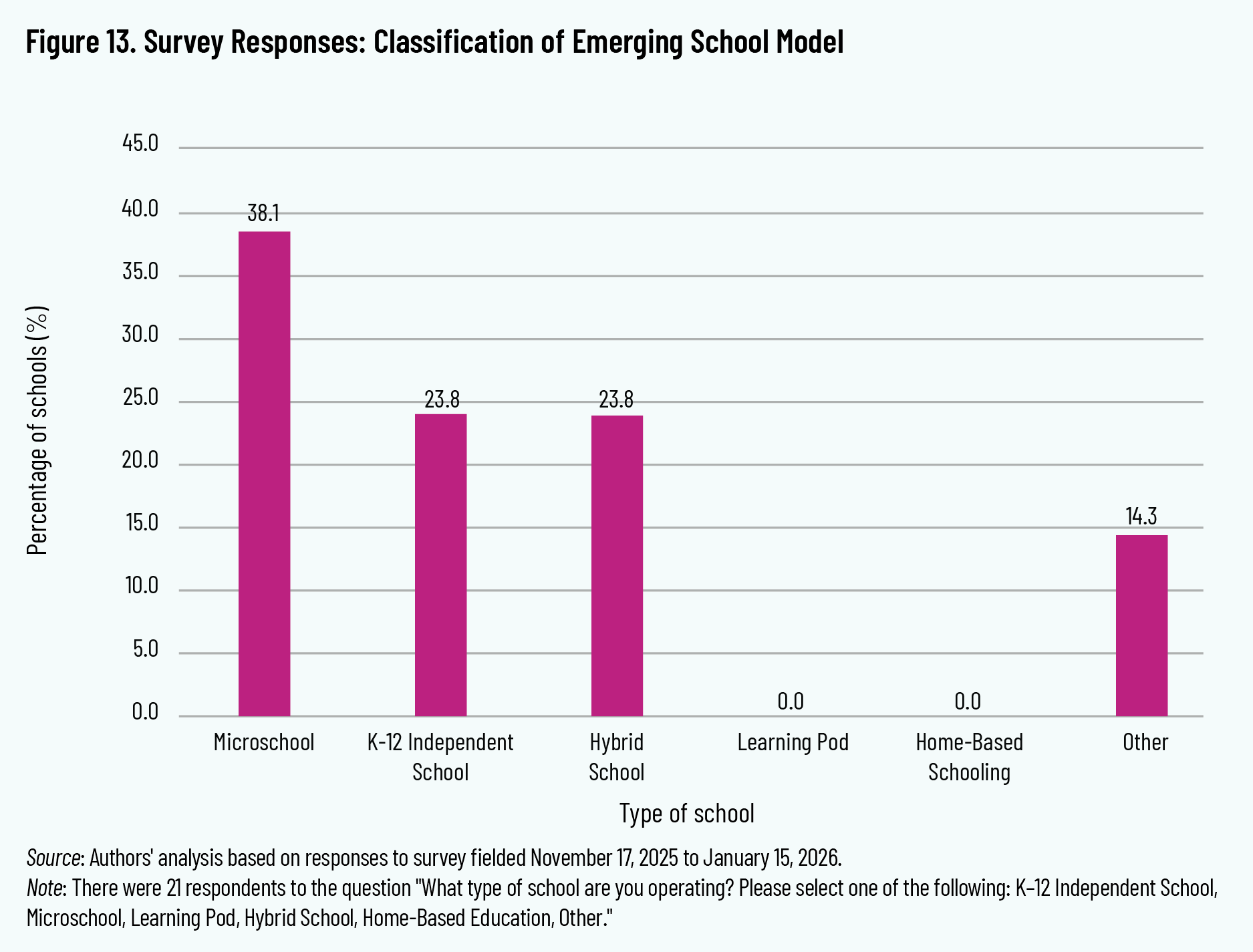
Respondents were also asked to indicate whether they were operating a type of emerging school model, such as a microschool, hybrid school, or learning pod (figure 13). Of those who said yes, microschooling was the most popular model at 38.1 percent, followed by both hybrid schooling and K–12 independent schooling at 23.8 percent. Finally, 14.3 percent selected “other,” indicating in a written response a variety of answers that can be summarized as describing fully online schools. The fact that 61.9 percent of respondents described their schools as either a microschool or a hybrid school (based on the definitions provided earlier) supports our website analysis, suggesting that emerging educational models are not only present in Ontario but may also be gaining traction, if the experience of the United States is any guide.
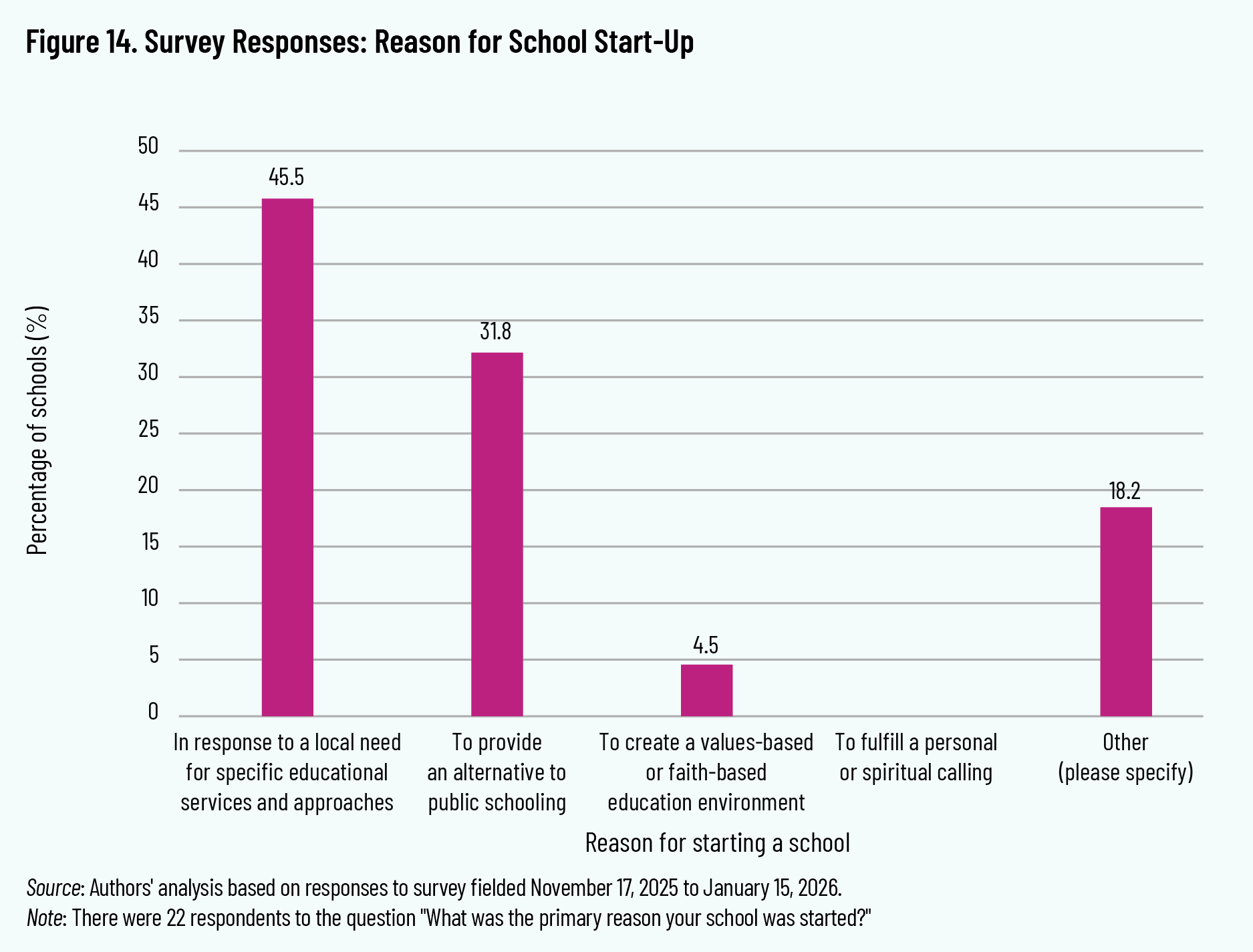
Finally, respondents were asked to share the primary reason why their school was founded. A plurality (45.5 percent) indicated that their school was started in response to an observed need for specific educational services and approaches (figure 14). Secondly, 31.8 percent of respondents indicated that their school was begun to provide an alternative to public (district) education. There was a moderately large number of “other” responses (18.2 percent), all of which described combinations of at least two of the stated options, emphasizing addressing a felt need to provide an alternative to public schooling and offer schooling that aligns with the founder’s values or religion.
Student Enrolment and Staff Size
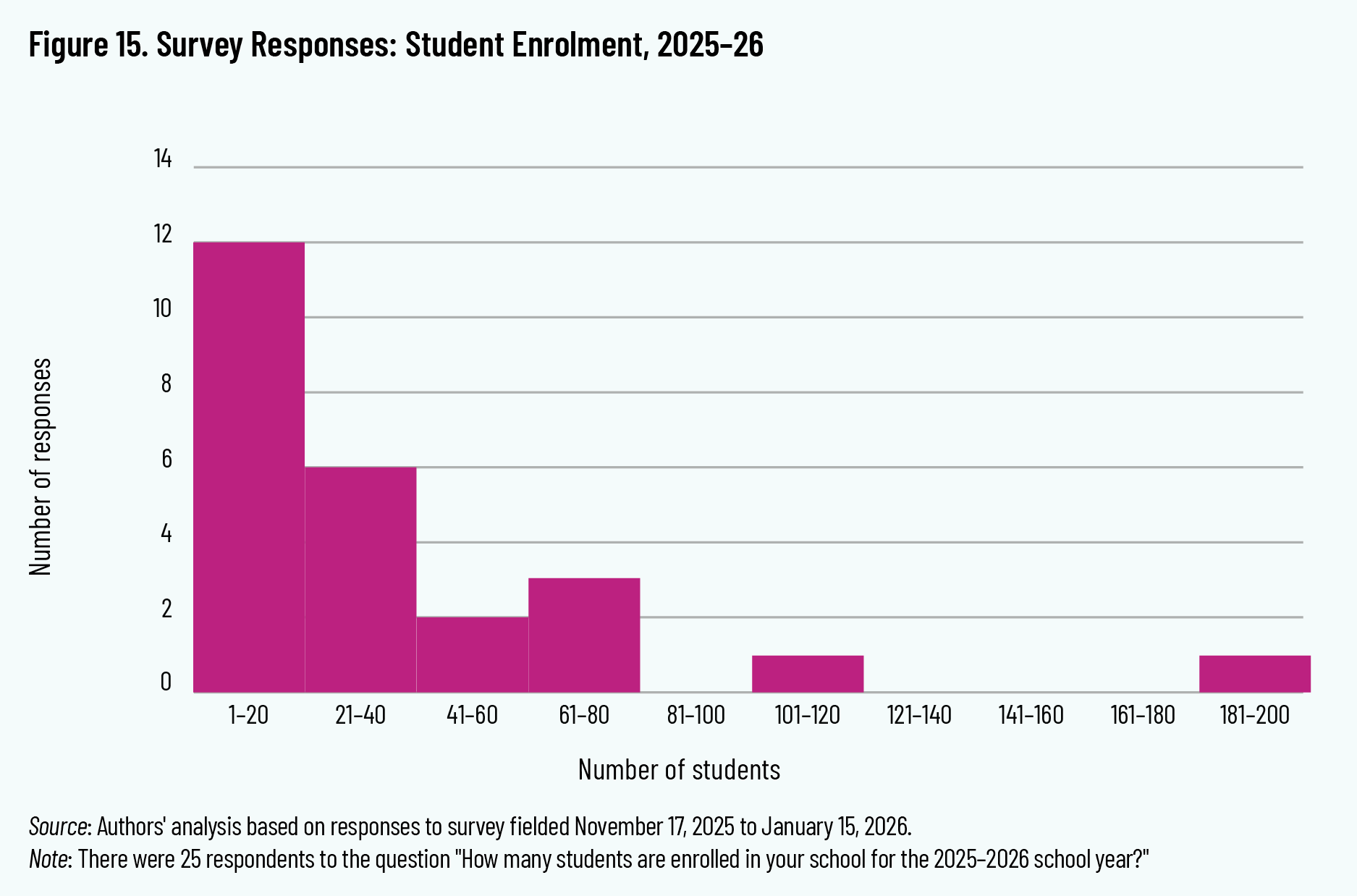
The student enrolment in schools within our survey sample is portrayed in figure 15. Somewhat intuitively, most new school start-ups indicate small school sizes, with just two schools reporting more than one hundred students. In fact, the majority of schools (18 of 25 responses, or 80 percent) have fewer than forty students enrolled.
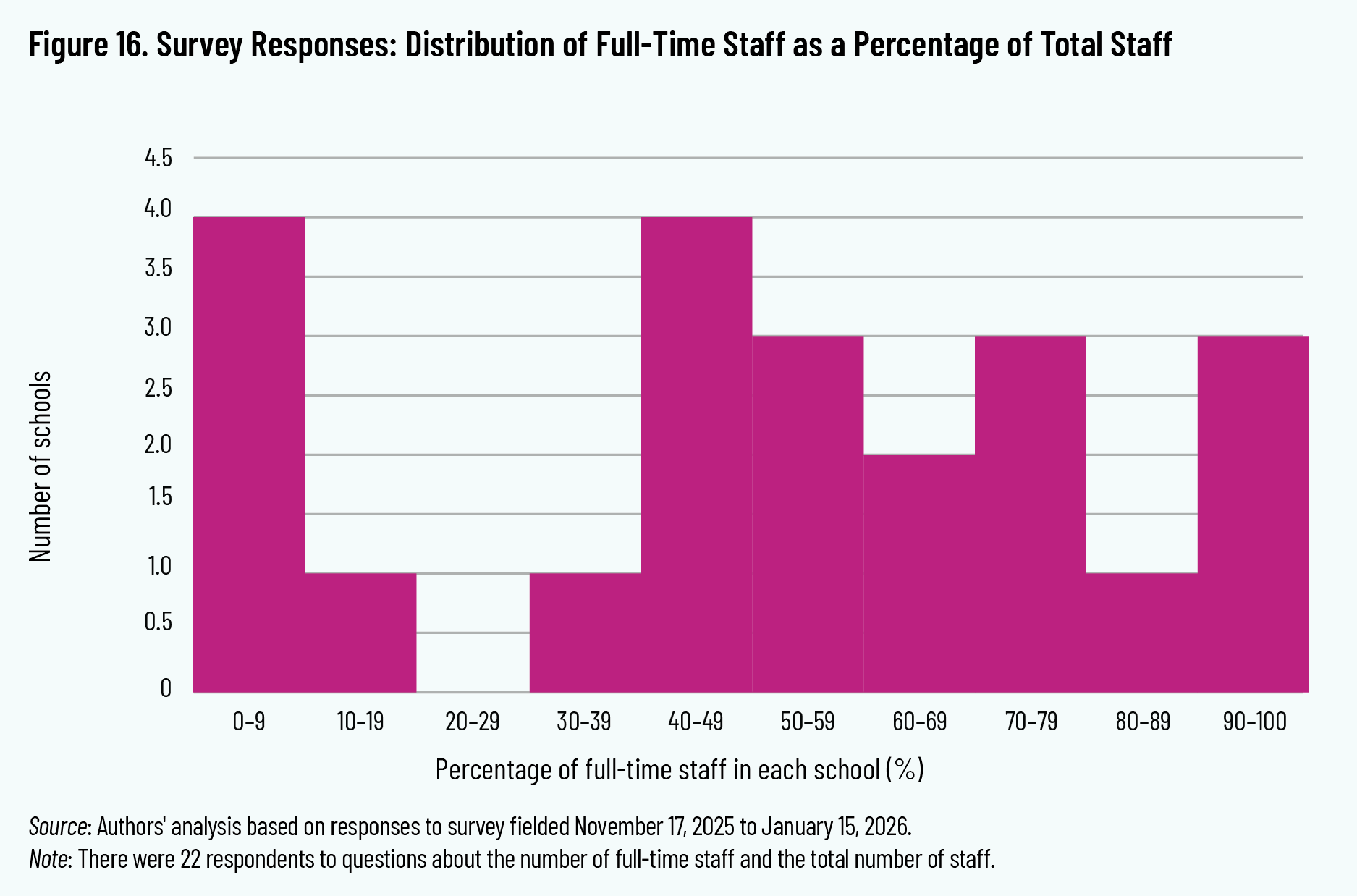
We also asked school leaders to report the number of full- and part-time staff employed at their schools. We then calculated the percentage of full-time staff at each school. Figure 16 demonstrates the overall distribution of full-time staff as a percentage of all staff at each school. Four schools report that less than 10 percent of their staff are full-time. This is contrasted with the majority of schools (16 of 22 responses) which report that 40 percent or more of their staff are full-time staff members.
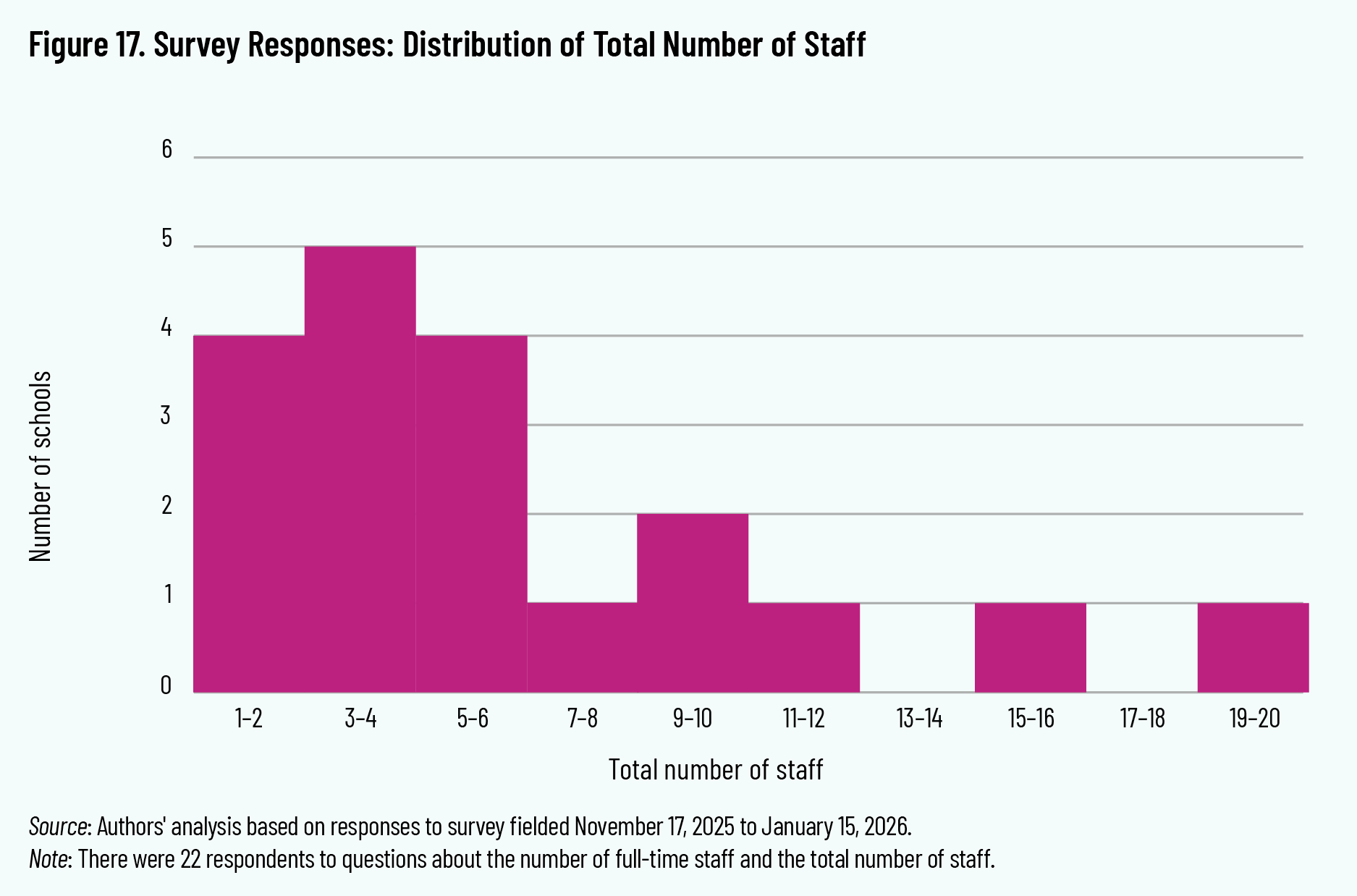
However, when asked about the total number of staff employed, most schools reported employing between one and six staff members (figure 17). Therefore, we have found that it is more common for these new schools to have fewer staff but employ them full-time, than it is to accumulate more staff that work in part-time roles.
Staff Roles and Certification
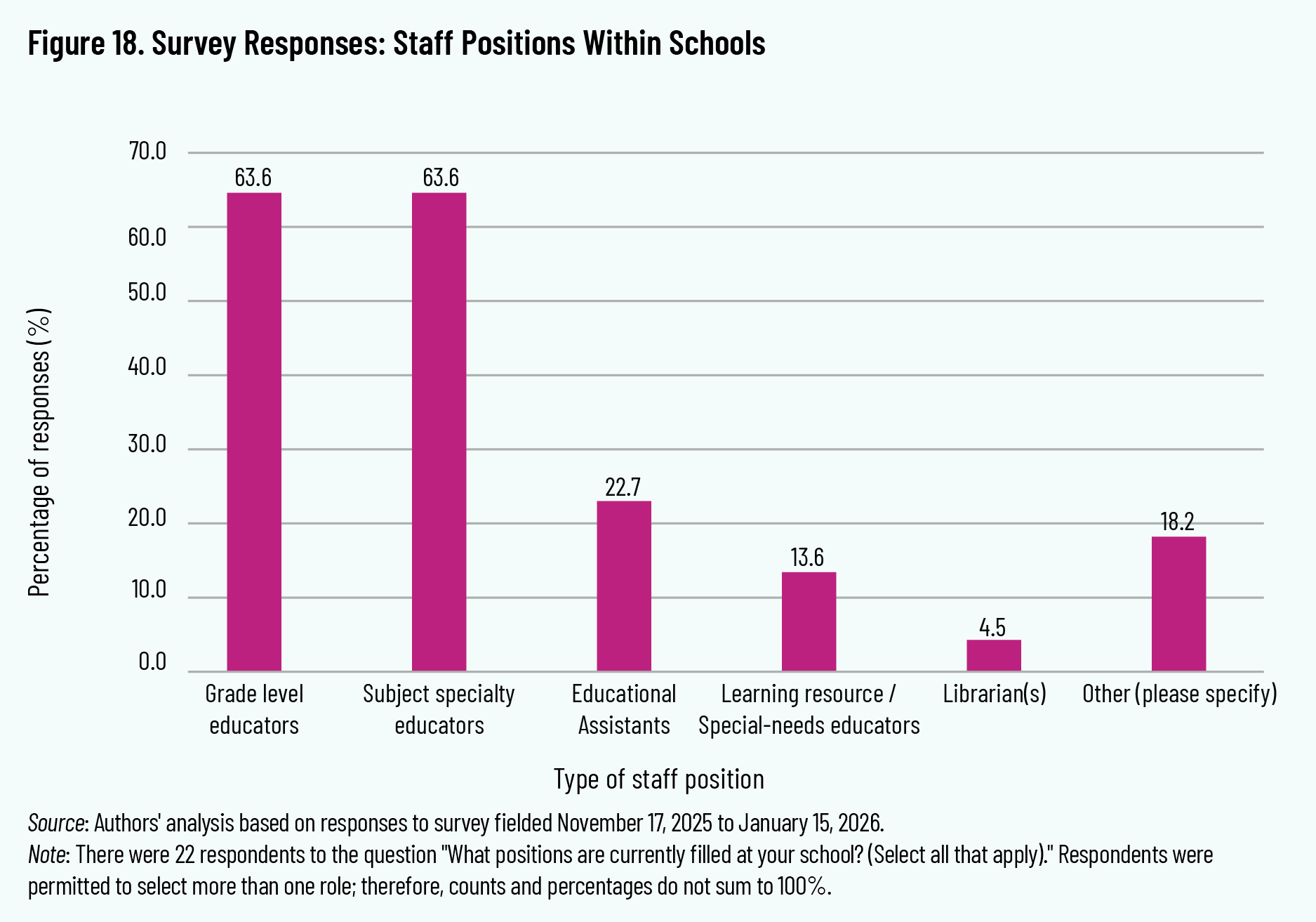
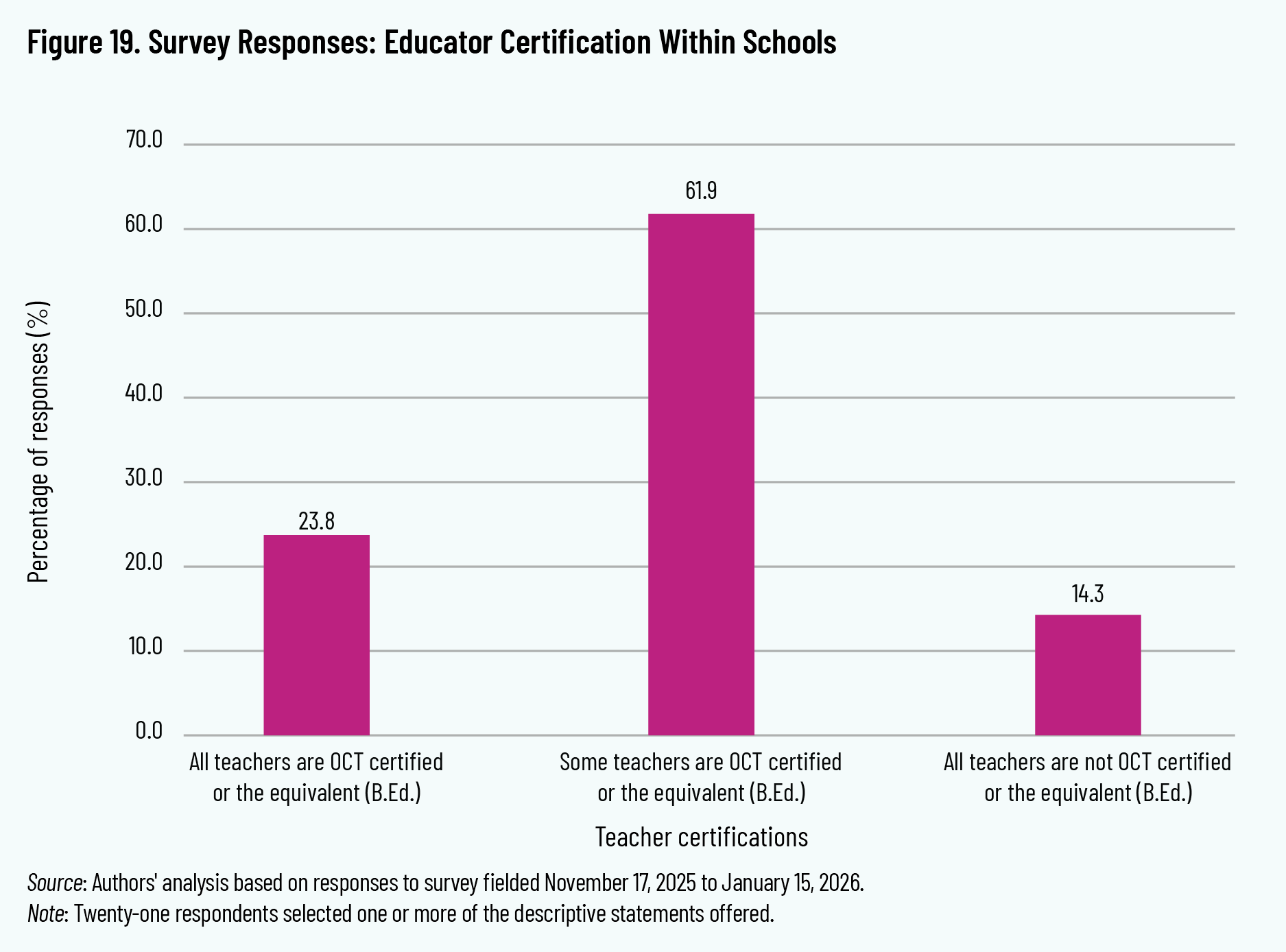
Figure 18 shows the staff positions (not including school leaders) currently filled at each school. Although grade level educators and subject specialty educators are the most frequent position filled, schools employ educational assistants, librarians, and staff dedicated to special needs students as well. This diversity is also reflected in these schools’ approach to teacher certification. While certification through the Ontario College of Teachers is important, it is not considered necessary in all circumstances or by all schools (figure 19). When asked whether their school employed teachers who may be accredited elsewhere, 50 percent of respondents indicated that their schools employed educators with alternative methods of accreditation, such as for subject specialties or specific pedagogical approaches or for religious traditions.
Alongside alternative teacher certifications, independent schools frequently obtain membership or affiliation with a school association. These school associations provide educator and administrative professional development, governance and policy support, advocacy and government relations, and other quality assurance services. 26 26 See DeJong VanHof, “Better Together,” for further detail. In this survey, eight of twenty-four respondents (33.3 percent) reported membership in a school association.
Curriculum and Content
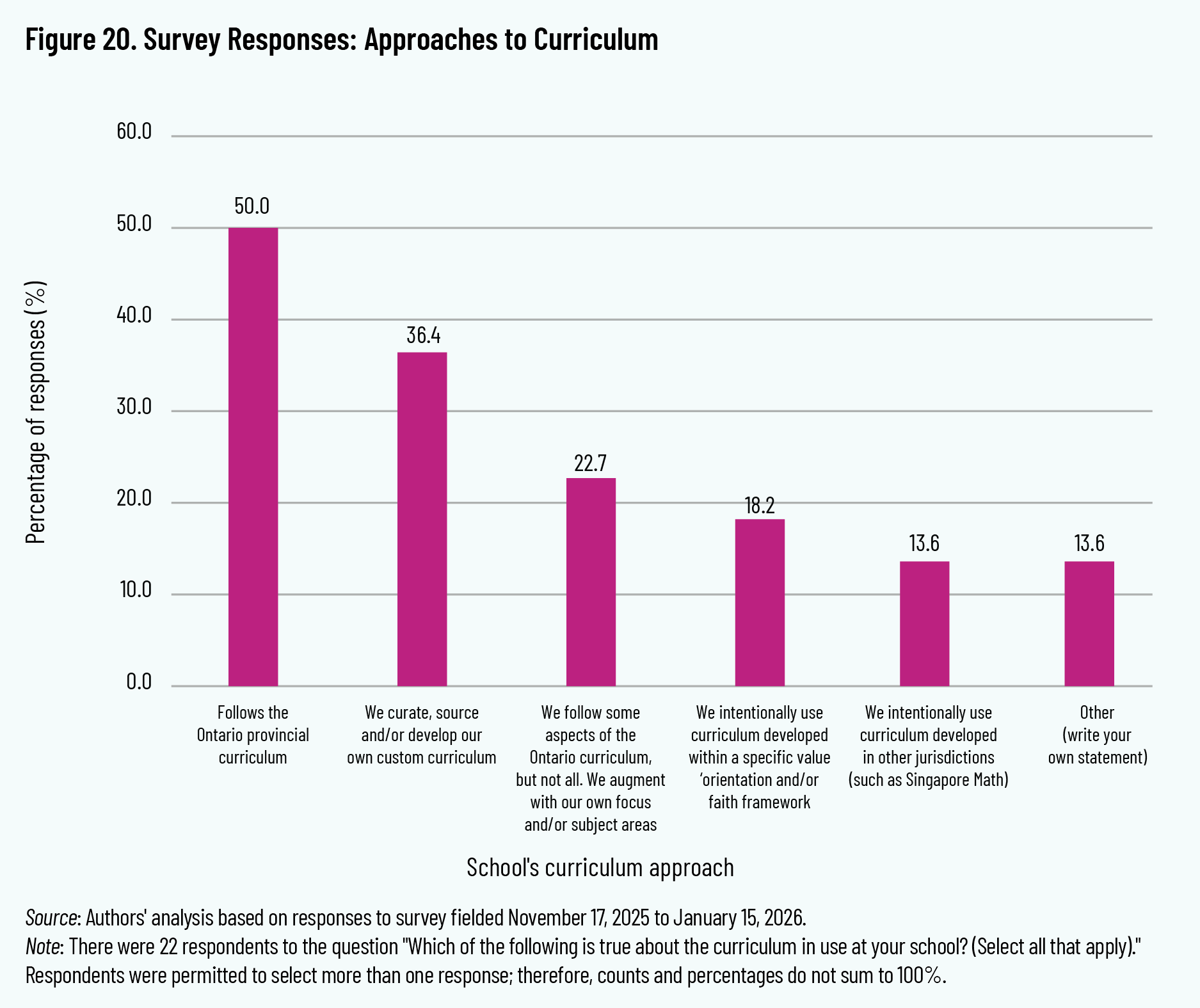
Schools also demonstrate varying responses when asked about their approach to curriculum (figure 20). Eleven respondents report that their school follows some or all of the Ontario curriculum, which is not mandatory for independent elementary schools in the province. For independent secondary schools that offer the OSSD, the Ontario curriculum is mandatory. The higher response rate here may be reflective of schools that offer these secondary school diplomas. Additionally, many independent elementary schools adopt the Ontario elementary school curriculum to ensure readiness and successful transition into Ontario secondary school course content. Schools also report curating, sourcing, and developing their own curriculum (eight respondents) and using curriculum developed within a value orientation or faith framework (four respondents). When all responses outside of “follows the Ontario curriculum” are cumulated, just over two-thirds (67.6 percent) exhibit a bespoke approach to curriculum on some level.
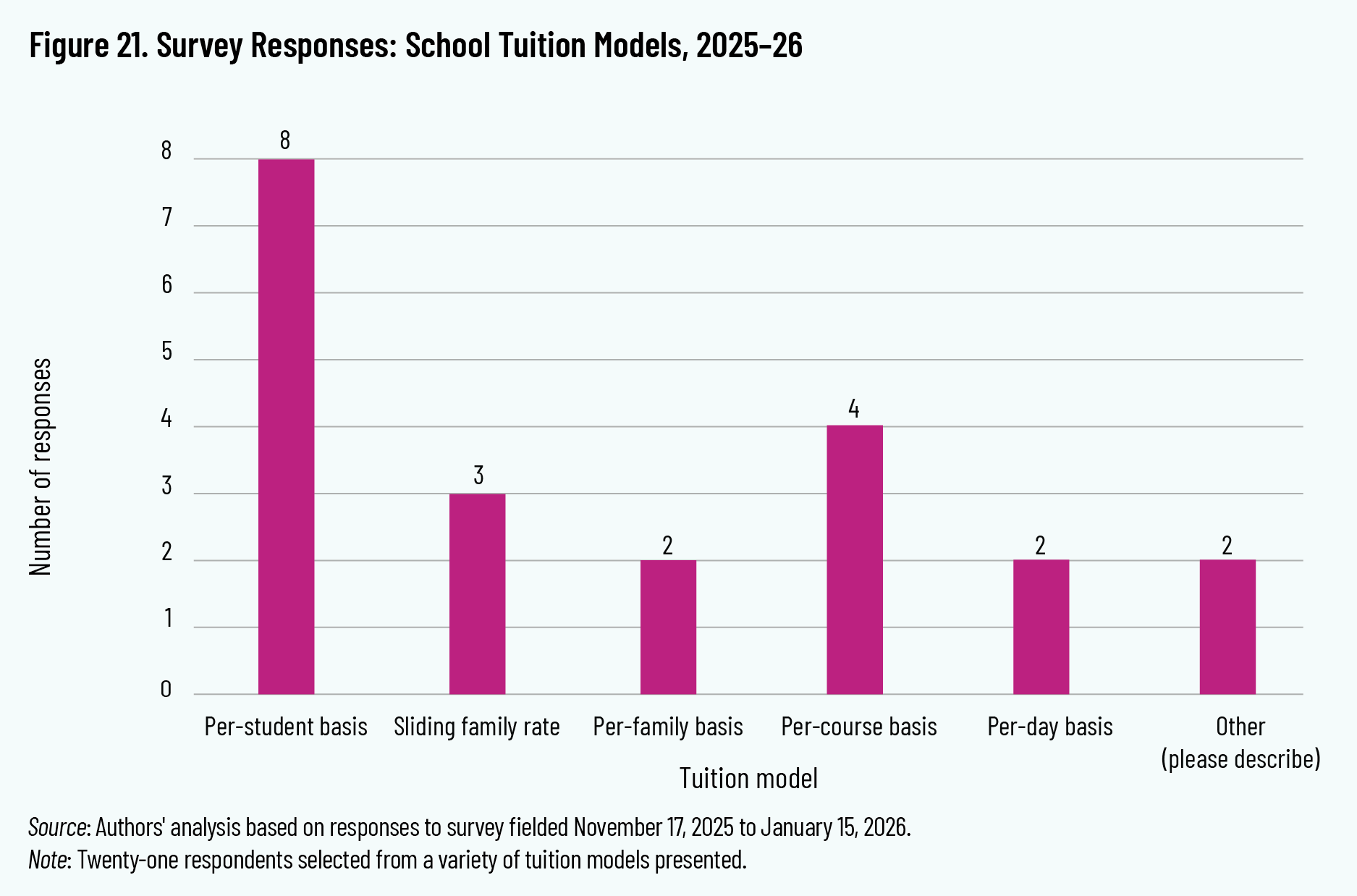
Tuition and Financial Aid
Emerging school models are frequently characterized by low fees and accessible tuition models. In our survey, schools reported a variety of different types of tuition models (figure 21), with a broad range of tuition fees. For example, reported fees per student started as low as 2,500 dollars per year and reached as high as 20,000 dollars per year. Many schools also offer discounts for families that enrol more than one child in their school. Additionally, survey respondents expressed a desire to assist students and their families through bursary funds or tuition relief, but also acknowledged that this is challenging when starting a new school. When asked “Does your school offer scholarships, bursaries, or financial aid?” one respondent replied, “No, I desperately wish to do this, just need to get us running a bit more first.”
School Leadership Roles and Characteristics
We asked school leaders to select their role at their school (figure 22). Of twenty-five respondents, nineteen (76 percent) selected more than one role, suggesting that leaders of new independent school start-ups frequently take on multiple or overlapping roles. For example, a school leader may be both principal and owner, or founder, principal, and educator.
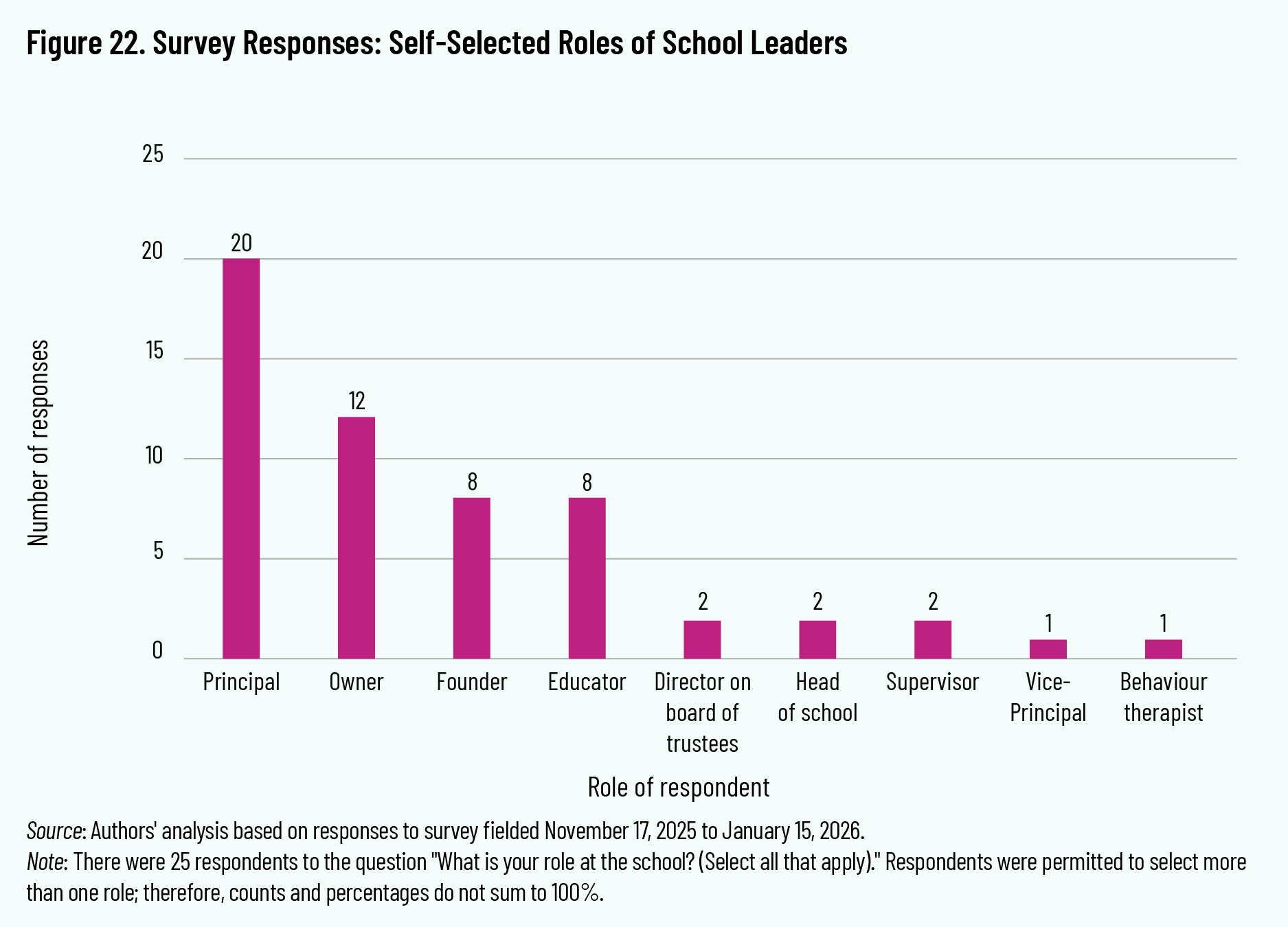
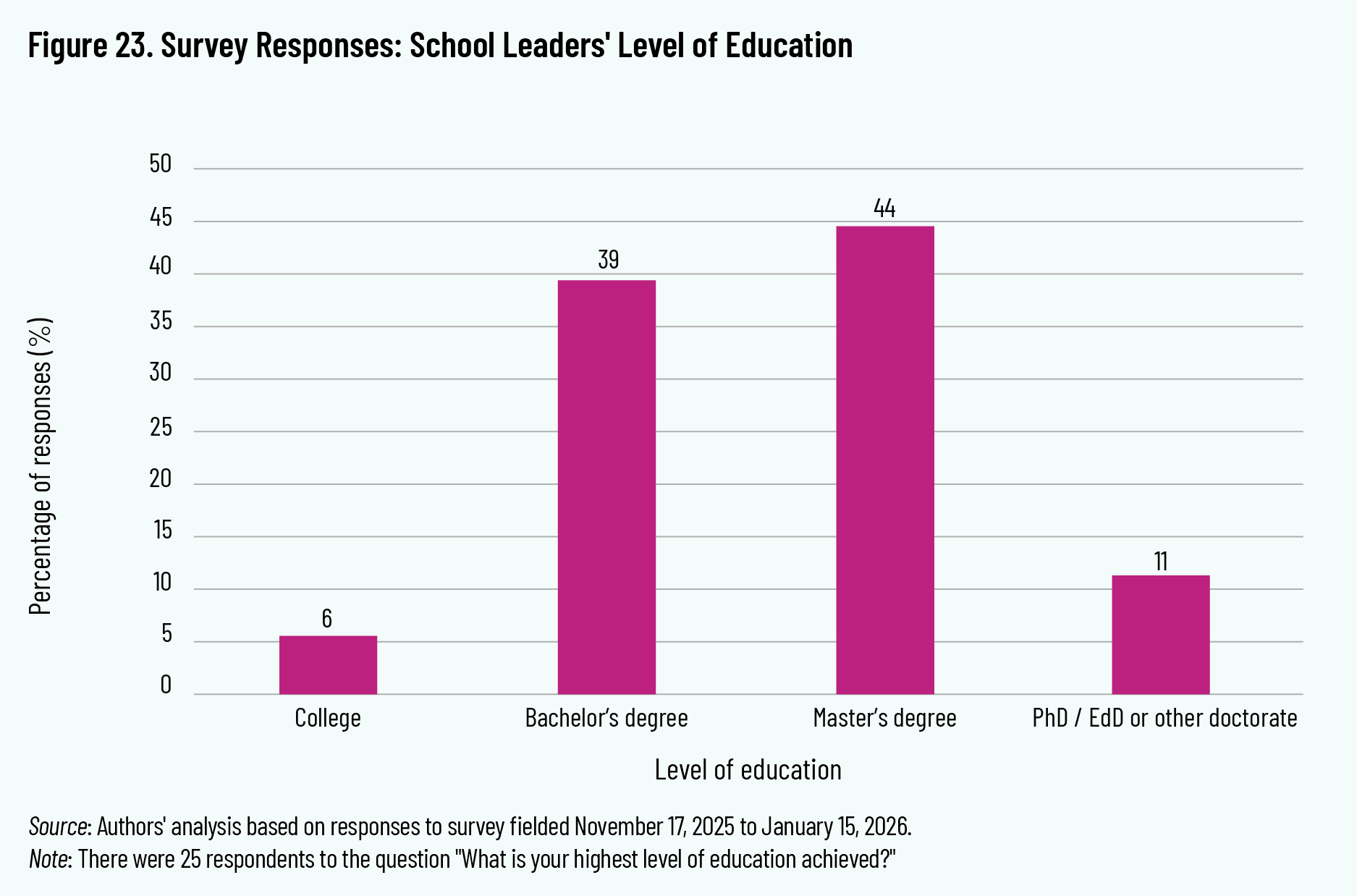
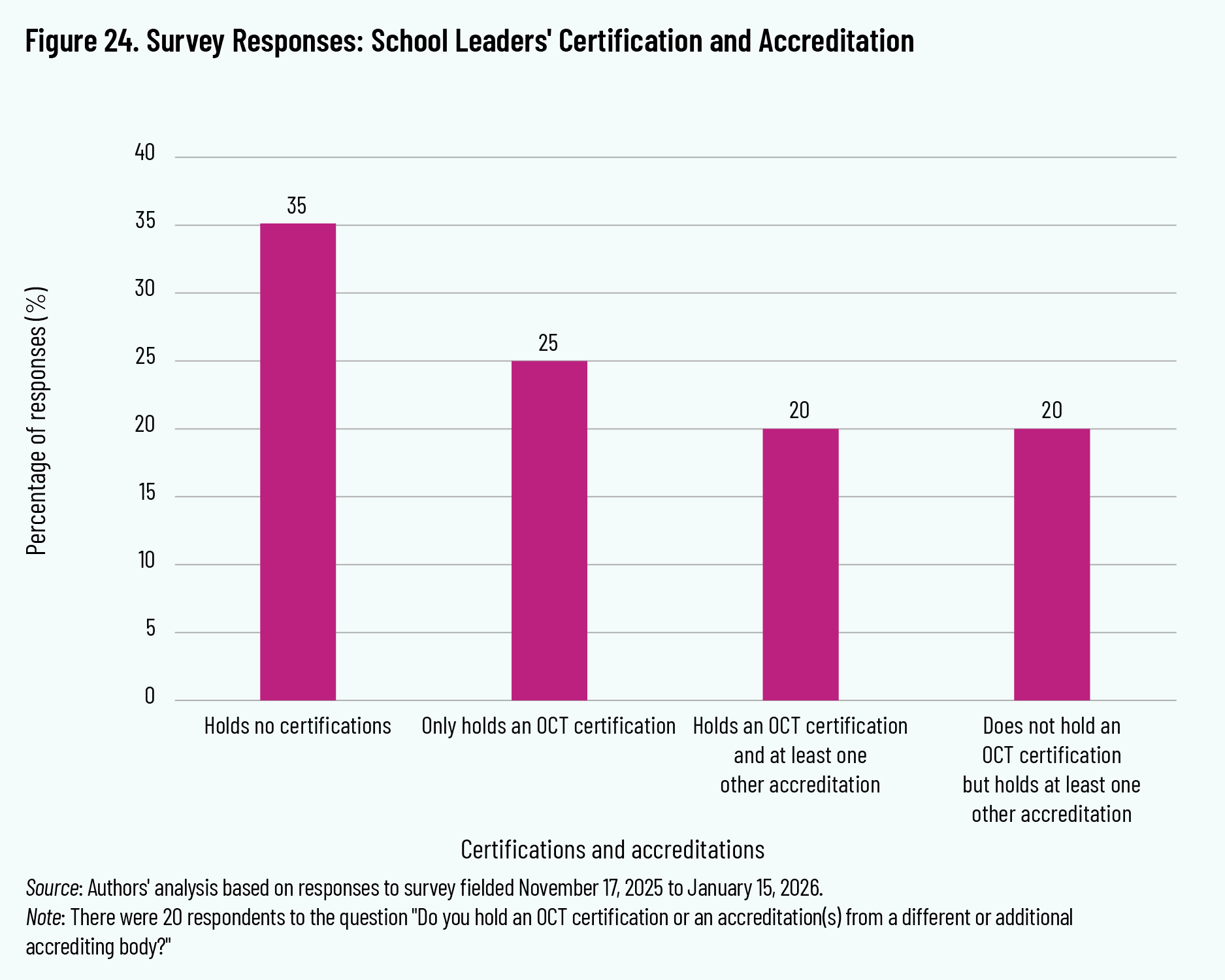
Figure 23 presents the highest level of education achieved by school leaders. Overall, school leaders tend to be highly educated, with the majority of respondents holding at least a bachelor’s degree. Additionally, almost half (45 percent) of school leaders hold an Ontario College of Teachers certification, and 40 percent hold accreditation from a different or additional accrediting body (figure 24).
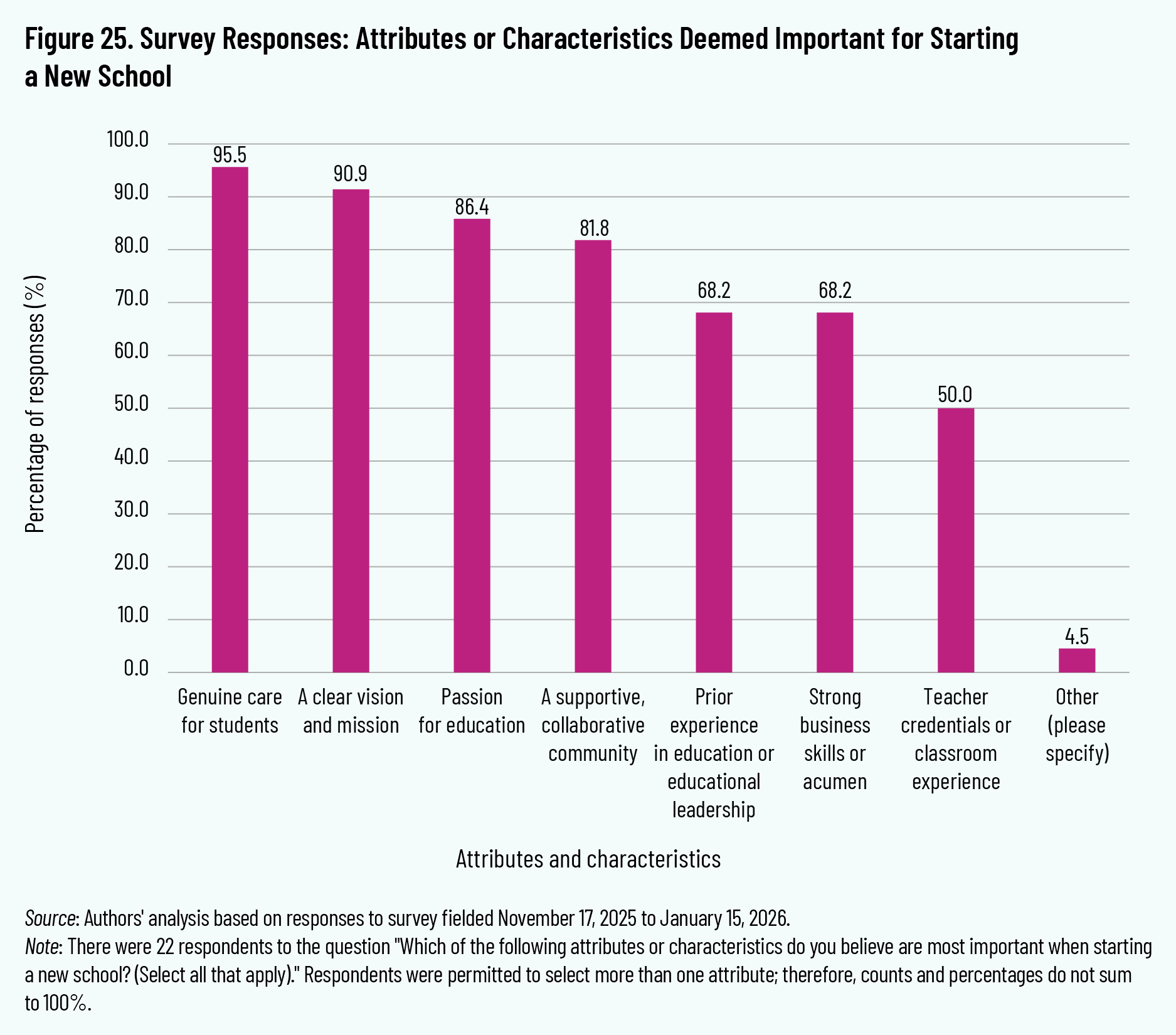
Interestingly, teacher credentials were rated the lowest among attributes or characteristics deemed important for starting a new school (figure 25). The most important attributes as identified by leaders were a clear vision and mission, genuine care for students, a passion for education, and a supportive and collaborative community. Teaching is a relational profession, learned best through practice and commitment to clear pedagogical principles. The qualities selected seem to reflect deeply held beliefs about education: who it is for, what drives it, and how it is successful.
School Sustainability
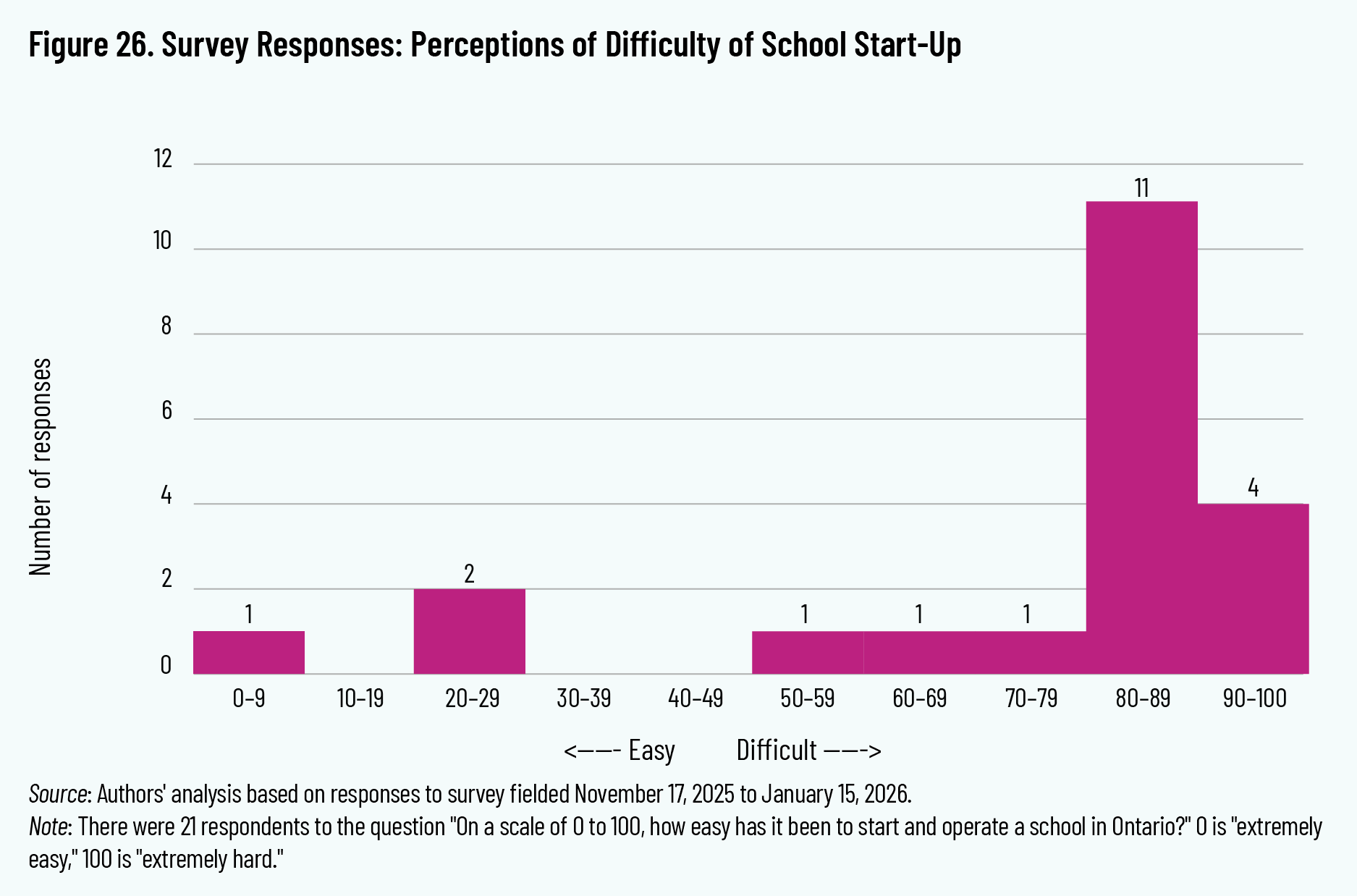
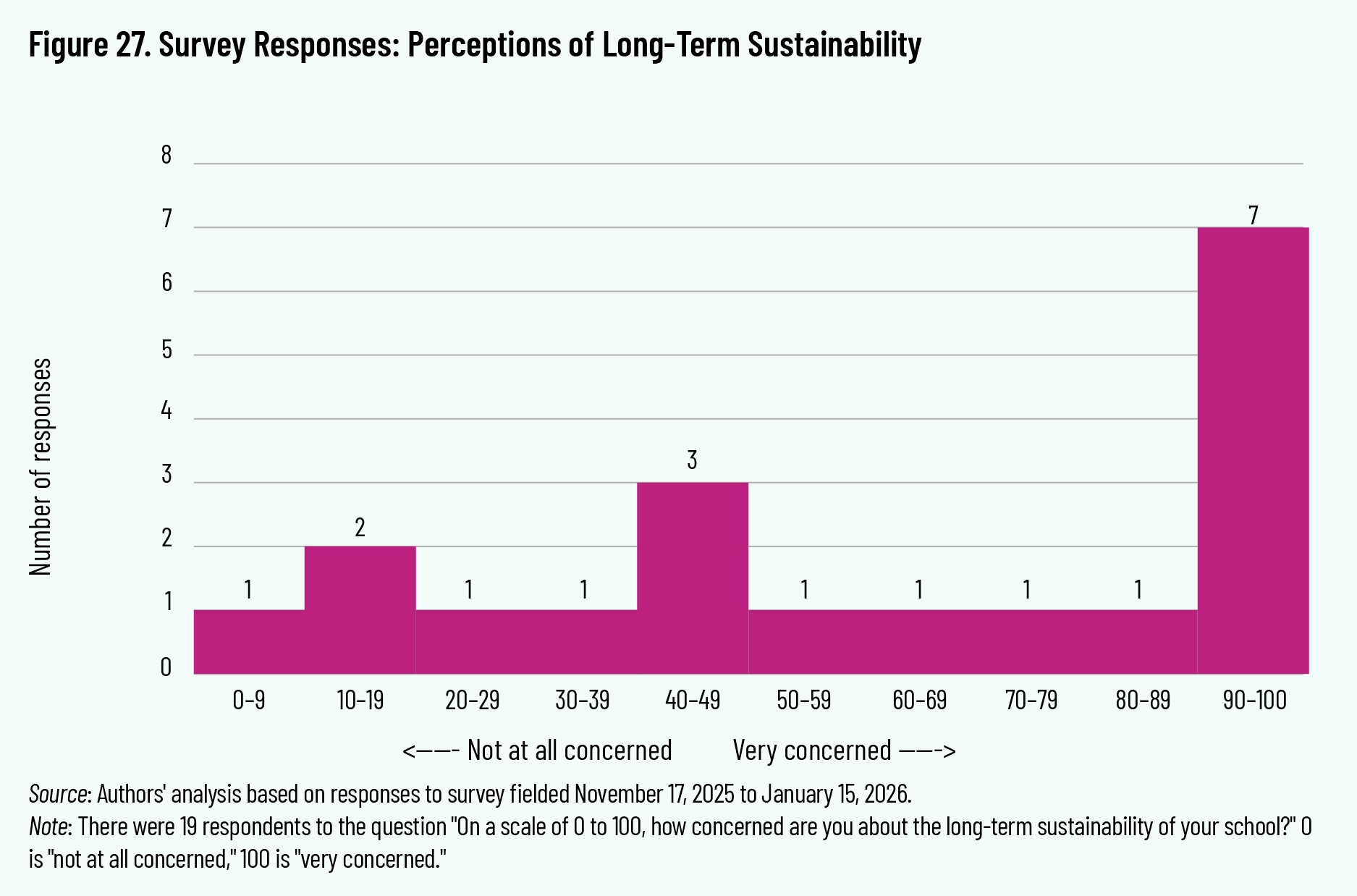
We asked school leaders about the process of starting a new school in Ontario, and about the sustainability of their school in the future. Overall, school leaders responded that they felt it was easy to start a school in Ontario, but they expressed concern about the long-term sustainability of their school (figures 26 and 27).
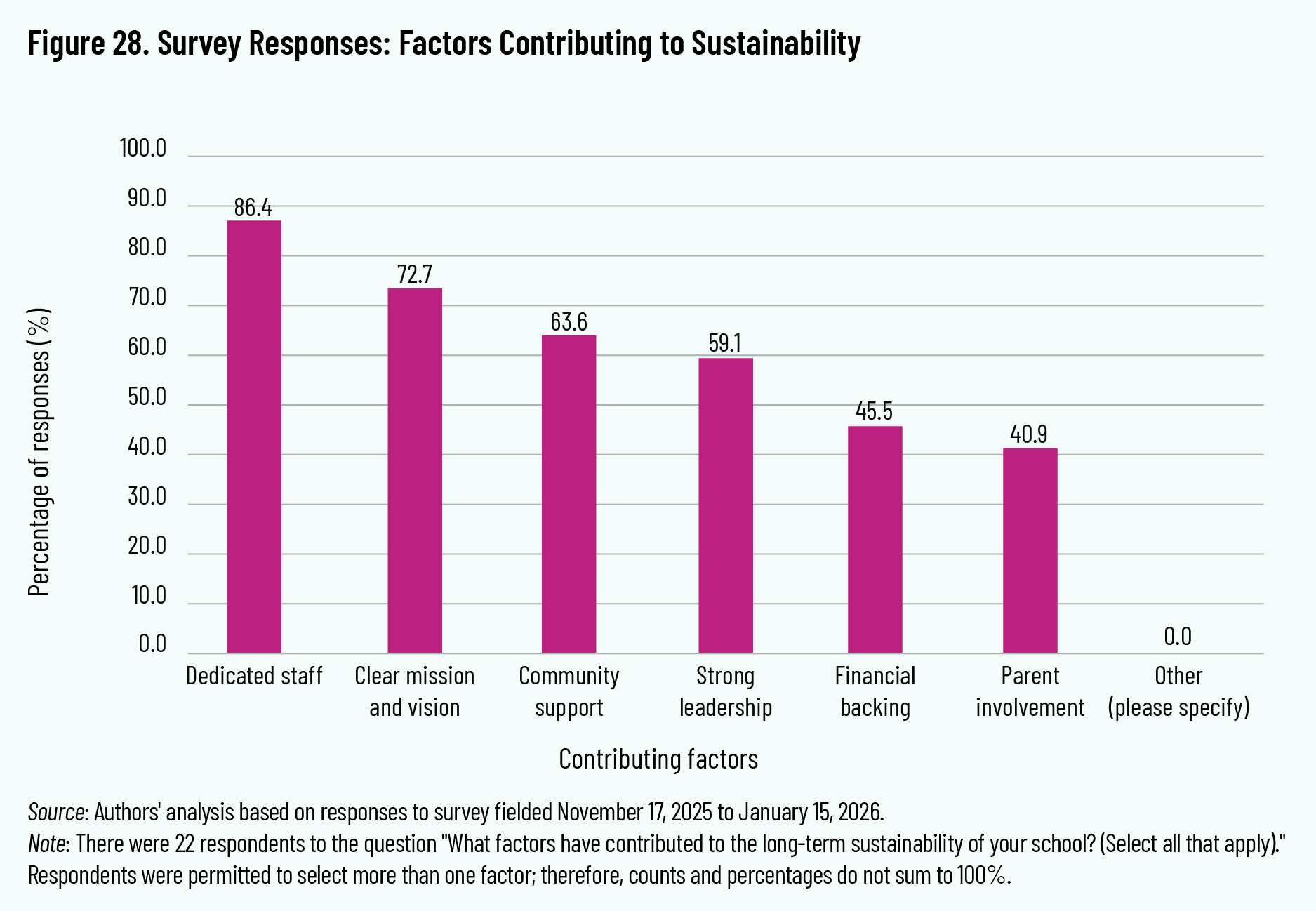
When asked about factors that have contributed to the sustainability of their school, 86.4 percent of respondents identified dedicated staff, followed by a clear vision and mission, and then community support (figure 28). All of these are integral components to the success of any school. School character shapes a school culture, and strong school culture is known to be a component of high-quality, successful schooling. When a school is intentionally established with shared values and practices that cohere around an aligned vision and mission, students are not only more likely to perform well academically but frequently demonstrate stronger life outcomes overall. 27 27 Pakaluk and Swanson, “A Good Fit”; Swaner, Cheng, and Eckert, “School-Sector Influences”; Cheng and Watson, “Diverse Outcomes.” When asked whether the mission, vision, or goals of their school had changed since it was founded, 86 percent indicated that these remained unchanged, suggesting that these new independent schools demonstrate a strong commitment to their vision, mission, and overall goals.
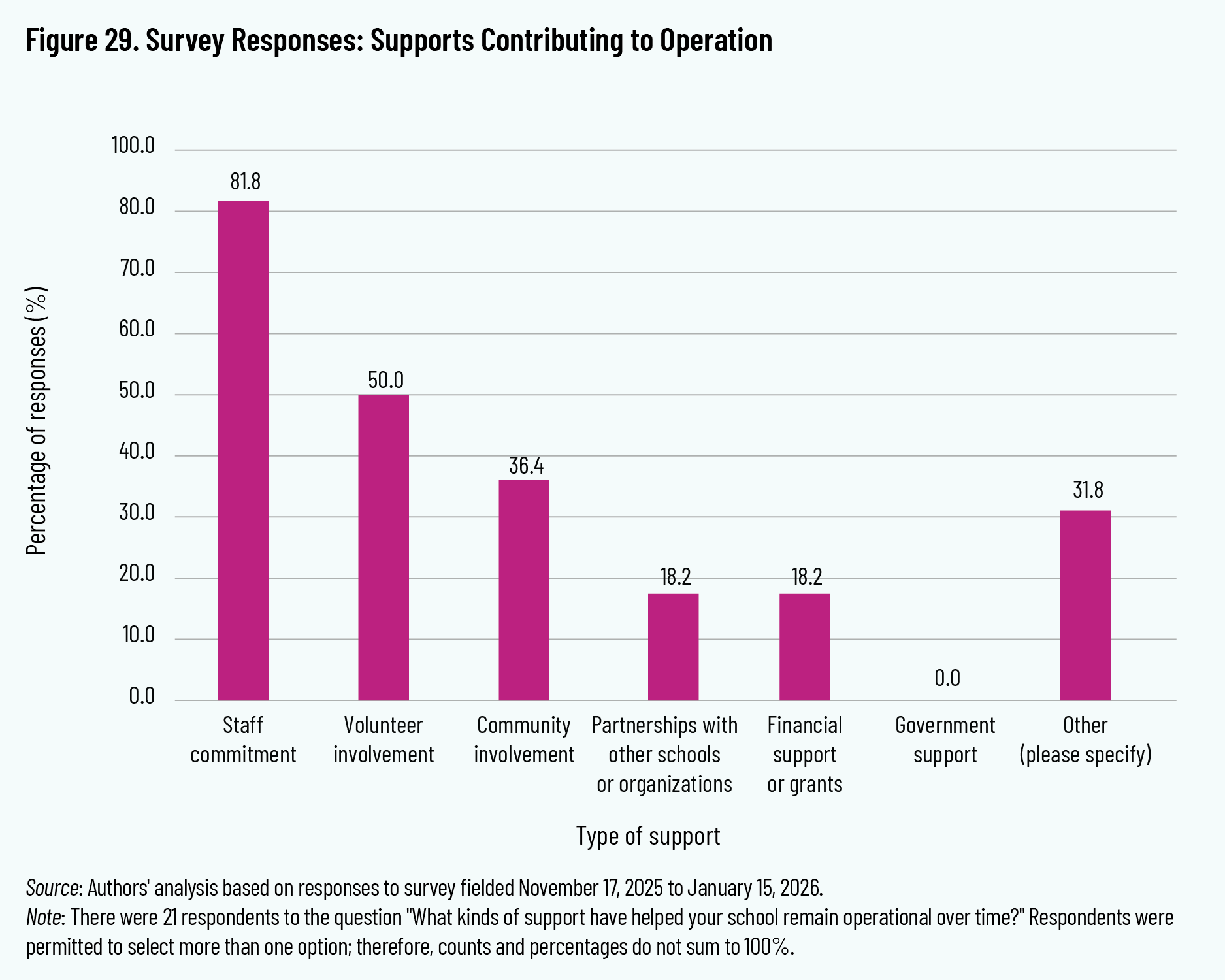
When asked about factors affecting successful school operations, school leaders identified staff commitment, followed by volunteer and community involvement (figure 29). Government support was not selected by any respondent, reflecting the lack of supports, financial or otherwise, available for independent schools in Ontario. One respondent even commented, “I have no support—just my own experience and the grace of God.” Taken together, these responses suggest that many emerging independent schools rely heavily on personal dedication, informal networks, and community goodwill rather than institutional backing. While this level of commitment is admirable, it also highlights the vulnerability of new schools operating without consistent external support.
Finally, we asked school leaders to describe, in their own words, the purpose of their school. After selecting from our typology for school type, this question allowed school leaders an opportunity to describe in more detail the qualities that make their independent school distinctive. Predictably, responses varied, but we note key elements that corroborate our website analysis findings and demonstrate the presence of emerging school models in Ontario. In these responses, schools identified hybrid schooling and microschooling approaches:
“The mission of [school name] is to provide a dynamic and flexible learning environment that blends the best of both an in-person classroom experience with home education. . . . Through innovative teaching methods, hands on learning, and a strong support network, our hybrid school will seek to cultivate critical thinking, creativity, and collaboration among students.”
“We believe in a one-room schoolhouse approach where our educator to student ratio is extremely low allowing individualized attention and differentiated or customized learning to each child meeting them exactly where they are, academically, and getting them where they are going. We do not adhere to grade levels, rather focus the child’s current abilities and how to progress them from there.”
Other responses focused on the student demographic their school is meant to support, identifying targeted support for specific minority communities, such as students with special needs or First Nation and rural communities:
“To support all students but in particular First Nation students in earning their OSSD.”
“To give parents in a rural community an option in their child’s education.”
“To provide neuroaffirming care, support and education for students and their families.”
“[School name] is a specialized, nonprofit elementary school. It’s designed specifically for neurodiverse students and children who require more support than traditional classrooms can offer. With class sizes capped at five, we offer multi-sensory instruction in literacy and numeracy, individualized success plans, and daily social-emotional learning, all supported by Ontario-certified teachers and skilled staff. Evidence-based programs, structured foundational skills, and real-world community excursions form the core of its approach.”
“We offer support to kids who don’t fit into the standard, institutional education model. We work with a lot of ‘hidden disabilities’ like ADHD, ASD, dyslexia, dyscalculia, etc. We work with the kids who aren’t ‘bad enough’ for additional support but aren’t thriving in the school system either.”
And finally, a significant number of schools affirmed the desire to educate according to religious values:
“To prepare our students to become morally and practically qualified participants of our civil society while reinforcing their personal faith identity.”
“To teach students to know and love Jesus and to make a difference in the world as His disciples.”
“Delivery of Ontario Curriculum, keeping in view the guidelines of Islamic values.”
Additional responses included a school identifying its purpose as to “adapt to a changing communication technology landscape” and another reflecting growing interest in outdoor and nature education: “Forest school providing mental health & wellness programs outdoors in nature. Learning happens across all life skills such as fire building, foraging, cooking & growing your own food. These hands-on learning opportunities include subjects such as math, science, reading, writing, art, music & physical education without being stuck in a building.”
Conclusion
The three converging trends that have driven the expansion of emerging school models in the United States have some resonance in Ontario, which also has a regulatory environment that presents few barriers to new school start-ups and experienced some of the longest school closures in the country during the COVID-19 pandemic. Ontario also represents a schooling environment in which education for minority communities has been marked by increasing failures of a large and bureaucratic district (public) system to meet student needs. This paper presents three main findings.
First, there has been robust growth and innovation in Ontario independent education over the last three years. While Credit Emphasis schools make up a portion of the 330 new schools in the province, the higher share of growth is driven by Special Emphasis and Religious schools, especially by Montessori and Nature schools in the former, and Islamic and Non-denominational Christian schools in the latter. Within both of these school types, there is significant diversity of offerings, especially at the elementary school level.
Second, emerging school models exist and are experiencing grassroots interest in the province. All forms of emerging school models, including hybrid schooling, microschooling, and bespoke education initiatives with diverse curricular offerings, are represented. Types such as Nature schools, which frequently operate as hybrid schools, are experiencing growing enrolment and visibility year by year. Moreover, these schools are not necessarily prohibitive in tuition costs but frequently operate with flexible tuition models to ensure affordability for parents.
Third, new independent school start-ups face significant challenges to long-term sustainability. Most report that their success is due to the dedication of their staff, the involvement of their community, and a clear sense of their vision and mission. However, they are small, their leaders occupy multiple roles, and they worry significantly about long-term sustainability. While some seek support from membership in school associations, most operate in isolation. New independent schools would benefit from the formation of school associations or from collaborative initiatives.
The robust and expansive growth in emerging school models within the independent school sector in Ontario is a trend that in many ways defies expectations and easy explanation. Despite the lack of any government funding, parents are finding a way to select from among a growing number of options for their children. Additionally, a low-regulatory environment may mean a low barrier to entry for new independent schools, but it is frequently a challenging environment for continued operation. Independent schools in this province consistently face misconception and mischaracterization; this study demonstrates in no small manner their resilience and community orientation. That families should be supported in accessing these options, many of which provide specialized support for students who most need it, is a conclusion increasingly difficult to ignore.
References
Allison, D. “School Choice in Canada: Diversity Along the Wild-Domesticated Continuum.” Journal of School Choice 9, no. 2 (2015): 282–309. https://doi.org/10.1080/15582159.2015.1029412.
Berner, A. “The Progressive Case for Educational Pluralism.” Cardus, 2024. https://www.cardus.ca/research/education/perspectives-paper/the-progressive-case-for-educational-pluralism/.
Cheng, A., and A. Watson. “Diverse Outcomes for a Diverse Population: Findings About Homeschooled Adults from the Cardus Education Survey.” Cardus, 2024. https://www.cardus.ca/research/education/reports/diverse-outcomes-for-a-diverse-population/.
Cheng, A., and A. Watson. “How Do Demographic Characteristics of Homeschooling Households Influence the Way Homeschooling is Practiced?” Education Reform Faculty and Graduate Students Publications, University of Arkansas, 2024. https://scholarworks.uark.edu/edrepub/154.
Cheng, A., and D. Hamlin. “Contemporary Homeschooling Arrangements: An Analysis of Three Waves of Nationally Representative Data.” Educational Policy 37, no. 5 (2023): 1444–66. https://doi.org/10.1177/08959048221103795.
Coons, J.E., and S.D. Sugarman. Education by Choice: The Case for Family Control. Educator’s International Press, 1999.
Dee, T.S. “Where the Kids Went: Nonpublic Schooling and Demographic Change During the Pandemic Exodus from Public Schools.” February 8, 2023, Urban Institute. https://www.urban.org/research/publication/where-kids-went-nonpublic-schooling-and-demographic-change-during-pandemic.
DeJong VanHof, J. “Can We Call Them Credit Mills? Assessing the Legitimacy of Some Independent Schools in Ontario.” Cardus, 2024. https://www.cardus.ca/research/education/reports/can-we-call-them-credit-mills/.
DeJong VanHof, J. “Better Together: How Canada’s Independent School Associations Strengthen Democracy and Civil Society.” Cardus, April 1, 2026. https://www.cardus.ca/research/education/reports/better-together/.
Democrats for Education Reform. “DFER Urges Democratic Governors to Opt-In to the Federal Tax Credit Scholarship Program.” September 12, 2025. https://dfer.org/2025/09/12/dfer-urges-democratic-governors-to-opt-in-to-the-federal-tax-credit-scholarship-program/.
Garnett, N.S. “Parental Rights, Parental Choice, and State Public Education Markets.” Journal of Contemporary Legal Issues 26, no. 73 (2025): 73–98.
Griffin, J., J. Paxman, K. Purle, and C. Lawrence. “Flexischooling Children with Special Education Needs: Insights from a Survey of Parents and Carers.” European Journal of Special Needs Education 40, no. 5 (2025): 863–79. https://doi.org/10.1080/08856257.2024.2437901.
Hunt, D., J. DeJong VanHof, and J. Los. “Naturally Diverse: The Landscape of Independent Schools in Ontario.” Cardus, 2022. https://www.cardus.ca/research/education/research-report/naturally-diverse/.
Justice, G. “Promise, Protection, and Privacy: Black Home Education as a Model for Studying Diversity in School Choice.” Journal of School Choice 19, no. 4 (2025): 707–13. https://doi.org/10.1080/15582159.2025.2575634.
Justice, G. “Latinx Families Homeschooling: A Community Cultural Wealth Analysis of Parent Involvement.” Journal of Latinos and Education (2025): 1–17. https://doi.org/10.1080/15348431.2025.2550740.
Kennesaw State University. “National Hybrid Schools Project.” Coles College of Business. https://www.kennesaw.edu/coles/centers/education-economics-center/national-hybrid-schools-project/index.php.
McShane, M.Q. “A New Crop of School Models Expands Choice.” Education Next 24, no. 2 (2024). https://www.educationnext.org/a-new-crop-of-school-models-expands-choice-alternatives-microschools-hybrid-homeschools/.
National Microschooling Center. https://microschoolingcenter.org/.
Ohls, S., L. Covelli, and J. Schweig. Microschools as an Emerging Education Model: Implications for Research and Evaluation. RAND, March 20, 2025. https://www.rand.org/pubs/research_reports/RRA3698-1.html.
Ontario Ministry of Education. Private School Contact Information. https://data.ontario.ca/dataset/private-school-contact-information/resource/6545c5ec-a5ce-411c-8ad5-d66363da8891.
Ontario Ministry of Education. Private Schools That Have Closed. https://www.ontario.ca/page/private-schools-have-closed.
Ontario Ministry of Education. Regional Offices for School Boards. Regional map. Obtained February 2022.
Pakaluk, C., and N. Swanson. “A Good Fit: How Matching Students and Schools by Religion Improves Academic Outcomes.” Cardus, 2021. https://cardus.ca/research/education/reports/a-good-fit/.
Schafer, M.J., and S.S. Khan. “Family Economy, Rural School Choice, and Flexischooling Children with Disabilities.” Rural Sociology 82, no. 3 (2017): 524–47. https://doi.org/10.1111/ruso.12132.
SchoolCred, “About SchoolCred.” https://schoolcred.ca/about/.
Soifer, D., and A. Soifer. “American Microschools: A Sector Analysis, May 2025.” https://microschoolingcenter.org/research.
Statistics Canada. Distribution (in Percentage) of Religious Groups, Ontario, 2011 and 2021. https://www12.statcan.gc.ca/census-recensement/2021/as-sa/fogs-spg/alternative.cfm?topic=10&lang=E&dguid=2021A000235&objectId=2.
Statistics Canada. Table 37-10-0109-01, Number of Students in Elementary and Secondary Schools, by School Type and Program Type. https://www150.statcan.gc.ca/t1/tbl1/en/tv.action?pid=3710010901.
Swaner, L.E., A. Cheng, and J. Eckert. “School-Sector Influence on Graduate Outcomes and Flourishing: Findings from the 2023 Cardus Education Survey.” Cardus, 2024. https://www.cardus.ca/research/education/reports/school-sector-influence-on-graduate-outcomes-and-flourishing/.
Taubman Center for State and Local Government. “Emerging School Models: Broadening the Landscape for Choice.” Harvard Kennedy School. https://www.hks.harvard.edu/centers/taubman/programs-research/pepg/events/emerging-school-models-2026-conference.
Watson, A.R. “Homeschool Participation: Post-Pandemic Persistence and Growth Trends.” Journal of School Choice 18, no. 4 (2024): 444–60. https://doi.org/10.1080/15582159.2024.2422742
Wearne, E. “A Descriptive Survey of Why Parents Choose Hybrid Homeschools,” Journal of School Choice 10, no. 3 (2016): 364–80. https://doi.org/10.1080/15582159.2016.1202075.
Wearne, E., and J. Thompson. National Hybrid Schools Survey 2025. National Hybrid Schools Project, Kennesaw State University, 2025. https://www.kennesaw.edu/coles/centers/education-economics-center/national-hybrid-schools-project/hybrid-research.php.
Williamson, B., C. Valladares Celis, A. Sriprakash, J. Pykett, and K. Facer. (2023). “Education’s Sociodigital Promises: A Briefing Paper and Research Agenda.” University of Bristol. https://doi.org/10.71706/92c8dd10-fa61-4897-a657-55bf6d31ab72.